Key takeaways
- Room size: Most residential oil radiators use 1,500 watts, making them best suited to bedrooms, offices, living areas, and other reasonably insulated rooms rather than open garages or drafty workshops.
- Heat control: Look for multiple heat settings and an adjustable thermostat. These let you maintain a stable temperature instead of running at full power continuously.
- Safety: Tip-over shutoff and overheat protection are essential. Place the heater on a level, hard surface with generous clearance from curtains, bedding, furniture, and gear.
- Controls: Mechanical knobs are simple and dependable, while digital controls, timers, remote operation, and child locks add convenience in bedrooms and busy family rooms.
- Mobility and storage: Wheels or caster-style feet make a full-size radiator easier to reposition. Check the footprint, cord storage, and carry handles before choosing a model for a small room.
What's inside
Cold rooms are rarely solved by buying the biggest heater on the shelf. In a living room, home office, cabin, or three-season space, the real challenge is finding steady warmth without fan noise, complicated controls, or a heater that becomes awkward to move. Oil-filled radiators work differently from quick-blast ceramic models: they warm their metal fins gradually, then continue releasing comfortable radiant heat after the thermostat cycles off.
This guide focuses on the practical details that matter in everyday outdoor-minded homes: room coverage, portability, control quality, safety features, and quiet operation. The selections below range from straightforward budget heaters to feature-rich models with digital thermostats, timers, remote controls, and child locks.
As an Amazon Associate we earn from qualifying purchases.




How to Choose an Oil Space Heater (2026)
- Room size: Most residential oil radiators use 1,500 watts, making them best suited to bedrooms, offices, living areas, and other reasonably insulated rooms rather than open garages or drafty workshops.
- Heat control: Look for multiple heat settings and an adjustable thermostat. These let you maintain a stable temperature instead of running at full power continuously.
- Safety: Tip-over shutoff and overheat protection are essential. Place the heater on a level, hard surface with generous clearance from curtains, bedding, furniture, and gear.
- Controls: Mechanical knobs are simple and dependable, while digital controls, timers, remote operation, and child locks add convenience in bedrooms and busy family rooms.
- Mobility and storage: Wheels or caster-style feet make a full-size radiator easier to reposition. Check the footprint, cord storage, and carry handles before choosing a model for a small room.
The Best Oil Space Heaters (2026) Reviewed
DREO Oil Filled Radiator Heater
The DREO is the most fully equipped option in this group, pairing quiet radiant warmth with a digital thermostat, ECO mode, four operating modes, remote control, and a 24-hour timer. Its child lock and dual safety protection make it especially appealing for family rooms, nurseries, and home offices where convenience matters as much as heat.
PELONIS Radiator Heater for Large Spaces
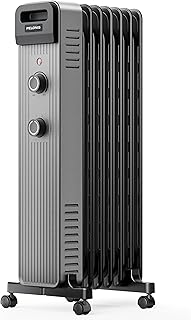
PELONIS keeps the experience refreshingly straightforward with dual knobs, three heat modes, and a 1,500-watt output. It is a sensible choice for someone who wants quiet background warmth and tactile controls without paying for a display or remote.
Amazon Basics Portable Oil Space Heater
This black Amazon Basics model covers the essentials with seven oil-filled fins, three heat settings, and an adjustable thermostat. Tip-over and overheat protection, along with ETL certification, give it a reassuring safety baseline for everyday indoor use.
Pelonis Oil Filled Radiator Heater, 2025 Upgraded
The upgraded Pelonis model is designed for large rooms and emphasizes quiet radiant heating rather than forced-air noise. Its three modes, adjustable thermostat, overheat protection, and tip-over protection provide the flexible control needed when temperatures shift through the day.
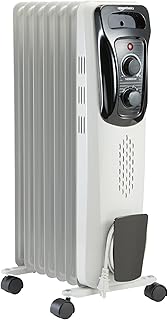
Amazon Basics Portable Oil Radiator Heater
The white Amazon Basics radiator is a practical alternative when you prefer a taller, clearly specified footprint. Its seven steel fins, three heat settings, thermostat control, and ETL-certified safety features suit bedrooms, offices, and other spaces where steady warmth is more useful than rapid heat-up.
Frequently Asked Questions
Are oil-filled heaters expensive to run?
They use electricity like other 1,500-watt heaters, so operating cost depends on your local energy rate and how long the unit runs. A thermostat can reduce waste by cycling the heater rather than allowing it to operate continuously at maximum output.
Do oil space heaters need oil added?
No. The thermal oil is sealed inside the radiator at the factory. It transfers heat from the internal element to the metal fins and is not intended to be drained, replaced, or topped up by the owner.
How long does an oil-filled heater take to warm a room?
Expect a gradual start rather than an instant blast of heat. The fins need time to become hot, but that slower warm-up brings quieter operation and more even comfort, particularly when the heater is used with a thermostat.
Can I leave an oil heater running overnight?
Only if the specific model’s instructions allow it and the heater is positioned correctly. Keep it on a stable, uncovered floor with clear space around it, never use an extension cord or power strip unless the manufacturer explicitly permits it, and avoid placing it beside bedding or curtains.
Final Thoughts
The DREO Oil Filled Radiator Heater is the strongest all-around pick for shoppers who want modern controls and family-friendly features. For simpler operation, the PELONIS Radiator Heater is a dependable choice, while the Amazon Basics Portable Oil Space Heater offers a practical balance of essential controls, safety features, and quiet warmth.