Key takeaways
- Sunrooms and three-season rooms: 45% to 50%. Glass sweats, and cushions stacked against cold panes wick that condensation.
- Basements storing patio sets, umbrellas, and cushions: 45%. Storage tolerates drier air than people do, and cardboard, canvas, and fabric all benefit.
- Bedrooms and living rooms: 50% to 55% for comfort without stuffiness.
- Bathrooms and laundry areas: 50%, with the unit running during and after use rather than around the clock.
What's inside
Ask ten people what to set their dehumidifier to and you will get ten answers, most of them guesses. The truth is simpler than the folklore: relative humidity is a target, not a dial you crank to the floor. Set it too high and you keep growing mildew on porch cushions and teak furniture. Set it too low and you burn electricity, dry out wood joinery, and shorten the life of a compressor that was never meant to run all day.
Working on covered patios, sunrooms, screened porches, and the basements where all of that furniture hibernates over winter, I have watched the same handful of settings solve almost every moisture complaint. Below you will find the number to start with, how to shift it by room and season, why capacity matters more than any menu option, and the temperature limits that quietly ruin results in unheated spaces.
Our recommended picks:
As an Amazon Associate we earn from qualifying purchases.


Start At 50% Relative Humidity
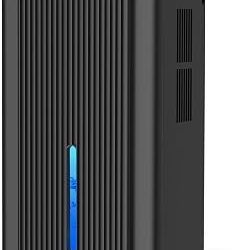
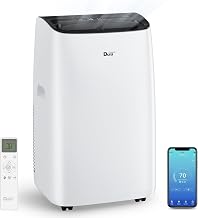
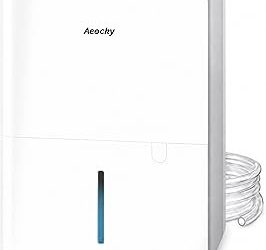
Fifty percent is the sweet spot for nearly every living space, and it is where I set a new unit before adjusting anything else. Mold and mildew need roughly 60% or higher to establish themselves, dust mites thrive above 55%, and most solid wood, rattan, and woven resin furniture stays dimensionally stable between 40% and 55%. Anything under 40% starts pulling moisture out of timber frames and drying the natural oils in seagrass and jute. If your unit uses fixed 5% increments, 50% is usually a preset. Models with a genuine humidistat, like the 5500 Sq.Ft Energy Star dehumidifier with intelligent humidistat, hold that number tightly instead of overshooting it.
Adjust By Room, Not By Habit
The single target rarely fits an entire house, especially once outdoor furniture and gear enter the picture.
- Sunrooms and three-season rooms: 45% to 50%. Glass sweats, and cushions stacked against cold panes wick that condensation.
- Basements storing patio sets, umbrellas, and cushions: 45%. Storage tolerates drier air than people do, and cardboard, canvas, and fabric all benefit.
- Bedrooms and living rooms: 50% to 55% for comfort without stuffiness.
- Bathrooms and laundry areas: 50%, with the unit running during and after use rather than around the clock.
A midsize unit with a wide adjustment range, such as the Waykar 34 Pint with 30% to 80% control, gives you room to fine-tune instead of choosing between two coarse presets.
Capacity Beats Settings Every Time
An undersized machine set perfectly will still lose. If a unit cannot outpace the moisture entering a room, the humidistat becomes decoration and the compressor never gets a break. Match the coverage rating to the actual space: a 1000 sq ft model like the ToLife 95 oz or the 95OZ dehumidifier with auto shut off handles a bedroom, bathroom, or enclosed porch. Open basements, walkout lower levels, and garages where furniture overwinters need serious capacity, which is where the KNKA Energy Star 4500 Sq.Ft at 80 pints per day or the 4500 Sq. Ft quilt compressor model earn their footprint. Damp, below-grade, or frequently opened spaces should be sized up a tier.
Fan Speed, Continuous Mode, And Drainage
Run high fan speed during the first day or two to pull the space down to target quickly, then drop to low or sleep mode to maintain it quietly. Continuous mode disables the humidistat entirely and runs nonstop, which is the right call only for flood cleanup, a new concrete pour, or a genuinely swampy crawlspace. For anything ongoing, use a target instead. And if you plan to leave a unit running unattended, connect the drain hose and let gravity handle the water. Every model listed here includes hose capability except the smallest tank-only units, and it is the difference between a set-and-forget appliance and a daily chore.
Mind The Temperature Floor
Compressor dehumidifiers lose efficiency as air cools and can frost their coils below roughly 60°F. Unheated porches, detached garages, and cold basements are exactly where people mount the biggest units and get the worst results. Look for automatic defrost, which the Waykar 34 Pint and both large-capacity models include, and expect reduced extraction in shoulder seasons. Below about 41°F, shut the unit down and drain it rather than fighting physics.
Tips
- Verify with a separate hygrometer. Onboard sensors read the air at the intake, not across the room.
- Position the unit 6 to 12 inches from walls with clear airflow on all sides, never wedged behind stored furniture.
- Close windows and exterior doors while it runs. Dehumidifying outdoor air is an unwinnable job.
- Rinse the filter monthly during heavy use. A clogged filter looks exactly like a failing compressor.
Frequently Asked Questions
Is 30% ever the right setting?
Rarely. It is useful for short remediation work after a leak, but sustained 30% risks shrinking wood furniture and cracking finishes, and it drives energy use up sharply.
Should I run it overnight?
Yes, if the space needs it. Sleep mode on the KNKA and ToLife units dims the display and slows the fan so the machine stays useful without becoming noise.
Why does mine never reach the target?
Usually undersizing, an air leak, or cold coils. Check the door seals and room size rating before assuming the unit is faulty.
Do I change the setting seasonally?
Slightly. Nudge toward 45% in humid summer months and toward 50% to 55% in winter, when heated indoor air is already dry.
Conclusion
Set 50%, adjust down to 45% for storage and glassy sunrooms, size the unit generously for the space, and plumb the drain so it can hold that number without help. Do those four things and your furniture, framing, and fabrics stay in the range they were built for, season after season.