Key takeaways
- Reach you actually need: Measure floor to blade, then subtract your comfortable arm height, roughly 18 inches above your head. Covered patios and vaulted porch ceilings usually call for a 6 ft pole; standard 8 ft interior ceilings do fine with a 4 ft model.
- Head style: Fork and sleeve heads sandwich the blade and clean both faces at once, which is the fastest route on a five-blade outdoor fan. Flat pads and chenille mop heads are more versatile for walls, soffits, and baseboards but need two passes per blade.
- Blade width tolerance: Damp-rated and wet-rated outdoor fans often use wide ABS or faux-wood blades. Check that the sleeve opening accommodates thicker profiles instead of stretching over them and losing contact.
- Washable, reusable covers: Outdoor grime is oilier than indoor dust. Look for microfiber sleeves rated for machine washing and buy a kit that includes spares so one is always dry and ready.
- Pole build and locking joints: Aluminum sections with twist locks hold angle better than friction-fit plastic. A pole that sags at full extension turns a two-minute job into ten, and a bendable neck helps you square up to blades on a sloped ceiling.
What's inside
Patio and porch fans live a harder life than their indoor cousins. Under a covered deck or a screened lanai, blades collect pollen in spring, cottonwood fluff in early summer, a fine mist of grill smoke all season, and a sticky film of humidity-borne dust that bakes on until it turns into gray felt. By the time you notice it from the lounge chair below, the buildup is heavy enough to throw the blades out of balance, which is where the wobble and the ticking noise start. Reaching that mess is the real problem: outdoor ceilings run high, ladders on uneven pavers are a genuinely bad idea, and a rag on a broom handle just pushes grit around and drops it into your drinks.
This guide covers the tools built for that specific job. Every pick below is a telescoping duster with a sleeve or fork head designed to wrap a fan blade and clean top and bottom in one pass, so debris stays trapped in the fibers instead of raining onto the outdoor sofa. I looked at reach, how the head grips thicker weatherproof blades, whether the sleeves survive a wash cycle after a greasy season, and how well each one pulls double duty on soffits, pergola beams, screen tracks, and the cobwebs that colonize every porch corner by August.
As an Amazon Associate we earn from qualifying purchases.



How to Choose a Ceiling Fan Cleaner (2026)
- Reach you actually need: Measure floor to blade, then subtract your comfortable arm height, roughly 18 inches above your head. Covered patios and vaulted porch ceilings usually call for a 6 ft pole; standard 8 ft interior ceilings do fine with a 4 ft model.
- Head style: Fork and sleeve heads sandwich the blade and clean both faces at once, which is the fastest route on a five-blade outdoor fan. Flat pads and chenille mop heads are more versatile for walls, soffits, and baseboards but need two passes per blade.
- Blade width tolerance: Damp-rated and wet-rated outdoor fans often use wide ABS or faux-wood blades. Check that the sleeve opening accommodates thicker profiles instead of stretching over them and losing contact.
- Washable, reusable covers: Outdoor grime is oilier than indoor dust. Look for microfiber sleeves rated for machine washing and buy a kit that includes spares so one is always dry and ready.
- Pole build and locking joints: Aluminum sections with twist locks hold angle better than friction-fit plastic. A pole that sags at full extension turns a two-minute job into ten, and a bendable neck helps you square up to blades on a sloped ceiling.
The Best Ceiling Fan Cleaner (2026)s Reviewed
DRQ Ceiling Fan Cleaner Duster (13 to 48 Inch)
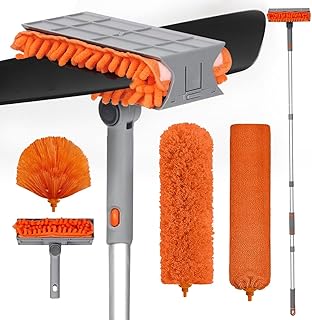
The DRQ strikes a nice balance for covered patios with standard-height ceilings, extending from a compact 13 inches out to 48 and locking firmly enough to stay put overhead. The removable microfiber sleeve slides off cleanly for washing, which matters when you are pulling grill residue off blades rather than dry dust.
Multi-Functional Fan Cleaner Duster Kit, 6 Ft Pole
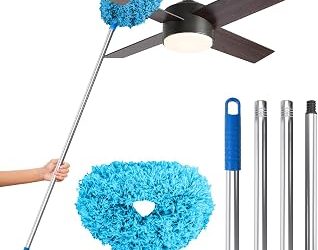
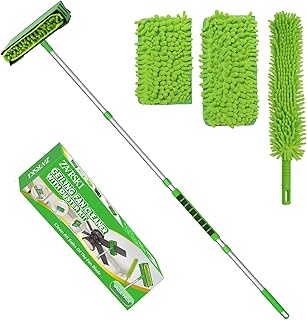
This is the one I would hand to anyone with a two-story porch, a screened room, or a pergola-mounted fan, since the full 77 inch reach clears most outdoor mounting heights without a ladder. The kit format earns its keep outdoors too, moving from blades to window screens to the baseboards on a three-season room in a single session.
72″ Extendable Chenille and Microfiber Duster Kit
Pairing a chenille mop head with microfiber sleeves makes this the most adaptable pick here, and the chenille is the better choice for textured outdoor ceilings and soffit vents where a flat pad skips over the low spots. Expect two passes per blade rather than one, which is the tradeoff for that versatility.
6 Ft/72″ Microfiber Duster with Reusable Pads
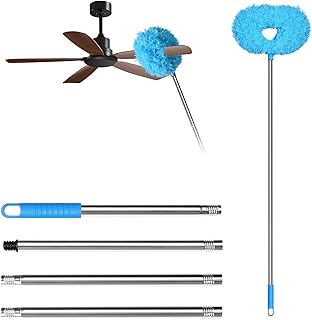
A straightforward, well-proportioned tool that handles seasonal blade cleaning and cobweb patrol without fuss, with pads that swap quickly when one loads up with pollen. The pole holds a decent angle at full extension, so you are not fighting flex while you work around a light kit.
Reusable Microfiber Blade Cleaner (13 to 49.7 Inch)
The wide adjustment range makes this a practical single tool for a house with both indoor and outdoor fans, collapsing small enough to store in a deck box. The removable design keeps dust contained on the way down, which is the whole point when you are working over cushions.
Frequently Asked Questions
How often should I clean an outdoor ceiling fan?
Once a month during peak pollen and grilling season, and a thorough pass at the start and end of the season. Outdoor blades load up two to three times faster than indoor ones.
Will a dry duster handle baked-on grime?
Not always. For sticky film, lightly dampen the sleeve with water and a drop of dish soap, then finish with a dry sleeve so no moisture sits on the motor housing or blade seams.
Can I use these on other outdoor surfaces?
Yes, and you should. The same head works on soffits, pergola rafters, screen tracks, string light cords, and the top edges of patio doors.
How do I wash the sleeves?
Shake them out, then machine wash cold with detergent and skip fabric softener, which coats microfiber and kills its grab. Air dry.
Final Thoughts
For high covered patios and screened rooms, the Multi-Functional Fan Cleaner Duster Kit with its 6 ft pole is the pick that removes the ladder from the equation entirely. If your fans sit at typical ceiling height, the DRQ 13 to 48 Inch duster is the tidier, easier-to-store option, and the compact Storystore Adjustable Microfiber Duster is a sensible pick for smaller porches where storage space is tight.