Key takeaways
- No-rinse foam is the practical choice for units cleaned in place. Products like the Arm & Hammer biodegradable HVAC and coil cleaner foam, or a larger 38 oz or 57 oz foaming coil cleaner, expand into the fin pack, lift grime, and drain out through the condensate pan. Good for light to moderate buildup and quick seasonal touch-ups.
- A full wash handles heavy matting, visible mold, or that sour smell that foam alone won’t fix. Pair a foaming cleaner with a low-pressure rinse and a bagged setup like the Oiktylr mini split cleaning kit with its 2L pressure sprayer, which catches runoff instead of letting it soak your floor or siding.
What's inside
A window air conditioner spends its life half-outside, which means it inhales everything your yard throws at it: cottonwood fluff, grass clippings, deck dust, pollen, and the fine grit that kicks up off a driveway. All of that ends up packed into aluminum fins spaced about a millimeter apart. The unit still runs, so nothing seems wrong, but it pulls more amps to move less air, and the room takes twice as long to cool. On a screened porch or a sunroom that opens to the yard, the buildup happens faster than most people expect, sometimes within a single season.
This guide walks through cleaning a window unit properly: what to pull apart and what to leave alone, how to pick between no-rinse foam and a full water wash, how to protect the space you’re working in, and how to straighten the fins you’ll inevitably bend. You’ll also find the maintenance rhythm that keeps a unit efficient for years rather than months, plus answers to the questions that come up most often once people open the front grille and see what’s in there.
As an Amazon Associate we earn from qualifying purchases.




Our recommended picks for this job are below.
Start With Power, Then Take Only the Panels That Come Off Easily
Unplug the unit at the outlet, not just at the control panel. Standby circuits stay live and the blower wheel can spin freely, so pulling the plug is the only real safety step here. From there, remove the front grille (usually two screws or a pair of snap tabs at the bottom edge) and slide out the filter. Some models let the whole chassis pull forward out of its sleeve, which makes cleaning far easier if the unit is light enough to handle safely. If yours is bracket-mounted at a second-floor window or feels heavy, clean it in place instead. Nothing about a deeper teardown is worth a dropped 70-pound box.
Choose Your Cleaning Method: No-Rinse Foam or a Full Wash
Two approaches cover almost every situation, and the difference comes down to whether you can control water.
- No-rinse foam is the practical choice for units cleaned in place. Products like the Arm & Hammer biodegradable HVAC and coil cleaner foam, or a larger 38 oz or 57 oz foaming coil cleaner, expand into the fin pack, lift grime, and drain out through the condensate pan. Good for light to moderate buildup and quick seasonal touch-ups.
- A full wash handles heavy matting, visible mold, or that sour smell that foam alone won’t fix. Pair a foaming cleaner with a low-pressure rinse and a bagged setup like the Oiktylr mini split cleaning kit with its 2L pressure sprayer, which catches runoff instead of letting it soak your floor or siding.
Skip household degreasers and bleach. Both attack aluminum fins and the coil’s protective coating, and bleach residue corrodes copper tubing from the inside out.
Protect the Room Before You Spray Anything
Cleaning a window unit indoors produces dirty water, and it goes wherever gravity takes it. The bag from a kit like the Oiktylr, sized for 18,000 to 24,000 BTU systems and built from waterproof PVC, funnels everything into a bucket. If you’re working on a smaller unit without a bag, lay a plastic drop cloth under and behind the AC, tape it to the sill, and set a shallow pan underneath. On a wood windowsill or a painted deck rail, this matters more than the cleaning itself. Coil cleaner residue leaves marks on finished surfaces once it dries.
Clean the Coils, Then Straighten the Fins
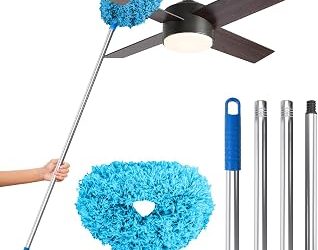
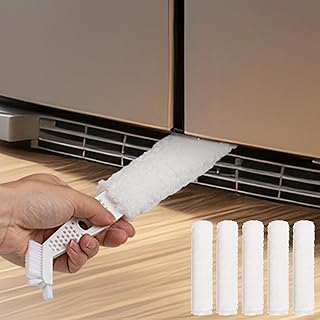
Vacuum loose debris off both coil faces with a soft brush attachment first, working parallel to the fins rather than across them. Then apply foam, let it dwell five to ten minutes per the label, and rinse only if the product calls for it. Once the coils are clean, bent fins become obvious, and they choke airflow at the exact spots where they’re crushed. A 3-piece fin comb cleaning kit with a brush and fin comb straightens them in a few passes. Match the comb spacing to your fin density, pull gently in one direction, and stop if you feel resistance. For the tight channels behind the blower and around the drain pan, a slim-profile tool like the air conditioner cleaner set with replaceable brush cloths reaches places your hand cannot, which is also why those spots are usually the dirtiest.
Dry Completely and Reassemble in Order
Let the unit air-dry for several hours before restoring power. Any moisture left on the blower motor or control board invites a short. Wash the filter with mild dish soap, rinse until the water runs clear, and dry it fully; a damp filter breeds exactly the mildew you just removed. Reinstall the filter, then the grille, plug in, and run the fan on high for ten minutes before switching to cool. You should hear a noticeably quieter blower and feel stronger discharge air.
Tips
- Rinse or vacuum the filter every two to three weeks during heavy use. It’s the cheapest efficiency gain available.
- Clean coils twice a year in pollen-heavy or coastal areas, once a year everywhere else, and always before the first hot stretch.
- Keep planters, trellises, and grill smoke at least two feet clear of the outdoor half of the unit.
- Photograph the screw locations before disassembly. Window AC grilles rarely use uniform hardware.
Frequently Asked Questions
Can I use a pressure washer on a window unit?
No. Even a low setting flattens aluminum fins and can drive water into the motor windings. A garden sprayer or the hand-pump sprayer included in a dedicated AC cleaning kit gives you plenty of pressure without the damage.
Do no-rinse foam cleaners actually work?
Yes, for light to moderate soiling. The foam suspends dirt and drains out with condensate as the unit runs. Heavy matting, mold, or a lingering musty odor needs a rinse to physically flush the debris out.
Why does my AC still smell after cleaning?
Usually a clogged drain pan or blocked drain port holding standing water. Clear the port with a soft wire or pipe cleaner and flush the pan. A slim brush tool reaches this area without pulling the chassis apart.
How do I know if cleaning helped?
Measure the temperature difference between intake and discharge air. A healthy unit produces roughly a 15 to 20°F drop. Less than that after a thorough cleaning points to low refrigerant or a failing compressor, both of which need a technician.
Conclusion
A window air conditioner asks for very little: a clean filter, clear coils, straight fins, and a drain that actually drains. Spend an hour on it at the start of the season with a foaming coil cleaner, a fin comb, and a way to contain the runoff, and you’ll get quieter operation, faster cooling, and a lower power bill from a unit that would otherwise quietly decline year after year.