Key takeaways
- Vacuum the rear grille first with a brush attachment, working top to bottom, to remove loose surface debris before it gets pushed inward.
- Insert the bendable duster through the grille slots and sweep laterally, then vertically. Bend the tip slightly so the microfiber contacts the impeller vanes rather than the housing wall.
- Repeat at the front outlet vent. This side collects less bulk but holds a greasier film, especially in kitchens or near a grill station.
- Wipe the exterior with a barely damp microfiber cloth and mild soap solution. Keep moisture away from the control panel and motor housing entirely.
- Remove and rinse the filter if your model has one, and let it dry fully before reinstalling.
- Let the unit air-dry at least an hour before plugging in.
What's inside
A tower fan works quietly against you. Unlike a bladed pedestal fan, where you can see grime building on the cage, a tower’s intake grille hides its own decline behind narrow vertical slots. On a screened porch or covered patio, that decline arrives fast: oak pollen in April, cottonwood fluff in June, fine grit from a gravel path, and a film of humidity-borne dust that binds it all into felt. By August the fan sounds busier and moves less air, and most people assume the motor is tired when the real culprit is a quarter-inch mat of debris on the inlet.
This guide covers the cleaning method that actually restores airflow, not just the parts you can reach with a rag. You will learn how to stage the job, which tools reach the impeller without scratching it, when opening the housing is worth it, and how often to repeat the process based on where the fan lives. There is also a short section on recognizing when a fan is past saving, plus a few current models worth considering if yours has reached that point.
As an Amazon Associate we earn from qualifying purchases.


Understand Where the Dirt Actually Sits
Tower fans pull air through a tall rear grille, accelerate it with a bladeless-style drum impeller, and push it out through a narrower front vent. Roughly 80 percent of accumulated debris lands on the inside face of that rear grille and on the leading edges of the impeller vanes. Wiping the exterior does nothing for either. That is why a fan can look presentable and still deliver noticeably weaker airflow than it did new. Before you touch anything, unplug the unit and set it on a drop cloth outdoors or in a garage bay, because a proper clean releases a surprising amount of airborne dust.
Assemble the Right Tools
You need something thin, flexible, and non-abrasive that can pass through a grille slot and sweep the surface behind it. Compressed air alone just relocates dust deeper into the housing. A bendable microfiber crevice duster is the correct tool here, and the 2 Pcs Fan Cleaning Brush, Bendable Microfiber Crevice Duster handles most single-fan jobs with soft, scratch-resistant bristles that will not mar plastic vanes. If you maintain several fans across a patio, sunroom, and bedroom, the Fan Cleaning Brush Dust Removal Tool Kit, 10 Pcs gives you varied widths and lengths so you are not forcing one head into a slot it does not fit. Round out the kit with a vacuum and brush attachment, a microfiber cloth, and a spray bottle of diluted dish soap.
The Step-by-Step Clean
- Vacuum the rear grille first with a brush attachment, working top to bottom, to remove loose surface debris before it gets pushed inward.
- Insert the bendable duster through the grille slots and sweep laterally, then vertically. Bend the tip slightly so the microfiber contacts the impeller vanes rather than the housing wall.
- Repeat at the front outlet vent. This side collects less bulk but holds a greasier film, especially in kitchens or near a grill station.
- Wipe the exterior with a barely damp microfiber cloth and mild soap solution. Keep moisture away from the control panel and motor housing entirely.
- Remove and rinse the filter if your model has one, and let it dry fully before reinstalling.
- Let the unit air-dry at least an hour before plugging in.
When to Open the Housing
Some tower fans have four to six rear screws that release the back panel, and if yours does, a full teardown once a season is worth the fifteen minutes. Photograph the assembly before separating anything, keep screws in a labeled cup, and never disturb wiring at the motor. Once open, the impeller can be brushed and wiped directly, which is the only way to remove the compacted ring of debris that forms at the vane roots. If the housing is sealed or ultrasonically welded, do not force it. Stick to the grille-access method and clean more frequently instead.
Know When Cleaning Will Not Help
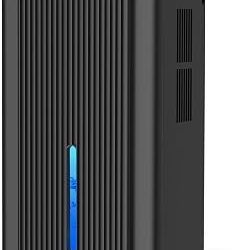
If a fan rattles at every speed after a thorough clean, wobbles on its base, smells faintly hot, or has visibly warped vanes, it is finished. Older AC motors also lose efficiency in ways no brush can address. Current DC-motor towers are meaningfully quieter and easier to maintain, with smoother interior surfaces that shed dust. The DREO Tower Fan, 28ft/s Velocity, 20dB, 8 Speeds suits bedrooms and enclosed porches where noise matters. The DREO 40″ Tower Fan, 5 Speeds, 12H Timer is a sensible mid-range pick for a home office or sunroom. For finer control, the DREO Tower Fan with 9 Speeds and DC Motor gives you more range at low output, and the DREO Smart Tower Fan with 40″–45″ Adjustable Height adds Alexa and Google control plus a height range that clears patio furniture backs.
Tips
- Clean at the start and end of each cooling season, plus once mid-summer if the fan runs on a porch or near open doors.
- Store the fan upright in a sealed bag or fitted cover over winter. Horizontal storage lets dust settle into the motor bearing area.
- Never wet the interior. Moisture plus residual dust creates a paste that hardens on the vanes and is far harder to remove than dry buildup.
- Keep towers at least eight inches off flooring edges and away from planter beds, where they inhale the most particulate.
Frequently Asked Questions
Can I use compressed air instead of a brush?
Only as a finishing step, outdoors, after brushing. Leading with compressed air drives fine dust past the impeller and into the motor cavity, where you cannot retrieve it.
How often should a tower fan be cleaned?
Every six to eight weeks during active use for outdoor and semi-outdoor spaces, and twice per season for indoor bedroom use. Pet households should lean toward the shorter interval.
Is it safe to leave a tower fan on a covered patio?
Only if the model is rated for it and fully shielded from rain and blown moisture. Most indoor towers will corrode internally within a season or two of unprotected patio exposure.
Will cleaning reduce fan noise?
Often, yes. Uneven debris on the impeller creates minor imbalance that reads as a hum or buzz. Removing it frequently drops perceived noise by a noticeable margin.
Conclusion
A tower fan rewards attention to the parts you cannot see. Vacuum the intake, sweep the interior with a bendable microfiber duster, keep water away from the motor, and open the housing when the design allows it. Do that on a predictable schedule and most towers will hold their original airflow for years, which makes maintenance a far better investment than replacement in nearly every case.