Key takeaways
- Washable pre-filter: This is the single most important feature for pet homes. A rinsable mesh screen catches visible hair and lint before it blinds your HEPA media, which can double or triple the life of the expensive filter underneath.
- Real coverage, not headline coverage: Big square-footage numbers usually assume a single air change per hour. For rooms with pets, aim for a unit rated at roughly twice your actual floor area so you get four or five air changes and faster capture of stirred-up hair.
- H13 HEPA plus activated carbon: HEPA handles dander and the fine particulate that triggers allergies; carbon is what deals with litter box, wet dog, and damp-porch odors. A purifier without meaningful carbon will clean the air but still smell like a kennel.
- Noise at the speed you’ll actually use: A quiet sleep mode is only useful if the unit is powerful enough that you can leave it low. Look for sub-25 dB minimums and check the noise figure on medium, since that is where most pet owners run theirs.
- Placement and filter economics: Position the intake near the traffic lane between your patio door and the main seating area, not in a corner behind furniture. Then price a year of replacement filters before you buy; annual media cost often exceeds the difference between two models.
What's inside
Anyone who lives with a dog or cat and an open patio door knows the drill: hair does not stay on the floor. Every time a pet trots in from the deck, a small cloud of undercoat, dried dander, and yard pollen comes with it, and most of it never lands where a vacuum can reach. It settles into sofa weave, drifts along baseboards, and clings to the sheers on a sunroom window. In transitional spaces like screened porches, four-season rooms, and open-plan living areas that spill onto a patio, the load is heaviest, because outdoor debris and indoor shedding stack on top of each other all season long.
An air purifier will not sweep your rug, but the right one intercepts the lightweight, airborne portion of the problem before it settles on your furniture. This guide covers what actually matters for pet households, how to size a unit for the rooms that connect to the outdoors, and six machines worth considering in 2026, from compact bedroom filters to whole-floor workhorses.
As an Amazon Associate we earn from qualifying purchases.


How to Choose an Air Purifier for Pet Hair (2026)
- Washable pre-filter: This is the single most important feature for pet homes. A rinsable mesh screen catches visible hair and lint before it blinds your HEPA media, which can double or triple the life of the expensive filter underneath.
- Real coverage, not headline coverage: Big square-footage numbers usually assume a single air change per hour. For rooms with pets, aim for a unit rated at roughly twice your actual floor area so you get four or five air changes and faster capture of stirred-up hair.
- H13 HEPA plus activated carbon: HEPA handles dander and the fine particulate that triggers allergies; carbon is what deals with litter box, wet dog, and damp-porch odors. A purifier without meaningful carbon will clean the air but still smell like a kennel.
- Noise at the speed you’ll actually use: A quiet sleep mode is only useful if the unit is powerful enough that you can leave it low. Look for sub-25 dB minimums and check the noise figure on medium, since that is where most pet owners run theirs.
- Placement and filter economics: Position the intake near the traffic lane between your patio door and the main seating area, not in a corner behind furniture. Then price a year of replacement filters before you buy; annual media cost often exceeds the difference between two models.
The Best Pet Hair Air Purifiers of 2026, Reviewed
uahpet Pet Air Purifier
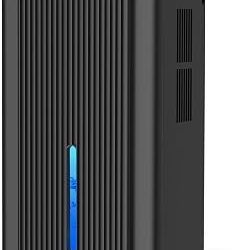
Purpose-built for animal households, with a low intake designed to pull in floating hair rather than just filter the air above it, plus an H13 HEPA stage and a washable pre-filter. The 2100 sq ft rating and onboard air quality monitor make it a sensible anchor unit for a great room that opens onto a deck.
LEVOIT Vital 100S-P
LEVOIT’s pet-focused model is AHAM Verified, which means the coverage claim has been independently tested, and its side-mounted intake is unusually good at grabbing hair near floor level. The best pick for bedrooms and dorm-sized rooms where a pet sleeps in the room with you.
KNKA APH4000
A well-balanced mid-size unit with AHAM verification, an AQI display, and a dedicated pet mode that ramps airflow for dander and pollen. Good value for a mudroom or den that catches the brunt of outdoor traffic.
Pet Air Purifier P339
With a 4200 sq ft rating, seven filtration stages, and app control, this is the one to consider if you want a single machine covering an entire open floor plan. Zero-ozone certification is worth noting, since some high-output purifiers achieve their numbers with ionization you would rather not run around pets.
YARIKI P280
A 22 dB minimum makes this the quietest option here, and the washable pre-filter keeps running costs sensible in a heavy-shedding home. Its 1500 sq ft rating suits a living room or covered sunroom that stays reasonably enclosed.
Also worth a look: the MOOKA B-D02L covers about 1076 sq ft with H13 True HEPA and a soft night light, a tidy fit for a nursery or guest room.
Frequently Asked Questions
Can an air purifier actually remove pet hair?
It captures the airborne fraction, which is the part that resettles on upholstery and window treatments. Hair already on the floor still needs a vacuum, so treat the purifier as prevention rather than cleanup.
Where should I put it in a room with a patio door?
Two to three feet from the main entry path, with at least a foot of clearance on the intake side. That intercepts pollen and hair as it comes in rather than after it has dispersed across the room.
How often do filters need changing in a pet home?
Expect six to nine months on HEPA media instead of the usual twelve. Rinse the pre-filter every two to four weeks and you will land at the longer end of that range.
Will one work on a screened porch?
Only marginally. Open-air spaces exchange air too quickly for a purifier to keep up, so it is better to place the unit just inside the door that leads in from the porch.
Final Thoughts
For most open-plan homes where pets move freely between the yard and the sofa, the uahpet is the most pet-specific choice and the P339 is the one to size up to if you are covering an entire floor. If your priority is a quiet bedroom or a single well-defined room, the LEVOIT Vital 100S-P offers verified performance at a friendlier price, with the YARIKI P280 close behind on noise.