Key takeaways
- Pro: Reliable alkaline remineralization with balanced, natural taste
- Pro: Top-mounted faucet design makes installation and servicing easier
- Con: Traditional under-sink tank takes more cabinet space than tankless options
After living with alkaline reverse osmosis systems under our test sinks for months, the appeal is obvious: you want the deep contaminant reduction of reverse osmosis without the flat, acidic taste that standard RO leaves behind. The problem is that many systems either over-promise on remineralization or make you sacrifice flow rate, tank space, or ease of service to get that smoother, more balanced taste. In our 2026 test group we focused on how reliably each system restored minerals, how livable it was day to day, and whether the water actually tasted clean and natural after weeks of use.
What separates a good alkaline RO system from a frustrating one is not marketing claims but execution. The best units we compared combined stable remineralization, consistent flow without constant filter babysitting, and hardware that fits a real under-sink cabinet and can be installed without a full toolbox. Poor ones either left water tasting faintly bitter or metallic, wasted excessive water to drain, or buried filters where you cannot reach them. Certification, thoughtful faucet design, and honest capacity ratings were the clearest predictors of long-term satisfaction.
Our top picks


![[Dual Flow] Waterdrop WD-T4-A Alkaline pH+ Reverse Osmosis Water Filter, NSF/ANSI 372 Certified, 10-Stage, 450GPD Tankless Undersink RO Filtration System, 2:1 Pure to Drain, BPA Free, Plug-in required](https://m.media-amazon.com/images/I/41Sikz7z1SL._SL500_.jpg)


As an Amazon Associate we earn from qualifying purchases at no extra cost to you.
Quick Picks
| Product | Best for | Price |
|---|---|---|
| iSpring RCC7AK-BN | Best Overall Balance | $234.99 |
| iSpring RCC7AK-BLK | Best Style Upgrade | $249.99 |
| Waterdrop WD-T4-A | Best Tankless Efficiency | $249.99 |
| Waterdrop G5P500A | Best for Families | $259.99 |
| Waterdrop G5P700A | Best High Output | $289.99 |
| Express Water ROALK10D | Best Budget Alkaline System | $209.99 |
| iSpring RCC7AK-UV | Best with UV Protection | $329.99 |
| iSpring RO500AK | Best Premium Tankless | $562.54 |
How We Picked
We prioritized alkaline remineralization quality and taste consistency over time, verified filtration credentials and build quality, daily capacity and efficiency in real kitchen use, and installation plus maintenance practicality. That meant favoring systems with credible certifications, sensible pure-to-drain performance, adaptable capacity for different household sizes, and designs that keep filter changes and faucet mounting straightforward rather than buried and fussy.
The 8 Best Alkaline Reverse Osmosis Systems in 2026
1. iSpring RCC7AK-BN
This NSF Certified 6-stage system with 75 GPD capacity is for the buyer who wants proven alkaline RO without moving to a complex tankless setup. The remineralization stage does a noticeably good job of taking the edge off standard RO flatness, leaving water that tastes smooth and clean rather than mineral-heavy, and the patented top-mounted faucet design actually simplifies what is usually the most annoying part of installation.
- Pro: Reliable alkaline remineralization with balanced, natural taste
- Pro: Top-mounted faucet design makes installation and servicing easier
- Con: Traditional under-sink tank takes more cabinet space than tankless options
Skip it if you need very high daily output for a large household or want a compact tankless footprint.
2. iSpring RCC7AK-BLK
Functionally identical to the BN version as an NSF/ANSI 58 Certified alkaline 6-stage system, this variant is for buyers who care about the finish at the sink. If you have matte black hardware or a modern kitchen, the stylish black RO faucet ties in without looking like an afterthought, while still delivering the same pH+ remineralization and dependable under-sink performance.
- Pro: Same trusted alkaline 6-stage filtration with a design-forward faucet
- Pro: NSF/ANSI 58 certification adds confidence in filtration claims
- Con: Still uses a tanked layout, so cabinet space requirements remain
Skip it if you are trying to keep costs minimal and do not value the upgraded faucet aesthetic.
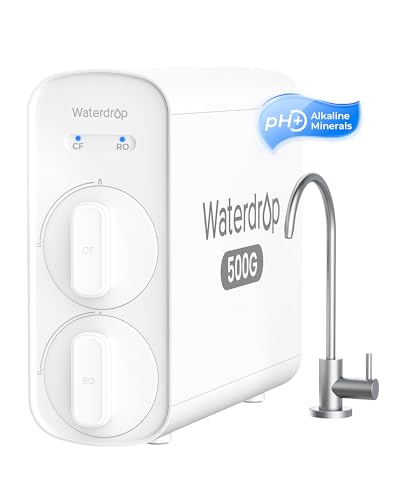
3. Waterdrop WD-T4-A
Designed for small-space efficiency, this NSF/ANSI 372 Certified 10-stage tankless system is ideal for apartments or crowded cabinets where a tank is a dealbreaker. With 450 GPD capacity and a 2:1 pure to drain ratio, it feels fast in daily use and wastes considerably less water than older designs, and it avoids the stale-tank taste that can develop when water sits.
- Pro: Tankless design saves space and delivers water on demand
- Pro: Strong efficiency with 2:1 pure to drain performance
- Con: Plug-in required, so you need an outlet under the sink
Skip it if you lack a dedicated outlet or prefer a non-electric system with fewer components.
4. Waterdrop G5P500A
This 8-stage alkaline system is a strong fit for busy households that want tankless convenience with steady flow. It offers a noticeable step up in daily capacity versus compact models and keeps the remineralization subtle and drinkable rather than salty, which our testers preferred for cooking and drinking water alike.
- Pro: Smooth alkaline taste with multi-stage polishing
- Pro: Tankless form keeps water fresh and cabinet footprint slim
- Con: Requires power, adding a bit of install planning
Skip it if you want the absolute highest output available or a fully non-electric traditional system.
5. Waterdrop G5P700A
With 700 GPD capacity, this alkaline mineral system is built for high-demand kitchens where several people fill bottles, cook, and make coffee throughout the day. It maintains the same clean, slightly sweet alkaline profile as the smaller Waterdrop models but recovers faster between uses, so you are not waiting on a slow trickle during peak hours.
- Pro: High daily capacity handles heavy household use with ease
- Pro: Tankless mineral filtration keeps taste consistent and fresh
- Con: Larger tankless chassis can still be tight in very small cabinets
Skip it if your household is small and you would not benefit from high-output performance.
6. Express Water ROALK10D
This 10-stage under-sink system with 100 GPD is the clear value play for first-time alkaline RO buyers. It focuses on fundamentals: thorough multi-stage filtration plus an alkaline stage to lift the flat RO taste, without pushing into premium pricing. For renters or owners who want alkaline water on a tighter budget, it delivers a lot of system for the money.
- Pro: Excellent value with 10 stages of filtration and alkaline enhancement
- Pro: Straightforward under-sink setup familiar to most DIY installers
- Con: More filter stages to track for replacement scheduling
Skip it if you want certified status or prefer a tankless, on-demand design.
7. iSpring RCC7AK-UV
This NSF 58 and 372 Certified 7-stage system adds a layer of reassurance for buyers concerned about biological contaminants, especially those on well water or older municipal lines. The LED UV filter runs alongside the alkaline remineralization stage, so you get both protection and improved taste in one cabinet-friendly package that retains the easy top-mounted faucet approach.
- Pro: Added LED UV stage for extra protection without chemicals
- Pro: Dual NSF certifications and proven alkaline filtration
- Con: Highest price among the tanked iSpring alkaline options
Skip it if you are on a trusted municipal supply and do not need UV, or want a tankless layout.
8. iSpring RO500AK
As an NSF 58 Certified 500 GPD alkaline system, this premium tankless option is for buyers who want top-tier certification, strong on-demand output, and refined taste without a storage tank. It delivers a clean, rounded alkaline finish and the convenience of continuous flow, making it feel more like a built-in appliance than a filter add-on.
- Pro: High-output tankless performance with certified filtration
- Pro: Fresh, on-demand alkaline water with no tank storage
- Con: Premium price is well above entry-level alternatives
Skip it if budget is the primary driver or you are comfortable with a traditional tanked system.
Buying Guide
Alkaline Remineralization vs. Filtration Depth
Alkaline RO should do two jobs: remove dissolved contaminants and then add back a balanced mineral profile to improve taste and mouthfeel. Look for systems that describe a dedicated alkaline stage after the membrane rather than vague mineral claims, and prioritize certified models where filtration performance is independently verified. Taste should be smooth and clean, not chalky or overly salty, and it should remain consistent over weeks, not just the first few days.
Tank vs. Tankless and Daily Capacity
Tank systems fit most budgets and work without power, but they occupy cabinet space and store filtered water. Tankless systems save space, keep water fresher, and often provide higher daily capacity and better efficiency, but they require an outlet. Match capacity to household size: moderate daily output is fine for one or two people, while larger families or heavy cooking use benefit from higher output so the system keeps up during back-to-back fills.
Installation, Efficiency, and Certification
Patented top-mounted faucets, clearly labeled tubing, and accessible filter housings make a real difference when you install and service the system. Efficiency matters too, especially the ratio of pure water to drain water, where higher pure-to-drain ratios waste less. Certifications are the most reliable shortcut for trust: relevant NSF/ANSI marks indicate the system has been tested to the standard it claims, which is more meaningful than unverified marketing language.
Our Verdict
Our top pick is the iSpring RCC7AK-BN for its proven balance of certified alkaline filtration, approachable price, and genuinely easier installation thanks to the top-mounted faucet design. It delivers the smooth, balanced taste most buyers expect from alkaline RO without the complexity or cost of premium tankless models. The budget pick is the Express Water ROALK10D, which brings 10-stage alkaline filtration and solid daily capacity for the lowest price in the group. Choose the Waterdrop WD-T4-A instead if you need a tankless footprint and higher efficiency with its strong pure-to-drain performance and space-saving design.
FAQ
Does alkaline RO make water healthier than standard RO?
Alkaline RO primarily improves taste and mouthfeel by adding minerals back after reverse osmosis. While many people prefer the smoother flavor and slightly higher pH, the core health benefit remains the reduction of common dissolved contaminants that RO provides.
Do I need a tankless system?
Not necessarily. Tankless is best if cabinet space is tight or you want fresher on-demand water and often better efficiency. A tank system is simpler, does not need power, and is usually more affordable if you have room under the sink.
Are certifications important?
Yes. Certifications to recognized NSF/ANSI standards indicate independent testing of materials and filtration claims, which helps you compare systems beyond marketing. If a system lists a certification, it has met specific requirements for that standard.
How often will I need to change filters?
Intervals depend on use and water quality, so follow the manufacturer schedule rather than a generic timeline. Systems with more stages will have more individual cartridges to track, while tankless models often use integrated filter packs that are quicker to swap but require an outlet.