Key takeaways
- Pro: Alkaline remineralization improves taste and balance while keeping filtration thorough
- Pro: Patented top-mounted faucet design simplifies installation and servicing
- Con: Six stages require keeping track of more filters over time
After living with under sink reverse osmosis systems through hard water, city chlorine, and well water with heavy dissolved solids, you learn quickly what actually matters day to day. The promise is simple: water that tastes clean straight from a dedicated faucet, without the flat bitterness of tap or the hassle of pitcher filters. The reality is that bad systems leak, waste cabinet space, deliver slow flow, or leave water tasting sterile and acidic.
The difference between a good and a great under sink RO comes down to a few practical details. Effective stage design and certified performance decide what gets removed, while thoughtful features like remineralization, leak detection, and a well-designed faucet determine how pleasant the water is to drink and how painless the system is to live with. Tank versus tankless, filtration balance, and service access matter far more than marketing claims.
Our top picks



As an Amazon Associate we earn from qualifying purchases at no extra cost to you.
Quick Picks
| Product | Best for | Price |
|---|---|---|
| iSpring RCC7AK-BN | Best Overall with Alkaline Remineralization | $234.99 |
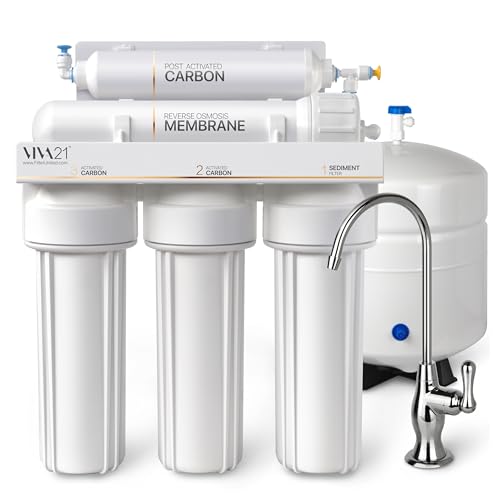
| VIVA21 5-Stage | Best Value Certified System | $169.99 |
| APEC ROES-50 | Best Simple 5-Stage Setup | $179.99 |
| iSpring RCC7AK-BLK | Best Alkaline System with Black Faucet | $249.99 |
| Waterdrop G3P600 | Best Tankless High Output | $429 |
| iSpring RCC7-BN | Best Classic High Capacity System | $219.96 |
| APEC ROES-PH75 | Best Alkaline Performance for the Price | $189.99 |
| GLACIER FRESH GFU03 | Best High Output with Integrated Tank | $219.98 |
How We Picked
We prioritized certification and real-world filtration balance over sheer stage count, favoring systems with credible NSF or WQA Gold Seal certification to NSF/ANSI standards. We then weighed daily output and form factor, comparing traditional tank systems against tankless and TankInside designs for flow, recovery, and cabinet space, and evaluated taste and pH handling including alkaline remineralization. Finally, we compared installation practicality, faucet quality, leak protection, and how easy it is to access and swap filters under a typical sink.
The 8 Best Under Sink Reverse Osmosis Systems in 2026
1. iSpring RCC7AK-BN
This system is built for buyers who want thoroughly filtered water that still tastes natural and smooth. The 6-stage design combines NSF Certified reverse osmosis filtration with a pH+ alkaline remineralization stage that restores a balanced, pleasant character without reintroducing dissolved solids you wanted removed. At 75 GPD it keeps up with daily drinking and cooking needs, and the patented top-mounted faucet design makes installation and future filter changes easier in tight cabinets.
- Pro: Alkaline remineralization improves taste and balance while keeping filtration thorough
- Pro: Patented top-mounted faucet design simplifies installation and servicing
- Con: Six stages require keeping track of more filters over time
Skip it if you prefer strictly unmineralized RO water or need the smallest possible tankless footprint.
2. VIVA21 5-Stage
An excellent fit for first-time RO buyers who want certified performance without overspending or overcomplicating maintenance. This 5-stage under sink system is WQA Gold Seal Certified to NSF/ANSI 58 and 372, which covers both filtration performance and lead-free materials, and it ships as a complete kit with a lead-free faucet, tank, and leak detector. Filtration is straightforward and effective for everyday tap issues like chlorine taste, odor, and dissolved solids, with a familiar tanked layout that is forgiving to install.
- Pro: WQA Gold Seal certification to NSF/ANSI 58 and 372 provides strong third-party assurance
- Pro: Complete kit with lead-free faucet and leak detector adds safety and value
- Con: Lacks an alkaline stage for those who prefer remineralized taste
Skip it if you specifically want pH-balanced alkaline water or a tankless design.
3. APEC ROES-50
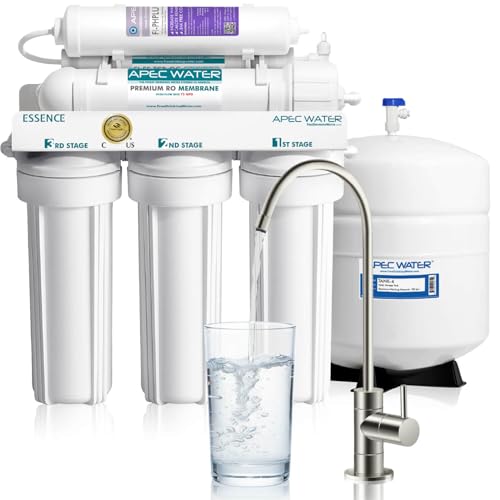
Ideal for households that value simplicity, reliability, and proven design over extra features. This 5-stage system at 50 GPD focuses on core RO filtration without remineralization, delivering clean, neutral-tasting water for drinking and cooking. The moderate output is well matched to tanked operation, which provides ready water on demand without needing a high-flow tankless system, and the overall layout is easy to understand for DIY installation and filter swaps.
- Pro: Straightforward 5-stage architecture is easy to maintain and troubleshoot
- Pro: Consistent performance for everyday chlorine, taste, and dissolved solids concerns
- Con: No alkaline remineralization and lower GPD than higher-output alternatives
Skip it if you want mineral-added taste or the fastest recovery for a large household.
4. iSpring RCC7AK-BLK
Designed for buyers who want the same polished filtration as the alkaline iSpring models but with a more design-forward kitchen look. This is an alkaline 6-stage system with pH+ remineralization and NSF/ANSI 58 certification, paired with a stylish black RO faucet that blends better with matte black and dark fixtures than standard brushed finishes. Filtration is comprehensive and taste is noticeably smooth and balanced, while build quality and faucet feel remain a step above basic kits.
- Pro: NSF/ANSI 58 certified with alkaline remineralization for balanced taste
- Pro: Stylish black faucet offers a premium look without compromising function
- Con: Premium finish and feature set comes at a higher price than similar alkaline models
Skip it if faucet aesthetics are not a priority and you prefer the lowest cost alkaline option.
5. Waterdrop G3P600
The pick for families and heavy users who are tired of waiting on a tank to refill. This tankless system delivers a 600 GPD output that provides strong, on-demand flow and frees up significant cabinet space compared to traditional tanked units. Without a tank to store water, the design also reduces stagnation and simplifies the under sink layout, while still offering thorough RO filtration for improved taste and clarity for drinking, coffee, and cooking.
- Pro: Tankless 600 GPD design offers fast flow and major space savings
- Pro: On-demand filtration helps keep water fresh and ready without tank storage
- Con: Higher upfront cost than tanked alternatives with similar stage counts
Skip it if you want the lowest upfront price or prefer a classic tanked system with lower initial cost.
6. iSpring RCC7-BN
A smart choice for buyers who want proven high-capacity RO without the added mineral stage. This NSF Certified 5-stage system at 75 GPD delivers strong daily output with a clean, crisp RO taste that many purists prefer, and it retains the patented top-mounted faucet design that makes mounting and filter access easier than older bracket-heavy layouts. The brushed nickel faucet finish is neutral enough to match most sinks and resists showing water spots.
- Pro: 75 GPD output with classic 5-stage filtration for reliable daily use
- Pro: Patented top-mounted faucet and brushed nickel finish ease installation and blend in easily
- Con: No remineralization stage, so water will taste like traditional RO
Skip it if you want alkaline-balanced water or a tankless high-flow system.
7. APEC ROES-PH75
Built for shoppers who want alkaline water on a sensible budget. This 6-stage alkaline system at 75 GPD layers remineralization over solid RO filtration to produce smoother, less acidic water that is more pleasant for all-day drinking. Output is strong for a tanked system, so recovery keeps up with regular family use, and the six-stage approach remains familiar for anyone who has serviced an under sink RO before.
- Pro: Alkaline 6-stage design with 75 GPD output balances taste and capacity
- Pro: Strong value compared to other remineralizing systems
- Con: Extra stage adds a bit more maintenance versus a basic 5-stage unit
Skip it if you prefer pure RO taste or want a tankless footprint to maximize cabinet space.
8. GLACIER FRESH GFU03
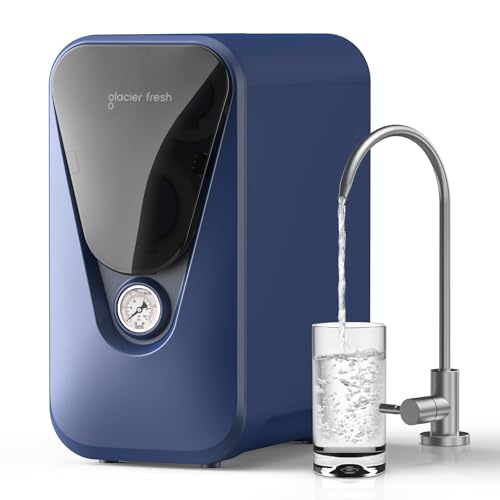
Perfect for large households that need high flow but still want stored water on hand. This 800 GPD system uses a TankInside design that integrates storage into a compact form, giving you fast, tank-like availability with less wasted space than a separate bulky tank. The high output helps the system keep up during peak times like filling bottles and cooking, while the overall footprint remains tidy under the sink.
- Pro: 800 GPD output with TankInside provides fast water with compact storage
- Pro: Well suited to higher demand without moving to a full tankless setup
- Con: Integrated high-output design is more complex than basic tanked systems
Skip it if you have light use and would be better served by a simpler, lower-output kit.
Buying Guide
Tank vs. Tankless vs. TankInside and What GPD Really Means
Traditional tank systems store filtered water so you have immediate flow even if GPD is modest, which works well for most families. Tankless systems skip storage to save space and keep water fresh on demand, but they need higher GPD to deliver satisfying flow at the faucet, which is why you see much higher GPD figures there. TankInside tries to split the difference with integrated storage that maintains quick availability without a separate large tank, making it a practical compromise for tight cabinets and high demand.
Stages, Remineralization, and Taste
Five-stage RO already covers sediment, carbon, and membrane filtration for broad contaminant reduction and better taste and odor. A sixth alkaline or pH+ stage does not improve contaminant removal but adds back minerals to soften the flat, slightly acidic character of pure RO water, which many people prefer for everyday drinking. Choose pure RO if you want the cleanest, most neutral base for cooking and want to mineralize yourself, and choose alkaline if you want smoother taste straight from the faucet.
Certification, Faucet Quality, and Serviceability
Certification matters because it verifies claims through independent testing. Look for NSF certification or WQA Gold Seal certification to relevant NSF/ANSI standards and note whether it covers filtration performance, material safety, or both. Also weigh the faucet finish and mounting style, leak detection, and how easily you can reach filters. A top-mounted faucet and clear filter access can turn a frustrating install into a quick weekend project and make routine service far more likely to get done on time.
Our Verdict
For most buyers, the iSpring RCC7AK-BN is the top pick because it pairs NSF Certified filtration with well-tuned alkaline remineralization and a genuinely easier top-mounted faucet design at a reasonable price. On a tighter budget, the VIVA21 5-Stage stands out with WQA Gold Seal certification to NSF/ANSI 58 and 372, a lead-free faucet and leak detector included, all for well under similar kits. If cabinet space and peak flow are your priorities, the Waterdrop G3P600 wins despite its higher price thanks to its tankless 600 GPD on-demand performance.
FAQ
Do I need an alkaline remineralization stage?
Not for safety, but many people prefer the taste. Pure RO water is clean but can taste flat or slightly acidic, while an alkaline stage adds back minerals for a smoother, more balanced flavor that is nicer for all-day drinking.
How much maintenance does an under sink RO require?
Expect periodic filter and membrane changes and occasional sanitizing, with tank systems also needing a quick tank check. Systems with fewer stages and accessible mounts are generally quicker to service and easier to keep on schedule.
Will a reverse osmosis system remove lead and improve taste?
Certified RO systems are designed to reduce dissolved solids and common tap water issues including lead, chlorine taste, and odor when properly installed and maintained. Certification to NSF/ANSI standards is the best way to verify those claims beyond marketing.
Is a tankless RO better than a traditional tank system?
Tankless saves space and delivers water on demand without storing it, which helps freshness and flow if GPD is high. Traditional tanks cost less upfront and provide ready water even at modest GPD, so they remain a solid choice for average households.