Key takeaways
- Window compatibility: Confirm that the unit is made for sliding or crank-out windows, or choose a portable model with a window-vent kit. A standard window unit usually will not fit a casement opening safely.
- Cooling capacity: Match BTUs to room size, but also account for direct sun, high ceilings, poor insulation, and kitchens. Oversizing can create short cycling and a clammy indoor feel.
- Installation: Look for included panels, mounting hardware, and clear dimensions. Casement installations may need a support bracket, a rigid insert, or professional help for a weather-tight seal.
- Efficiency and noise: Inverter compressors can reduce cycling and energy waste, while sleep modes and lower fan settings are valuable in bedrooms or quiet workspaces.
- Controls and maintenance: Remote controls, timers, auto-restart, washable filters, dehumidification, and smart-home support can make daily use easier, especially in rooms that are not occupied all day.
What's inside
Cooling a room with a casement window can be surprisingly difficult. Most window air conditioners are designed for double-hung windows, while crank-out windows leave little room for a conventional unit and often require a secure, weather-resistant installation approach. Add sun exposure, limited floor space, and outdoor noise, and choosing the right setup becomes more than a matter of matching BTUs.
This guide compares leading options for bedrooms, apartments, home offices, and other everyday spaces. It separates true casement-window models from portable and standard window alternatives, while considering cooling capacity, controls, operating noise, energy use, installation flexibility, and practical comfort for outdoor-living-minded homes where airflow and fresh-air access matter.
As an Amazon Associate we earn from qualifying purchases.



How to Choose a Casement Window Air Conditioner (2026)
- Window compatibility: Confirm that the unit is made for sliding or crank-out windows, or choose a portable model with a window-vent kit. A standard window unit usually will not fit a casement opening safely.
- Cooling capacity: Match BTUs to room size, but also account for direct sun, high ceilings, poor insulation, and kitchens. Oversizing can create short cycling and a clammy indoor feel.
- Installation: Look for included panels, mounting hardware, and clear dimensions. Casement installations may need a support bracket, a rigid insert, or professional help for a weather-tight seal.
- Efficiency and noise: Inverter compressors can reduce cycling and energy waste, while sleep modes and lower fan settings are valuable in bedrooms or quiet workspaces.
- Controls and maintenance: Remote controls, timers, auto-restart, washable filters, dehumidification, and smart-home support can make daily use easier, especially in rooms that are not occupied all day.
The Best Casement Window Air Conditioner (2026)s Reviewed
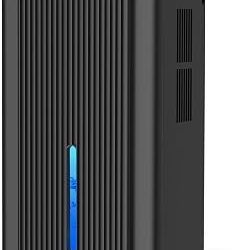
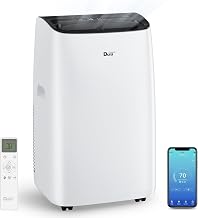
Air Choice 10,000 BTU Portable AC
The Air Choice portable unit is a practical workaround when a casement window cannot accept a conventional air conditioner. Its portable format, remote, sleep mode, timer, fan, and dehumidifier functions suit bedrooms and apartments, while the vent hose can be adapted to a properly sealed casement insert. It uses floor space and may be louder than a permanently mounted unit, but installation is generally more flexible.
BLACK+DECKER 12,000 BTU Window AC
The BLACK+DECKER BWAC12WTB offers substantial cooling for spaces up to roughly 550 square feet, with three cooling speeds, fan-only operation, and a remote. It is better suited to a traditional double-hung window than a crank-out design, so casement-window shoppers should treat it as an alternative only if they have a compatible opening or a carefully engineered installation solution.
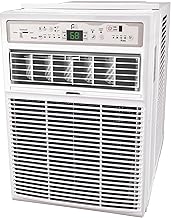
Perfect Aire 10,000 BTU Casement AC
Perfect Aire’s 10,000 BTU casement model is the most directly targeted option in this group. Its sliding/crank-out window design, digital display, timer, and Follow Me remote function make it a strong candidate for a medium-size room, provided the opening meets its listed height, width, and depth requirements. Measure the window and surrounding frame before ordering.
ELEMENT 10,000 BTU Casement AC
The ELEMENT ESC10BE is another purpose-built casement window unit with capacity suited to many bedrooms, offices, and living areas. Its main advantage is a design intended for the narrow, vertical profile of a crank-out window; buyers should still verify mounting requirements, included hardware, and the exact window dimensions for their home.
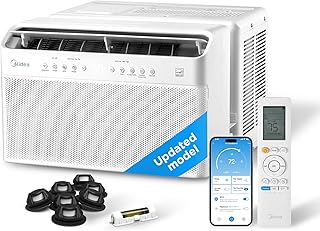
Midea 10,000 BTU U-Shaped Smart Inverter AC
Midea’s U-shaped unit is known for a design that preserves some open-window flexibility and uses inverter technology to moderate compressor output. Alexa and Google Assistant compatibility can simplify scheduling, and its advertised coverage fits rooms around 450 square feet. However, the U-shaped frame is not automatically casement-compatible, so it should be considered only for an appropriate window configuration or as a portable-style alternative through a separate setup.
Frequently Asked Questions
Can a regular window air conditioner fit a casement window?
Usually not. Standard units are built to sit between the upper and lower sashes of a double-hung window. A casement window opens outward, so it generally needs a dedicated casement model or a portable air conditioner vented through a sealed panel.
Are casement air conditioners difficult to install?
They can be more involved than standard window units because the opening is tall and narrow. Follow the manufacturer’s instructions, support the unit correctly, seal gaps against rain and hot air, and consider professional installation if the frame or exterior access is challenging.
What size air conditioner is best for a 450-square-foot room?
A 10,000 BTU model is commonly appropriate for a room around that size, but conditions matter. Strong afternoon sun, multiple occupants, heat-producing appliances, or weak insulation may increase the required capacity, while a shaded, well-insulated room may need less.
Is a portable AC better than a casement window unit?
It depends on the priority. A portable model is easier to reposition and can work with many casement windows, while a dedicated casement unit usually leaves more floor space available and may provide a cleaner permanent installation. Portable units also require careful hose sealing and condensate management.
Final Thoughts
For a true crank-out window, the Perfect Aire and ELEMENT casement models are the most straightforward starting points. Choose the Air Choice portable unit when installation flexibility matters most, and consider the Midea for a compatible window setup where quieter inverter operation and smart controls are especially valuable.