
Key takeaways
- Divide before you buy. Estimate honestly how many times per week you will use the thing, multiply by 156 for three years, and divide the price. If the result exceeds $2 a session, you are buying furniture.
- Count the exercises, not the features. A bench that supports incline press, decline crunches, seated curls, and single-arm rows earns its footprint. A machine locked to one movement pattern rarely does.
- Check the resale floor. Steel plates, kettlebells, and Concept2 rowers hold 60–80% of their value on the used market. Anything with a screen and a subscription tends to collapse toward zero, which quietly doubles its real cost per session.
- Measure your ceiling and your floor. Overhead presses need about 24 inches of clearance above your reach, and rowers need a 9-foot runway. Apartment dwellers should also weigh whether the downstairs neighbor will tolerate deadlifts on a wood subfloor.
- Buy the boring thing first. Dumbbells, a bench, and a bar cover roughly 80% of a well-designed strength program. Specialty gear should be the fourth purchase, never the first.
What's inside
A gym membership at $52 a month costs $1,872 over three years, and that figure assumes you never miss leg day, never pay an annual maintenance fee, and never drive more than a mile to get there. Home equipment gets judged on a sticker price instead, which is why a $429 pair of dumbbells feels extravagant and a $624-a-year treadmill contract feels normal. The math is backwards. The only number that matters is what a piece of gear costs each time you actually use it.
So that is the metric used here. Every pick below is scored on cost per session: street price divided by a realistic number of workouts, assuming three years of ownership at the frequency the equipment genuinely invites. A rowing machine you climb onto four times a week amortizes fast. A cable tower you use twice a month does not, no matter how good the reviews are. Six products, six honest divisions, and one clear winner on pure value that costs less than a protein bar.
As an Amazon Associate we earn from qualifying purchases at no extra cost to you. Product prices and availability are accurate as of the date shown and are subject to change.

#1 Pick

#2 Pick

#3 Pick

#4 Pick

#5 Pick

#6 Pick
#7 Pick
As an Amazon Associate we earn from qualifying purchases at no extra cost to you. Product prices and availability are accurate as of the date shown and are subject to change.
#1 Pick
Quick Comparison
| Product | Typical Price | Assumed Use (3 yrs) | Cost Per Session | Best For |
|---|---|---|---|---|
| Bowflex SelectTech 552 Adjustable Dumbbells | $429 | 3×/week — 468 sessions | $0.92 | Full-body strength in one square foot |
| Concept2 RowErg | $990 | 4×/week — 624 sessions | $1.59 | Serious conditioning that lasts decades |
| FLYBIRD Adjustable Weight Bench | $160 | 3×/week — 468 sessions | $0.34 | Unlocking every pressing angle |
| TRX All-in-One Suspension Trainer | $170 | 2×/week — 312 sessions | $0.54 | Travel, small spaces, core work |
| Iron Gym Total Upper Body Workout Bar | $30 | 3×/week — 468 sessions | $0.06 | Pull-ups without drilling holes |
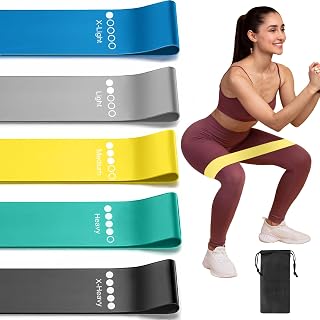
| Fit Simplify Resistance Loop Band Set | $25 | 3×/week — 468 sessions | $0.05 | Warm-ups, rehab, glute activation |
How to Choose
- Divide before you buy. Estimate honestly how many times per week you will use the thing, multiply by 156 for three years, and divide the price. If the result exceeds $2 a session, you are buying furniture.
- Count the exercises, not the features. A bench that supports incline press, decline crunches, seated curls, and single-arm rows earns its footprint. A machine locked to one movement pattern rarely does.
- Check the resale floor. Steel plates, kettlebells, and Concept2 rowers hold 60–80% of their value on the used market. Anything with a screen and a subscription tends to collapse toward zero, which quietly doubles its real cost per session.
- Measure your ceiling and your floor. Overhead presses need about 24 inches of clearance above your reach, and rowers need a 9-foot runway. Apartment dwellers should also weigh whether the downstairs neighbor will tolerate deadlifts on a wood subfloor.
- Buy the boring thing first. Dumbbells, a bench, and a bar cover roughly 80% of a well-designed strength program. Specialty gear should be the fourth purchase, never the first.
Top Picks Reviewed
Bowflex SelectTech 552 Adjustable Dumbbells
Each dumbbell dials from 5 to 52.5 pounds in 2.5-pound increments up to 25, replacing fifteen fixed pairs and about 40 linear feet of rack space. That granularity is the real value: small jumps let you actually progress on lateral raises and skull crushers instead of stalling for months. The dial mechanism demands respect, though. It only adjusts while the weight sits in its cradle, and dropping a loaded 552 from lockout will crack the plastic housing. Treat them gently and they handle every press, row, curl, and lunge you can name for under a dollar a workout.
Concept2 RowErg
The highest sticker price here and, over a long enough horizon, the cheapest cardio in existence. Concept2 machines routinely log 10,000+ hours with nothing more than chain oil and an occasional bungee replacement, and the company still sells parts for models built two decades ago. Stretch ownership to ten years and cost per session drops to roughly $0.48. The performance monitor reports watts, split times, and stroke rate, which turns vague effort into data you can chase. Downsides: it needs 9 feet of floor, and the drive-phase whoosh is audible through thin walls.
FLYBIRD Adjustable Weight Bench
At $160, this is the highest-leverage $160 in the entire list, because a bench multiplies the value of dumbbells you already own. Six back positions from decline through full upright, a 700-pound rated capacity, and a folding frame that slides under a bed or behind a door. The pad is firm rather than plush and the seat can slip slightly during heavy incline work, so brace with your feet. For a third of a dollar per session it converts a dumbbell-only setup into something resembling a real gym.
TRX All-in-One Suspension Trainer
Two nylon straps, adjustable handles, and a door anchor that packs into a bag smaller than a loaf of bread. Bodyweight rows, chest presses, pistol-squat progressions, and fallouts all load through the same 1.5 pounds of hardware, and difficulty scales by changing your foot position rather than adding plates. It shines for core and for anyone who travels. It is less useful for building a heavy squat, and pressing movements feel awkward until you have practiced the setup a few times.
Iron Gym Total Upper Body Workout Bar
Six cents a session. The bar wedges into a standard doorframe using leverage, no screws, and supports up to 300 pounds for pull-ups, chin-ups, and hanging leg raises. Popped off the frame it doubles as a push-up and dip station on the floor. Check your trim first: ornate or narrow molding can prevent a flush fit, and painted frames sometimes scuff. Nothing else on this list delivers vertical pulling this cheaply.
Fit Simplify Resistance Loop Band Set
Five latex loops spanning roughly 2 to 30 pounds of tension, plus a carry pouch. Nobody builds a physique with these alone, and that is not the point. They handle hip and shoulder warm-ups, banded glute bridges, lateral walks, and post-injury rehab work that heavy iron cannot touch. Expect 18 to 24 months of life from the heaviest band before it thins out. At a nickel per session, replacement is a non-event.
Frequently Asked Questions
What is the minimum setup that actually builds muscle?
Adjustable dumbbells, an adjustable bench, and a pull-up bar. That trio totals about $619 and covers horizontal and vertical pressing, both pulling planes, hinges, squats, and every isolation lift worth doing. Combined cost per session across three years of thrice-weekly training: roughly $1.32.
Are adjustable dumbbells worth nearly ten times the price of bands?
Yes, if you intend to get stronger rather than just stay mobile. Progressive overload requires measurable load increases, and bands deliver inconsistent, non-linear tension that is difficult to log. Bands are the best warm-up tool per dollar; dumbbells are the best strength tool per dollar.
How much space do I really need?
An 8-by-6-foot area handles dumbbells, a folding bench, and suspension work comfortably. Add the rower and you need a dedicated 9-by-4-foot lane, though it can stand vertically between sessions if your ceiling clears about 7 feet.
Should I buy used?
For anything made of steel, absolutely — plates, kettlebells, and benches are nearly indestructible and often sell at half price. Be more careful with adjustable dumbbells, where the selector mechanism is the failure point, and inspect rower chains and flywheels before handing over cash.
Final Thoughts
The cheapest gear here is not the best gear, and the best gear is not the cheapest per session — that tension is the whole exercise. Bands and a doorway bar cost eleven cents a workout combined and belong in every home, but they will not add 40 pounds to your bench. The dumbbell-and-bench pairing at $1.26 per session is the value sweet spot, the purchase that changes what your training can look like. And if you row four mornings a week for a decade, the RowErg quietly becomes the least expensive thing in this article. Pick based on the workouts you will genuinely do, run the division yourself, and let the number decide.
FAQ
What is the minimum setup that actually builds muscle?
Are adjustable dumbbells worth nearly ten times the price of bands?
How much space do I really need?
Should I buy used?
8 Best Gym Mats for Home: Rubber vs Foam Picks for Any Floor
Best gym mat for home choices come down to material density and...
8 Best Rowers for Home Gym: Air, Magnetic and Water Compared
Best rowers for home gym shortlists usually collapse once someone measures the...
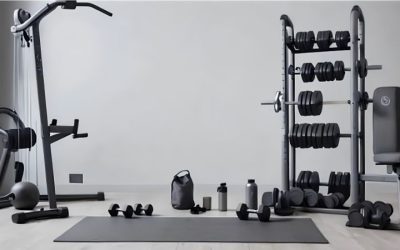
8 Best Weight Home Gyms: 6 All-in-One Machines for Small Rooms
Best weight home gym decisions come down to two numbers before brand...
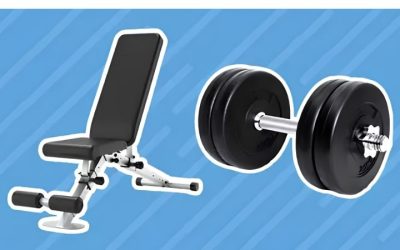
8 Best Home Gym Equipment for Beginners: The Starter Setup
Best home gym equipment for beginners is not a machine – it...
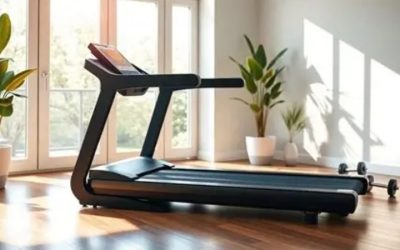
Best Treadmills for Home Gym: 5 Picks by Deck and Motor
Best treadmills for home gym decisions come down to two specifications and...
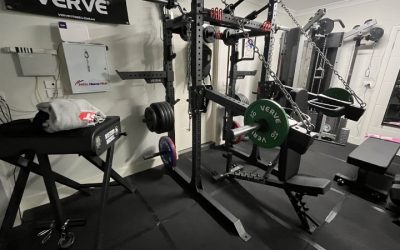
8 Best Home Gym Compact Setups: 6 Space-Saving Picks Ranked
Best home gym compact claims usually quote a stored footprint and stay...
Best Adjustable Bench for Home Gym: 5 Picks Ranked by Use
Best adjustable bench for home gym decisions turn on three numbers most...
Best Cable Machine for Home Gym: 5 Picks and Pulley Ratios
Best cable machine for home gym shortlists collapse quickly once you convert...
8 Best Cable Machines for Home Gym: 5 Types and Their Limits
Best cable machines for home gym use are not one product category...
8 Best Home Gym Setups: Floors, Ceilings, Noise and Layout
Best home gym setup guides talk about equipment and skip the room,...
Write Your Review
No reviews yet. Be the first to share your experience!