Key takeaways
- Start at the source, not the symptom: Place the unit on the lowest level where water actually enters, usually the basement or the room adjoining an outdoor slab. Drying the source starves the upper floors of the moisture feeding them.
- Respect the stairwell: Position the machine within sight of the stair opening or a central hallway so return air circulates instead of pooling. A dehumidifier tucked behind boxes in a far corner dries a three-foot radius and little else.
- Plan drainage before you plan aesthetics: A gravity drain hose running to a floor drain, sump, or exterior grade turns a tank you empty twice a day into an appliance you ignore for months. Basements and porch-adjacent rooms almost always beat a second-floor closet for this reason.
- Match capacity to volume, not floor area: Marketing square footage assumes eight-foot ceilings and closed doors. Open stairwells, vaulted great rooms, and sunrooms with glass on three sides need a 34-pint class unit even in a modest footprint.
- Give it breathing room and stable temperature: Leave eight to twelve inches on the intake and exhaust sides, and avoid unconditioned spaces that swing below 41°F unless the model includes automatic defrost.
What's inside
Anyone who spends their days building screened porches, sunrooms, and covered patios learns one thing fast: moisture does not stay where you left it. A two-story house behaves like a chimney. Warm, damp air pulled in from a crawlspace, a walk-out basement, or a sliding door left open on a muggy afternoon rises through stairwells and floor registers until it collects upstairs, where it fogs windows, curls trim, and leaves closets smelling like a tarp that never dried. Most homeowners buy a capable machine, park it in the wrong room, and conclude the machine is the problem.
This guide fixes the placement question first, then matches it to hardware. Below you will find the units worth considering for multi-level homes, a short checklist for deciding which floor and which wall to claim, and honest notes on drainage, noise, and coverage claims. If your damp zone touches an outdoor transition space, a sunroom, a garage, an enclosed porch, or a basement door to the yard, pay close attention to the continuous-drain section.
As an Amazon Associate we earn from qualifying purchases.




How to Choose a Place To Put Dehumidifier In 2 Story House (2026)
- Start at the source, not the symptom: Place the unit on the lowest level where water actually enters, usually the basement or the room adjoining an outdoor slab. Drying the source starves the upper floors of the moisture feeding them.
- Respect the stairwell: Position the machine within sight of the stair opening or a central hallway so return air circulates instead of pooling. A dehumidifier tucked behind boxes in a far corner dries a three-foot radius and little else.
- Plan drainage before you plan aesthetics: A gravity drain hose running to a floor drain, sump, or exterior grade turns a tank you empty twice a day into an appliance you ignore for months. Basements and porch-adjacent rooms almost always beat a second-floor closet for this reason.
- Match capacity to volume, not floor area: Marketing square footage assumes eight-foot ceilings and closed doors. Open stairwells, vaulted great rooms, and sunrooms with glass on three sides need a 34-pint class unit even in a modest footprint.
- Give it breathing room and stable temperature: Leave eight to twelve inches on the intake and exhaust sides, and avoid unconditioned spaces that swing below 41°F unless the model includes automatic defrost.
The Best Place To Put Dehumidifier In 2 Story House (2026)s Reviewed
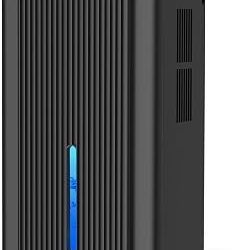
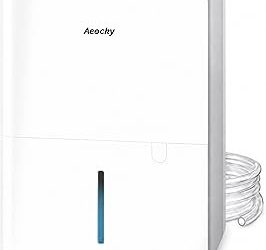
4500 Sq. Ft Quilt Compressor Dehumidifier with Drain Hose
The largest coverage rating in this group, which makes it the sensible ground-floor anchor for a home with an open stair, a walk-out basement, or a big sunroom pulling humidity through the house. Intelligent humidity control plus the included hose means you set a target once and let it run as a whole-home defense.
34 Pint/D 2500 Sq.Ft Dehumidifier with 3 Modes
At a rated 40dB, this is the one to put near a stairwell or a bedroom hallway on the second floor without listening to it all night. Three modes and a 24-hour timer let you dry aggressively during the day and idle back after bedtime.
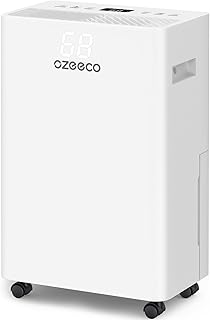
ozeeco Dehumidifier with Ionizer and Child Lock
Ultra-quiet operation, a child lock, and RV compatibility make this the flexible pick for finished basements, family rooms, and enclosed porches where the unit lives in plain view. The ionizer is a bonus rather than a reason to buy, but the 0.45-gallon tank paired with hose drainage covers both temporary and permanent placements.
KNKA 2500 Ft² 34 Pint Dehumidifier
A clean, white, no-drama compressor unit with a laundry drying mode that earns its keep in basement utility rooms and mudrooms off the patio. Intelligent humidity control holds a setpoint well, which matters when the machine is out of sight downstairs.
Waykar 34 Pints 2000 Sq. Ft. Energy Star Dehumidifier
Automatic defrost and Energy Star certification make this the strongest candidate for a cool basement or an unheated garage bay that stays damp into late fall. The 0.66-gallon tank is the largest here, useful before you commit to a permanent hose route.
Frequently Asked Questions
Should the dehumidifier go upstairs or downstairs?
Downstairs first, in the room where moisture originates. If upstairs humidity still reads above 55% after a week of basement operation, add a second smaller unit rather than relocating the main one.
Do I need two dehumidifiers in a two-story house?
Often yes, if the floors have separate HVAC zones or doors stay closed. One capable unit per level with a shared setpoint of 45 to 50% is more effective than one oversized machine fighting closed doors.
Can I run the drain hose outdoors?
Yes, as long as the discharge point sits below the unit for gravity flow and the line cannot freeze. For upper floors without a nearby drain, use a model with a built-in pump or keep the tank routine.
What humidity level should I target?
Between 45 and 50% year-round. Below 40% you invite dry joints in wood flooring and trim; above 60% you invite mold on the shaded, poorly ventilated surfaces closest to your outdoor transitions.
Final Thoughts
For most two-story homes, the 4500 Sq. Ft Quilt Compressor unit downstairs handles the source load, while the 40dB 34 Pint/D model earns the upstairs hallway spot where noise matters most. If your damp zone runs cool, whether that is an unheated basement or a garage off the patio, the Waykar Energy Star unit with automatic defrost is the safer long-season choice.