Key takeaways
- Compressor vs. evaporative: A compressor unit removes heat and humidity and needs a hose to the outside. An evaporative cooler pushes air across a wet pad, adds moisture, and needs no venting. In dry heat or a breezy covered patio, evaporative wins. In muggy Gulf Coast air or a sealed bedroom, only a compressor will make you comfortable.
- BTU honesty and square footage: Treat headline BTU numbers as a ceiling, not a promise. ASHRAE ratings run higher than the newer SACC standard, so a unit advertised at 8,000 BTU may perform closer to 5,000. Match the stated coverage area to your actual room, then subtract for west-facing glass, uninsulated walls, or a vaulted ceiling.
- Venting logistics: Before buying a compressor model, confirm you have somewhere for the exhaust hose to go — a sash window, a sliding door with a panel insert, or a dryer-style wall port. Keep the hose short and straight; every extra foot of coiled duct dumps heat back into the room.
- Water and drainage habits: Evaporative coolers ask you to refill a tank, typically every several hours on high. Compressor units collect condensate and either self-evaporate it or need a drain line. Decide which chore you will actually keep up with, especially in a space you visit rather than live in.
- Noise, timers, and remote control: Anything you sleep beside should have a low fan speed, a sleep mode that eases off overnight, and a timer so it is not running at dawn. A remote matters more than it sounds when the unit sits across a porch or under a workbench.
What's inside
Anyone who spends real time in the in-between spaces of a house knows the problem: a screened porch that turns into a kiln by two in the afternoon, a converted garage the ductwork never reached, a camper or bunk room where the only airflow is whatever the window offers. Central air rarely helps out there, and window units are a non-starter when the opening is a sliding screen, a jalousie, or nothing at all. That leaves portable cooling, and once the budget caps at roughly two hundred dollars, the field splits into two very different machines that both get called “portable air conditioners.”
This guide sorts them out from a practical, outdoor-living perspective. You will see where a water-fed evaporative cooler genuinely outperforms a compressor unit, where it will disappoint you, how to read BTU claims without getting oversold, and which models hold up in porches, workshops, studios, and bedrooms. Below are the current picks worth your attention, followed by a buying framework and answers to the questions that come up most.
As an Amazon Associate we earn from qualifying purchases.



How to Choose a Portable Air Conditioner Under $200 (2026)
- Compressor vs. evaporative: A compressor unit removes heat and humidity and needs a hose to the outside. An evaporative cooler pushes air across a wet pad, adds moisture, and needs no venting. In dry heat or a breezy covered patio, evaporative wins. In muggy Gulf Coast air or a sealed bedroom, only a compressor will make you comfortable.
- BTU honesty and square footage: Treat headline BTU numbers as a ceiling, not a promise. ASHRAE ratings run higher than the newer SACC standard, so a unit advertised at 8,000 BTU may perform closer to 5,000. Match the stated coverage area to your actual room, then subtract for west-facing glass, uninsulated walls, or a vaulted ceiling.
- Venting logistics: Before buying a compressor model, confirm you have somewhere for the exhaust hose to go — a sash window, a sliding door with a panel insert, or a dryer-style wall port. Keep the hose short and straight; every extra foot of coiled duct dumps heat back into the room.
- Water and drainage habits: Evaporative coolers ask you to refill a tank, typically every several hours on high. Compressor units collect condensate and either self-evaporate it or need a drain line. Decide which chore you will actually keep up with, especially in a space you visit rather than live in.
- Noise, timers, and remote control: Anything you sleep beside should have a low fan speed, a sleep mode that eases off overnight, and a timer so it is not running at dawn. A remote matters more than it sounds when the unit sits across a porch or under a workbench.
The Best Portable Air Conditioners Under $200 (2026) Reviewed
4-in-1 Evaporative Air Cooler with 1500ML Tank and USB-C
This is the most genuinely portable option here, running off USB-C so it can work from a power bank on a campsite table or a shaded deck rail. The 1500ml tank, three speeds, and two mist modes deliver a noticeable chill within a few feet of the outlet, making it a personal cooler rather than a room cooler — set expectations accordingly and it earns its place.
24″ Windowless 3-in-1 Swamp Cooler
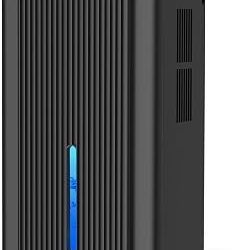
The tower footprint, 2-gallon reservoir, and 120-degree oscillation make this the strongest pick for spaces with no venting option at all: three-season rooms, garage bays, finished basements. It runs quietly enough for evening use and the 15-hour timer means one fill can carry an entire workday, though humid climates will blunt its effect.
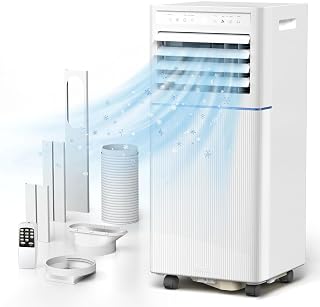
Garvee 14000 BTU 3-in-1 Portable AC
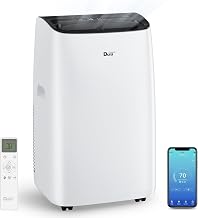
The heavy hitter of the group, rated for roughly 750 square feet with cooling, dehumidifier, and fan modes plus a Follow Me remote that reads temperature where you are sitting. If you need real refrigerant-based cooling for an open-plan room or a large sunroom with a window nearby, this is the one to size up to.
COSTWAY 8000 BTU Portable AC
A tidy, no-drama unit for bedrooms and offices up to about 230 square feet, with a sleep mode and 24-hour timer that make overnight running painless. The included window kit installs quickly, and COSTWAY’s 10,000 BTU sibling is worth a look if your room pushes past 300 square feet.
Antarctic Star 8000 BTU 4-in-1 AC
Rated at 8,000 BTU ASHRAE for spaces up to 350 square feet, this one leans on a genuinely simple install and quiet operation, with dehumidifier and fan modes for shoulder-season days when you want moisture control more than cold air. A sensible middle ground for studios and apartment bedrooms.
Frequently Asked Questions
Do windowless portable air conditioners really work?
Evaporative models work, but through a different mechanism — they cool by adding humidity, so they shine in dry heat and open or well-ventilated spaces. They cannot lower the temperature of a sealed humid room the way a compressor unit does.
Can I use one of these on a covered patio?
Evaporative coolers are well suited to covered outdoor areas since they need no exhaust and benefit from fresh air. Compressor units are designed for enclosed rooms and will fight a losing battle outdoors.
How often will I be refilling the water tank?
Expect a few hours from a small personal tank and most of a day from a 2-gallon reservoir, depending on fan speed and how dry the air is. Cold water or a few ice cubes sharpens the output.
Will a unit this affordable dehumidify a damp basement?
A compressor model with a dedicated dry mode will pull meaningful moisture during normal operation, though it is not a substitute for a standalone dehumidifier in a persistently wet space. Evaporative coolers do the opposite and should be avoided there.
Final Thoughts
For most readers cooling a bedroom, studio, or home office, the Antarctic Star 8000 BTU strikes the best balance of coverage, quiet running, and easy setup, while the Garvee 14000 BTU is the pick when you need to cool a genuinely large or open room. If your space has no window to vent through, the 24″ windowless tower cooler is the most capable ventless option in this price range.