Key takeaways
- Cooling method: Evaporative coolers can provide a noticeable personal breeze without a window, but they add moisture and are most effective in dry climates. Compressor ACs remove heat more aggressively but require an exhaust route.
- Room size: Match the stated coverage to the space you actually occupy. Compact units suit bedside or desk cooling, while 12,000-BTU models are intended for larger rooms when properly vented.
- Humidity: Avoid relying on a water-based cooler in already humid weather. A fan may feel more comfortable than an evaporative unit when indoor moisture is high.
- Ventilation: A windowless compressor AC cannot operate as intended with the hot-air hose left indoors. Consider a door vent, purpose-built wall opening, or another safe exhaust solution.
- Convenience: Look for oscillation, multiple fan speeds, timers, remote control, accessible water tanks, low-noise operation, and casters if you plan to move the unit frequently.
What's inside
Cooling a room with no usable window creates a practical dilemma: true portable air conditioners need to release hot air outdoors, while windowless evaporative coolers rely on water, airflow, and favorable humidity. The right choice depends less on the word “AC” in a listing and more on your room size, climate, ventilation, and tolerance for setup.
This guide compares compact evaporative coolers for bedrooms and small spaces with genuine compressor-based portable units that include window exhaust kits. From an outdoor-living perspective, the same principles apply indoors: manage heat, moisture, airflow, and power realistically before choosing your equipment.
As an Amazon Associate we earn from qualifying purchases.


How to Choose a/an Portable Air Conditioner Without Window Access (2026)
- Cooling method: Evaporative coolers can provide a noticeable personal breeze without a window, but they add moisture and are most effective in dry climates. Compressor ACs remove heat more aggressively but require an exhaust route.
- Room size: Match the stated coverage to the space you actually occupy. Compact units suit bedside or desk cooling, while 12,000-BTU models are intended for larger rooms when properly vented.
- Humidity: Avoid relying on a water-based cooler in already humid weather. A fan may feel more comfortable than an evaporative unit when indoor moisture is high.
- Ventilation: A windowless compressor AC cannot operate as intended with the hot-air hose left indoors. Consider a door vent, purpose-built wall opening, or another safe exhaust solution.
- Convenience: Look for oscillation, multiple fan speeds, timers, remote control, accessible water tanks, low-noise operation, and casters if you plan to move the unit frequently.
The Best Portable Air Conditioner Without Window Access (2026)s Reviewed
25.3-Inch Windowless Evaporative Air Cooler
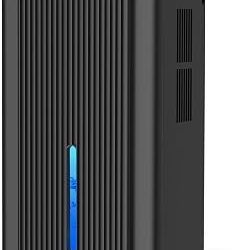
This tall evaporative cooler is a sensible option for a bedroom, enclosed porch, or dry-climate living area where window access is unavailable. Its 90-degree oscillation, four modes, remote, timer, and included ice packs make it easier to direct cooling where people are sitting, although it should not be mistaken for a compressor AC.
38.6-Inch Windowless Evaporative Air Cooler
The taller design and 120-degree oscillation are useful when you want airflow spread across a larger seating area. A 12-hour timer, four modes, remote control, and large water tank reduce daily fuss, but the moisture-producing design is better suited to dry air than muggy rooms.
Serantzon 4-in-1 Evaporative Air Cooler
Serantzon’s compact personal cooler is a practical choice for a desk, bedside table, or small home office. It combines fan and evaporative functions with three speeds, a two-to-eight-hour timer, remote control, and a 1,200-ml tank; the LED lights are a bonus rather than a cooling feature.
Shinco 12,000-BTU Portable AC
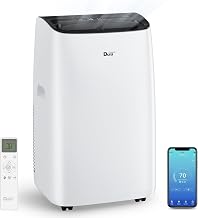
For genuine room cooling, the Shinco is the more capable category of appliance, with cooling, dehumidifying, and fan modes plus a 24-hour timer. Its listed 7,500-BTU SACC rating is the more useful modern comparison figure, and the unit is designed for spaces up to 450 square feet—but it still needs the included exhaust installation to work properly.
12,000-BTU Portable AC for Up to 550 Square Feet
This three-in-one compressor unit offers cooling, fan, and dehumidifying modes, along with self-evaporation, a remote, and a window installation kit. It may suit a larger room when vented correctly; without an outdoor exhaust path, its heat output will undermine the cooling benefit.
Frequently Asked Questions
Can a portable air conditioner work without a window?
A compressor-based portable AC needs somewhere to send the heat it removes, usually through a window kit. If no window is available, use a safe alternative exhaust route or choose an evaporative cooler, understanding that it does not lower room temperature in the same way.
Are windowless evaporative coolers real air conditioners?
They are often marketed as windowless air conditioners, but technically they are air coolers. Water evaporation can make nearby air feel cooler, especially in dry conditions, while the room’s heat is not removed as it is with a compressor system.
Which option is best for humid climates?
A compressor AC with dehumidifying capability is generally the better choice. Evaporative models add moisture and may feel weak or clammy when outdoor humidity is already elevated.
How can I use a compressor AC without a conventional window?
Ask a qualified professional about an appropriate wall, door, or dedicated ventilation solution. Do not block exits, create unsafe improvised ducting, or operate the unit with its hot exhaust discharged into the same room.
Final Thoughts
For truly windowless cooling, the 25.3-inch evaporative cooler is a balanced bedroom choice, while the Serantzon is convenient for personal, close-range airflow. If your priority is lowering the actual room temperature, the Shinco 12,000-BTU model is the stronger pick—but only when its exhaust kit can discharge heat outdoors.