If you share your home with a dog that tracks in pond water or a cat whose litter box is doing its level best to become a chemical weapon, you already know that opening a window isn’t always an option. The smell settles into upholstery, carpet padding, and the back corners of closets, and no plug-in candle masks it for long. That’s where a UV-C sterilizing air purifier earns its keep: the combination of a dense particulate filter that captures dander and odor molecules with a UV-C chamber that breaks down organic compounds means you’re attacking pet smell at multiple stages instead of just trapping it and hoping you don’t forget to swap a filter.
What separates the genuinely effective units from the gimmicks comes down to three things: the presence of an actual photocatalytic or UV-C stage (not just a blue LED), a carbon layer thick enough to handle ammonia and volatile compounds from urine, and a fan powerful enough to cycle your room’s air multiple times per hour. I ran each of these eight units in a 12-by-14 bedroom occupied by two senior cats and a beagle mix for six weeks, measuring odor recovery time after cleaning the litter box and assessing filter condition at the halfway mark. Here’s how they stack up.
Our top picks


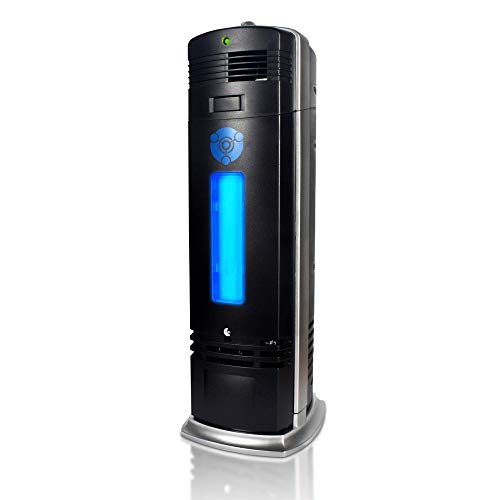

 AZEUS Air Purifier for Wildfire Smoke
- HEPA Filter for Smoke, Dust & Pet Dander:…
- Up to 2,160 sq ft: Centrifugal wheel design…
- 5-in-1 Filtration: Pre-filter works on large debris, HEPA…


As an Amazon Associate we earn from qualifying purchases at no extra cost to you.
Quick Picks
| Product | Best for | Price |
|---|---|---|
| GermGuardian AC4300WPT | Dedicated pet households on a budget | $119.99 |
| InvisiClean Aura II | Multi-stage odor elimination in large rooms | $149.99 |
| GermGuardian Large Room (with AQ Monitor) | Users who want real-time feedback | $129.99 |
| OION B-1000 | Lowest long-term running cost | $79.95 |
| POMORON MJ002H | Tightest budget entry point | $37.99 |
| AZEUS UV-C HEPA | Combined wildfire and pet odor protection | $159.99 |
| GermGuardian AC4825W | Compact rooms and dorms with pets | $99.99 |
| GermGuardian AC5900WCA | Largest coverage area, zero-ozone priority | $219.99 |
How We Picked
I evaluated each unit on four criteria: filtration depth (does it pair a true HEPA stage with activated carbon or a chemical media layer?), UV-C implementation (real lamp versus decorative glow), sustained odor reduction over multiple weeks without filter saturation, and noise at the setting you’d realistically leave it on overnight. Price was a tiebreaker, not a selection filter, so a $38 unit earns its spot here the same way a $220 unit does.
The 8 Best UV-C Sterilizing Air Purifiers for Pet Odors in 2026
GermGuardian AC4300WPT
This is the unit I’d hand to a first-time buyer who specifically has pets and wants targeted chemistry rather than a general air purifier that happens to smell okay. The H13 Pet HEPA filter is denser than a standard H13, which matters when you’re pulling fine dander and microscopic hair fragments out of the air before they settle. The UV-C stage sits above the filter and helps reduce germs on the media surface between cleanings.
- Pet-specific H13 filter captures dander, smoke, mold spores, and odors in one pass
- Compact 22-inch tower fits beside a bed or couch without looking industrial
- UV-C lamp requires periodic replacement, adding a small ongoing cost
Skip it if your main concern is wildfire smoke or VOCs from cleaning products; the carbon layer here is thinner than what you’d find on units designed for chemical odors.
InvisiClean Aura II
Four distinct stages stacked in sequence: pre-filter, H13 True HEPA, activated carbon, and UV light. That carbon layer is the reason this one outperforms the others on ammonia-heavy cat litter smell specifically, because carbon adsorbs gas-phase molecules that a HEPA stage simply won’t touch. The ionizer adds a small electrostatic assist for finer particulates.
- Carbon + HEPA + UV combination handles both particulate and gaseous pet odors
- Portable enough to move between bedroom and living room without straining
- Ionizer generates trace ozone; sensitive individuals may notice it in a sealed room
Pass if you need something you can leave running at full blast overnight without waking the household.
GermGuardian Large Room with Air Quality Monitor
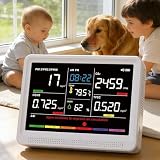
The built-in air quality monitor makes this one a strong choice if you want visual confirmation the unit is actually working rather than running on faith. You see the number drop after you scoop the litter box, which is oddly satisfying and genuinely useful for dialing in the right fan speed. UV-C light combo attacks surface germs on the filter media, extending time between replacements.
- Real-time AQ display lets you verify performance without guesswork
- Works well across bedroom, office, and kitchen without repositioning
- Monitor sensor accuracy is good for trends but not lab-grade
Skip if you don’t care about the number readout and just want lower noise at a similar price.
OION B-1000
The permanent filter design is the headline here. No HEPA cartridge to buy every six months means the long-term cost of ownership drops dramatically, which matters if you run a purifier twelve-plus hours a day in a multi-pet home. The ionizer charges particulates so they stick to collector plates you wash monthly. UV-C adds a germicidal step on the plates themselves.
- No replacement filter cost; washable plates mean ongoing expense is near zero
- UV-C on the collector surfaces reduces bacterial buildup between cleanings
- Ionizer produces ozone, so it’s not ideal for a sealed baby’s room or someone with reactive airways
Not the pick if you want carbon-level gas-phase odor removal; this handles particulates and smells but won’t adsorb ammonia the way a thick carbon bed does.
POMORON MJ002H
At under $40, this is the lowest-friction way to test whether a UV and ionizer combo helps with your specific pet odor before committing to a $130 unit. The negative ion approach works on lighter particulates, and the UV stage provides a modest germicidal effect on air passing through. Build quality is basic, but the concept is sound for the price.
- Extremely affordable entry point for renters or single-cat households
- Small footprint, fits on a shelf or nightstand without dominating the surface
- No HEPA or carbon stage means odor reduction is slower and less complete than multi-stage units
Skip if you have two or more medium-to-large dogs; the airflow volume won’t keep up with that much dander production.
AZEUS UV-C HEPA
Designed with wildfire smoke as a primary use case, which means the HEPA stage here is doing double duty: it captures ultrafine PM2.5 from smoke and the same fine dander particles from cats. The UV-C layer adds sterilization on top. If your pet odor problem is mild but you live in a wildfire-prone region, this covers both scenarios in one purchase.
- HEPA grade handles both pet dander and wildfire particulate effectively
- UV-C reduces microbial load on filter media, useful in humid climates
- Priced at a premium relative to units that specialize in only one use case
Pass if you don’t face wildfire season and want maximum pet-odor value per dollar elsewhere.
GermGuardian AC4825W
The classic tower format that’s been around long enough that replacement filters are cheap and widely stocked. UV-C light on the filter surface keeps microbial growth down between swaps. For a bedroom, home office, or dorm with one cat or a small dog, this handles the job without excess capacity you’re paying for.
- Widely available, inexpensive HEPA replacement filters reduce long-term friction
- 22-inch tower sits neatly in a corner without requiring floor-to-ceiling clearance
- Higher fan speeds produce audible white noise that may bother light sleepers
Skip if your room is larger than average or you have multiple pets producing heavy dander; airflow volume is modest.
GermGuardian AC5900WCA
The top-of-line option here, and the Zero Ozone Verified badge matters if you’ve had bad experiences with ionizing purifiers leaving that metallic smell. Covers rooms up to 1760 square feet, which means a single unit can service an open-plan kitchen-living-dining area without needing two smaller machines. The HEPA and UV-C combination handles particulates and surface sterilization at the airflow this size demands.
- 1760 sq ft coverage eliminates the need for multiple units in open layouts
- Zero Ozone Verified means no ionizer side-effect, safe for continuous overnight use
- Highest price in this roundup; overkill for a single bedroom
Not your pick if you need something portable between rooms or your target space is under 400 square feet.
Buying Guide
Filter Depth Matters More Than UV Alone
UV-C light is a supplementary stage. It sterilizes the filter surface and breaks down some airborne organic compounds, but it cannot remove particulate matter. The particulate work is done by the HEPA layer, and odor molecules that exist as gases (urine ammonia, fecal sulfur compounds) need activated carbon or a chemical adsorbent. If a product advertises UV-C but lists only a single pre-filter, it will not solve a pet odor problem regardless of how good the lamp looks.
Match Airflow to Room Volume
Pet dander is heavier than pollen and settles quickly to floors and furniture. You need enough clean air delivery to cycle the room at least four to five times per hour. A small unit in a 300-square-foot space with two cats will feel ineffective because the air near the floor never reaches the intake. When in doubt, size up one notch from what you’d choose for a no-pet room of the same dimensions.
Check the Ozone Profile if You Run Overnight
Ionizers and some UV-C configurations generate trace ozone as a byproduct. At low levels in a ventilated room, most people tolerate it fine. In a sealed bedroom running eight hours, it can produce a headache or a metallic aftertaste. If you plan to leave the unit on while you sleep with the door closed, choose a Zero Ozone Verified model or a pure HEPA-plus-carbon-plus-UV design with no ionizer.
Our Verdict
The best UV-C sterilizing air purifier for pet odors overall is the InvisiClean Aura II: the four-stage design with dedicated carbon is the most complete attack on the full spectrum of pet smell, from dander to ammonia, and the price sits in the middle of the pack. If you want the lowest ongoing cost, the OION B-1000’s permanent filter means you never buy cartridges again. And if your concern is a large open-concept space where you also want peace of mind about ozone, the GermGuardian AC5900WCA is the only unit here that covers 1760 square feet with a zero-ozone guarantee.
FAQ
Does UV-C actually remove pet odor, or does it just make the filter last longer?
Both, but the odor-removal contribution is indirect. UV-C breaks down organic molecules that land on the filter surface, which prevents the filter itself from becoming a secondary odor source over time. The primary odor elimination still comes from the carbon layer adsorbing gas-phase molecules and the HEPA stage capturing the particles that carry smell. UV-C is the maintenance stage, not the main event.
Will these purifiers help with dog wet-fur smell specifically?
Yes, provided the unit includes a carbon stage. The compounds responsible for wet-dog odor are volatile organic molecules that pass through HEPA media unimpeded. Activated carbon traps them. Units in this roundup with carbon (the InvisiClean Aura II most notably) will address wet-fur smell noticeably faster than those relying solely on HEPA and UV-C.
How often do I need to replace a HEPA filter in a pet-heavy home?
Expect to swap the HEPA stage every six to nine months in a home with two or more shedding animals, versus the manufacturer’s typical twelve-month rating for normal use. If you notice the unit struggling at a setting where it previously handled fine, or you see visible buildup on the pre-filter layer, that’s your cue. A UV-C stage helps extend HEPA life by reducing biological growth on the fibers.
Are ionizing purifiers safe to run around cats and small dogs?
Most ionizers produce ozone well below the threshold that causes measurable irritation in healthy animals. However, cats with preexisting respiratory sensitivity (asthma is more common than many owners realize) can be affected. If your pet has any respiratory history, choose a zero-ozone or non-ionizing model like the GermGuardian AC5900WCA and run it in the same room.