Key takeaways
- Keep dispensers out of direct sun. UV exposure and warmth accelerate algae growth in translucent reservoirs and can craze plastic housings over a season.
- Label the filter change date on painter’s tape stuck to the back of the unit, or lean on a built-in indicator like the Brita Metro’s SmartLight.
- Never put a lid, reservoir, or filter housing in the dishwasher unless the manual says top-rack safe — heat warps the seating surfaces and causes drips.
- Deep clean at the start and end of patio season. Those two anchor dates cover most households without any tracking effort.
What's inside
A water dispenser earns its keep fastest in outdoor-adjacent spaces — on a covered porch, beside a patio bar cart, in a screened room off the pool deck. Those are also the spots where dispensers get dirty in ways an indoor kitchen unit never does. Pollen drifts onto the drip tray. Warm afternoon air keeps the reservoir at biofilm-friendly temperatures for hours. Hard water leaves a chalky ring on the spout that a paper towel simply smears around. Left alone for a season, that combination turns a convenience into a source of flat, musty-tasting water.
The good news: cleaning a dispenser properly takes about 40 minutes, most of it hands-off soak time, and it only needs to happen a few times a year. This guide walks through the sequence that actually works — drain, descale, scrub the hidden channels, sanitize, rinse — plus how the routine shifts depending on whether you own a bottom-load cooler, a large-capacity filtered dispenser, or a simple pitcher. A few tools make the job noticeably easier, and they are called out where they matter.
As an Amazon Associate we earn from qualifying purchases.




Drain Completely Before You Clean Anything
Unplug the unit and let it sit long enough that the hot tank cools — this is a burn risk worth respecting, and rushing it is the most common injury on this job. Remove the bottle or lid, then open every tap until the lines run dry, including the hot side. On a bottom-load model like the Brio 520, that means detaching the probe assembly and letting the internal tube empty as well; water trapped in that line is where stale flavors hide. Pull the drip tray and grille and set them aside to wash separately. Pitchers such as the Waterdrop WFD-22L or the Brita Metro come apart faster: filter out, lid off, reservoir separated from the holding tank.
Descale First, Sanitize Second
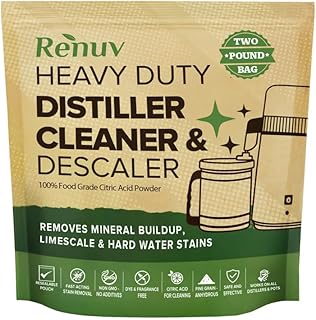
Order matters. Mineral scale is a porous crust, and sanitizer cannot reach bacteria sheltered underneath it. Start with an acid soak to dissolve the deposits, then disinfect the bare surfaces. Food-grade citric acid is the cleanest choice for anything that touches drinking water — a bulk powder like Renuv Citric Acid mixes into warm water at roughly a tablespoon per quart and lifts limescale from tanks, spouts, and reservoirs without leaving a residual smell. Fill the unit, let it stand 20 to 30 minutes, and dispense a cup through each tap so the acid works inside the lines too. Vinegar does a passable job but requires a much longer rinse to clear the odor, which is why it is a poor fit for units that live near seating areas.
Get Into the Channels You Cannot See
Spouts, probe tubes, and the narrow neck of a reservoir are where films rebuild first, and no amount of soaking substitutes for mechanical contact. A tapered brush set such as the Holikme Bottle Brush Tube Cleaning Lab Set handles the range well: the long-handle brush reaches the bottom of a cooler reservoir, the slim straw brushes clear spout interiors and pickup tubes, and the small detail brush gets under lid gaskets. Work gently on silicone seals — an aggressive scrub can score them, and scored gaskets both leak and harbor growth. For a purpose-built option, a dispenser-specific product like the Water Cooler Cleaning Kit bundles the sanitizing solution with the fittings needed for both top- and bottom-loading designs.
Rinse Until the Water Tastes Like Nothing
Under-rinsing is what makes people think cleaning ruined their dispenser. Run at least two full reservoirs of fresh water through every tap, dispensing until each stream runs clear and the water is genuinely flavorless. Wipe the cabinet exterior with a damp cloth, dry the drip tray fully before reseating it, then install a fresh filter. Reusing an old cartridge after a deep clean reintroduces exactly what you just removed.
Match the Routine to Your Setup
Gravity pitchers need the most frequent attention because the reservoir sits open to the air. Rinse the holding tank weekly and deep clean monthly, especially for a high-volume unit like the 40-cup Waterdrop that may sit half-full for days. Powered coolers with sealed bottles can go three to four months between full descalings, though the drip tray and spout still want a weekly wipe. Anywhere near open doors, screens, or a pool, tighten those intervals — airborne pollen, chlorine mist, and summer heat all shorten the clock.
Tips
- Keep dispensers out of direct sun. UV exposure and warmth accelerate algae growth in translucent reservoirs and can craze plastic housings over a season.
- Label the filter change date on painter’s tape stuck to the back of the unit, or lean on a built-in indicator like the Brita Metro’s SmartLight.
- Never put a lid, reservoir, or filter housing in the dishwasher unless the manual says top-rack safe — heat warps the seating surfaces and causes drips.
- Deep clean at the start and end of patio season. Those two anchor dates cover most households without any tracking effort.
Frequently Asked Questions
How often should I deep clean a water dispenser?
Every three to four months for a bottled cooler, monthly for an open-reservoir pitcher. Shorten either interval if the unit lives outdoors, in a humid room, or in a household with well water.
Can I use bleach in a water dispenser?
A heavily diluted bleach solution is sometimes recommended by manufacturers, but it demands thorough rinsing and can degrade some gaskets. Citric acid for scale plus a food-safe sanitizer designed for beverage equipment is the lower-risk combination.
Why does my water taste stale even after cleaning?
Usually an exhausted filter or water sitting too long in the lines. Replace the cartridge on schedule and dispense a few ounces from each tap after the unit has gone unused for more than a day or two.
Do sealed bottled coolers really need cleaning?
Yes. The bottle is sealed, but the probe, reservoir, and internal tubing are not, and every bottle change introduces air and surface contact. Scale also builds up in the hot tank regardless of how clean the source water is.
Conclusion
Clean water comes down to a repeatable sequence rather than any single product: drain fully, dissolve the scale, brush the passages a soak cannot reach, sanitize, then rinse until the water tastes like nothing at all. Put that on the calendar twice a year — more often for a dispenser stationed near the patio door — and the unit will keep pouring the way it did the week you unboxed it.