Our Top Picks
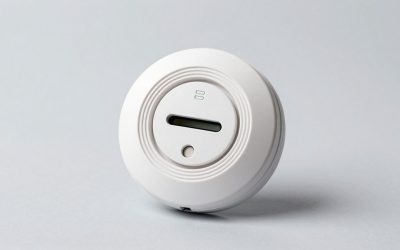
 First Alert Hardwire Combination Smoke & Carbon Monoxide1-Pack8 x 7.5 x 3.5 inches0.56 poundsCheck on Amazon
 First Alert Battery Combination Smoke & Carbon Monoxide1-Pack5.6 x 5.6 x 2 inches0.66 poundsCheck on Amazon
 First Alert 10-Year Battery Combination Smoke & CarbonOne5.67 x 5.67 x 1 inches0.41 poundsCheck on Amazon
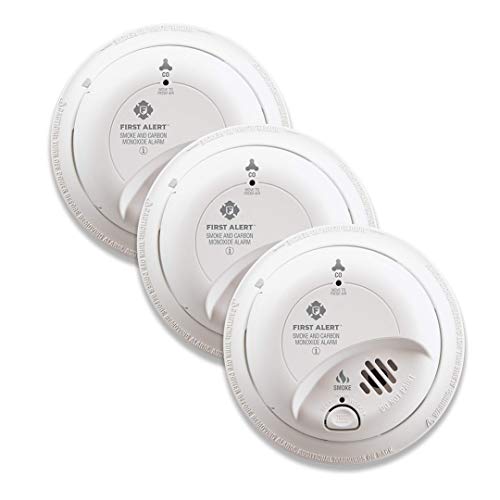 FIRST ALERT BRK SC9120B-3 Hardwired Smoke and Carbon3-Pack1.9 x 5.6 x 5.6 inches0.7 poundsCheck on Amazon
The best combination smoke and carbon monoxide alarm for a bedroom is a 10-year sealed-battery or hardwired model that is interconnected with the rest of the house, so one alarm sounds everywhere. A combination smoke and carbon monoxide alarm covers two different hazards in one housing, which is handy on a bedroom ceiling where space and wiring are limited. This guide compares seven current models and four alternatives, explains photoelectric versus ionization sensing, and shows how battery life and interconnect options change the buying decision.
Key takeaways
- Pick a 10-year sealed battery if you do not want to change batteries and cannot wire alarms; pick hardwired with battery backup if your ceiling already has a junction box.
- Interconnect matters more than extra features: a fire in the kitchen should wake the person in the far bedroom.
- Photoelectric sensing is generally better at smoldering fires; check the product page for the sensor type before you buy.
- Smoke and CO alarms both age out. Write the install date on the back and replace by the date in the owner’s manual.
- This guide is based on listing and maker information, not on our own use of the products.
Quick comparison of combination smoke and carbon monoxide alarms
| Model | Power | Interconnect | Best for | Price tier |
|---|---|---|---|---|
| Kidde 30CUD10-V | 10-year sealed battery | Check listing (standalone version) | Simple bedroom swap with voice alerts | Mid |
| X-Sense SC07-W | 10-year sealed battery | Wireless whole-home | Renters and no-wiring houses | Mid |
| X-Sense XP0H-WN | 10-year sealed battery | Wireless | Add-on rooms and larger homes | Mid |
| Kidde 30CUA10-V | Hardwired plus 10-year battery | Wired | New builds and ceiling box swaps | Mid to upper |
| First Alert SMICO100-AC | Hardwired, 9V backup | Wired | Replacing older hardwired alarms | Mid to upper |
| First Alert SMCO100 | Battery | None listed | Lowest-effort single replacement | Low to mid |
| Heiman 10-year combo (6-pack) | 10-year sealed battery | Check listing | Outfitting a whole home at once | Upper (multi-pack) |
1. Kidde 30CUD10-V: Best for a simple bedroom swap
- Kidde Smoke & Carbon Monoxide Detector, 30CUD10-V
- 10-year battery · voice alerts · no battery replacements or low-battery chirps
- Sold as a single unit and in multi-packs
- Screws to a standard mounting plate on the ceiling or wall
Best for: A bedroom where you want to remove an old chirping alarm and not think about it for a decade. A voice that says “fire” or “carbon monoxide” is easier to interpret half-asleep than a pattern of beeps.
First Alert Hardwire Combination Smoke & Carbon Monoxide Alarm | SMICO100-AC, 9V Battery Backup
Chosen because it specifies SMICO100-AC and 9V Battery Backup.
View on AmazonFirst Alert Battery Combination Smoke & Carbon Monoxide Alarm | SMCO100
Chosen because it specifies SMCO100.
View on AmazonFirst Alert 10-Year Battery Combination Smoke & Carbon Monoxide Alarm | SMCO210 Slim Profile Design, Sealed Battery
Chosen because it specifies SMCO210 Slim Profile Design and Sealed Battery.
View on AmazonFIRST ALERT BRK SC9120B-3 Hardwired Smoke and Carbon Monoxide (CO) Detector with Battery Backup, White, Pack of 3
Chosen because it specifies White and Pack of 3.
View on AmazonSkip if: You need alarms that talk to each other. This listing describes a standalone battery unit, so confirm the interconnect details on the maker page.
Pros:
- Sealed battery means no door to open and no 9V swaps
- Voice alerts name the hazard
- Familiar brand with wide parts and mounting support
Cons:
- Whole sealed unit is discarded at end of life
- No wired interconnect on this version
2. X-Sense SC07-W: Best for interconnect without wiring
- X-Sense Interconnected Smoke and CO Detector, SC07-W
- 10-year sealed battery (not hardwired) · whole-home wireless interconnect · 2-in-1 smoke and CO
- Available as 1-pack and larger sets
- Designed to pair with other units of the same family
Best for: Renters and owners of finished houses where running new wire through ceilings is not realistic. You get interconnected behavior from battery units alone.
Skip if: You already have a hardwired system and want to keep one brand and one signal path.
Pros:
- Wireless interconnect avoids opening walls
- Sealed battery cuts maintenance
- Multi-pack sets simplify matching units
Cons:
- Pair every unit and confirm alerts reach the farthest room
- Mix only models the maker lists as compatible
3. X-Sense XP0H-WN: Best for larger homes and add-on rooms
- X-Sense Wireless Combination Smoke and CO Detector, XP0H-WN
- 10-year sealed battery (not hardwired) · wireless interconnect · combination alarm
- Sold as single units and in 3-packs; a kit with a remote exists
Best for: Adding a bedroom or a basement room to an existing wireless set, or starting a set in a larger house where more alarms are needed.
Skip if: You want the older SC07-W family; the two are not guaranteed to interlink, so check the maker’s compatibility chart.
Pros:
- Same low-maintenance sealed battery idea
- Kit with remote helps with high ceilings
- Multi-packs reduce cost per room
Cons:
- Newer model line, so read the compatibility notes
- Whole unit is replaced at end of life
4. Kidde 30CUA10-V: Best for hardwired homes
- Kidde Smoke & CO Detector, Hardwired & 10-Year Battery, 30CUA10-V
- Hardwired power · 10-year battery backup · voice alerts · wired interconnect
- Sold as a 1-pack and a 4-pack
Best for: New construction or a bedroom ceiling that already has a junction box and interconnect wire. Power comes from the house, with a sealed battery for outages.
Skip if: Nobody comfortable with household wiring is available. Switch off the breaker and follow local rules or hire an electrician.
Pros:
- Mains power with sealed backup
- Wired interconnect is fast and does not rely on radio range
- Voice alerts
Cons:
- Wiring harness must match the existing alarms
- Installation takes longer than a battery unit
5. First Alert SMICO100-AC: Best for replacing older hardwired alarms
- First Alert Hardwire Combination Smoke & Carbon Monoxide Alarm, SMICO100-AC
- Hardwired · 9V battery backup · interconnect · multi-pack options up to 12
Best for: Swapping out a hardwired alarm that has reached its replacement date while keeping the same brand family and connector approach.
Skip if: You dislike changing 9V backup batteries. Look at the sealed-battery hybrids above instead.
Pros:
- Backup battery is a common, easy-to-find type
- Packs of 6 and 12 suit whole-house projects
- Interconnect works with compatible hardwired units
Cons:
- Battery still needs scheduled replacement
- Check the connector against your existing wiring
6. First Alert SMCO100: Best for the lowest-effort single replacement
- First Alert Battery Combination Smoke & Carbon Monoxide Alarm, SMCO100
- Battery powered · combination alarm · single or multi-pack
- A slimmer SMCO200 variant also appears in the lineup
Best for: A quick swap in a room with no wiring and no interconnect needs, such as a guest room or an apartment bedroom with one other alarm in the hall.
Skip if: You want a sealed 10-year battery; confirm the battery type on the listing before buying.
Pros:
- Straightforward install on a plate
- Often one of the more economical combination units
- Strong brand recognition
Cons:
- Replaceable batteries mean periodic chirps
- No interconnect listed on this version
7. Heiman 10-year combo (6-pack): Best for outfitting the whole house
- Heiman Smoke & Carbon Monoxide Detector Combo, 6-pack
- 10-year sealed battery · listing cites UL 217 and UL 2034 certification · 85 dB alarm
Best for: Buying every alarm in a small house at once so they all share the same install date and replacement date.
Skip if: You only need one bedroom alarm. A 6-pack is overkill.
Pros:
- One purchase, one replacement date
- Certification marks stated on the listing
- Less brand recognition than Kidde or First Alert, so check support
Cons:
- Verify interconnect behavior before relying on it
- Large upfront outlay
Also consider
- Kidde Smart Smoke & CO Detector with Ring, RGCUDR-RW: AA battery · Ring app enabled · wireless interconnect capability. A fit if you already run a Ring system.
- Kidde Smoke & CO Detector, 30CUDR: AA battery · 2-in-1 detection with LED status lights. A budget-friendly battery option.
- SITERWELL wireless interconnected combo: 10-year battery · wireless interconnect. Another way to build a wireless set.
- First Alert SMCO200 Slim Profile: battery combination alarm with a lower profile for tight ceilings.
Photoelectric vs ionization: what it means for a bedroom
Ionization sensing reacts quickly to fast, flaming fires with few visible particles. Photoelectric sensing reacts to the larger particles from smoldering fires, such as a cigarette in upholstery or an overheated cord inside a wall. In bedrooms, smoldering fires matter because they can develop while people sleep. NFPA says the best protection comes from using both sensing types in the home, either as separate alarms or as dual-sensor alarms, and many fire-safety groups point to photoelectric or dual-sensor designs near sleeping areas and kitchens because they tend to cause fewer nuisance alarms. Product pages differ on how clearly they say which sensor is used, so open the specification section and look for the words “photoelectric”, “ionization” or “dual”. If the listing does not say, check the maker page or choose a model that does.
Carbon monoxide sensing is separate from smoke sensing. Most combination alarms use an electrochemical CO sensor with a limited life, which is one reason combination alarms carry a replacement date. Always read the label for the date, not the memory of when you bought it.
| Trait | Photoelectric | Ionization | Dual sensor |
|---|---|---|---|
| Typical strength | Smoldering fires | Fast flaming fires | Both types |
| Nuisance alarms near kitchens | Usually fewer | More common | Varies |
| Where to prioritize | Bedrooms and hallways | Rarely the only choice | Whole-home coverage |
| What to check | Listing says photoelectric | Listing says ionization | Listing says dual |
Smoke alarm and CO alarm placement for bedrooms
- Put an alarm inside every bedroom, outside each sleeping area, and on every level, including the basement. This follows the layout recommended by fire-safety guidance such as NFPA.
- Mount on the ceiling at least 4 inches from any wall, or on a wall with the top of the alarm 4 to 12 inches below the ceiling, as many manuals specify; wall-mount distances vary slightly between sources, so follow the manual that came with your alarm.
- Keep alarms away from bathroom doors, cooking appliances, supply vents and ceiling fans, which can cause nuisance alarms or push smoke away.
- For CO, follow the manufacturer’s placement instructions. Combination units are made for ceilings or walls, and the manual states which.
- Press the test button after installation and once a month afterward; write the install date on the back.
Bedroom scenarios: what changes with the room
Closed door at night
Many people sleep with the door shut. A closed door slows both smoke and sound, so an alarm outside the door alone may not wake a deep sleeper. This is the strongest argument for putting a combination alarm inside the bedroom and linking it to the hallway alarm, so either one triggers both. If you choose standalone battery units for budget reasons, place at least one inside each sleeping room and accept that they will sound independently.
Kids’ rooms and older adults
Children often sleep through a standard tone. Voice alerts and a lower-pitched alarm tone can help, and many families also run a practice drill so everyone knows two ways out. For older adults with hearing loss, ask the maker whether a strobe or bed-shaker accessory is available for the model family you plan to buy; do not assume a combination alarm supports one.
Rooms with a fuel-burning appliance or attached garage
Carbon monoxide can come from a furnace, water heater, gas range, fireplace or a car idling in an attached garage. A bedroom that shares a wall with a garage or a utility closet is a good candidate for a combination unit, because the CO half of the alarm is working all night. Alarms are a backup, not a replacement for servicing fuel-burning appliances once a year.
Basement and attic bedrooms
Finished basements and loft bedrooms often have no existing alarm wiring. A wireless interconnected battery set is usually easier than a hardwired retrofit there, as long as the wireless range reaches through the floor. Confirm range limits on the maker page and check the alert from the farthest room after pairing.
Small bedrooms and low ceilings
On a low ceiling, a slim housing such as the First Alert SMCO200 lineup may look less obtrusive. Allow clearance for the alarm to be removed or twisted off its plate when the time comes to replace it.
Installation and maintenance routine
- Choose the location using the manual’s clearance numbers, and mark screw holes with a pencil.
- Install the mounting plate, attach or pair the alarm, and pull the activation tab if the model uses one.
- Press and hold the test button until the alarm sounds. For interconnected sets, confirm that every unit sounds.
- Write the install date and the replace-by date on the back or on a label inside the closet door.
- Once a month, press the test button; once or twice a year, vacuum the vents with a soft brush attachment.
- Replace the alarm at the label date, even if it appears to work.
Common mistakes to avoid
- Mixing families. Interconnect usually works only inside one brand or family. Mixing leaves some rooms silent.
- Painting or covering the unit. Paint and dust over sensor openings can block detection.
- Removing the battery after a nuisance alarm. Use the hush button or move the source of steam or smoke instead.
- Ignoring the date. An alarm in a bedroom that is a decade old may have an aged sensor, even if it still beeps on test.
- Placing too close to a bathroom or kitchen. Steam and cooking fumes cause repeated alarms, which tempts people to disable them.
How We Chose
This is research-based. We did not personally use these products. We compared current model listings, maker pages and the certification marks stated by the sellers, then favored recognizable brands, clear descriptions of power source and interconnect, and options for both battery and hardwired homes. We limited each brand to two main picks and kept alternatives separate.
Buying guide: choosing a combination smoke and carbon monoxide alarm for a bedroom
Power source. A sealed 10-year battery is the least maintenance and removes the temptation to pull a battery during a nuisance alarm. A hardwired model with a sealed or 9V backup suits homes with ceiling junction boxes, and the alarm keeps running during outages. Plain replaceable-battery alarms are the cheapest up front, but plan a battery change at least once a year and a swap the moment you hear a chirp.
Interconnect. If you have two or more floors, interconnect is worth paying for. Wired interconnect needs wires between alarms; wireless interconnect needs units from a compatible family within range. Do not mix brands unless the maker states compatibility.
Voice and silence features. Voice alerts that say what the hazard is can help children and older adults. A hush button for cooking alarms is useful near kitchens but less relevant inside bedrooms.
Certification. Look for UL 217 for smoke alarms and UL 2034 for CO alarms on the box, or the equivalent listing in your country. A product page that does not name the standard deserves a look at the maker site.
Size and mounting. Check the diameter and depth against the existing mounting plate. If you are replacing a hardwired alarm, bring the model number of the old one when you shop.
Lifespan. Smoke alarms are generally replaced about every 10 years, and the CO sensor often has a similar or shorter life depending on the model. Treat the date printed on the product as the deadline.
Ceiling height and mounting reach. A kit with a remote helps when a bedroom has a vaulted ceiling and you want to silence a nuisance alarm without a ladder.
Decision table: match your bedroom to the alarm
| Situation | Pick | Why |
|---|---|---|
| Rental apartment, no wiring changes allowed | X-Sense SC07-W | Wireless interconnect from battery units |
| Existing hardwired alarms from the same era | First Alert SMICO100-AC or Kidde 30CUA10-V | Matches existing wired setups |
| One bedroom, nothing else to link | Kidde 30CUD10-V | Sealed battery, voice alerts |
| Starting from scratch in a small house | Heiman 6-pack or X-Sense multi-pack | One date for everything |
| Heavy Ring smart-home user | Kidde Smart with Ring | App integration |
FAQ
Is a combination alarm as good as separate smoke and CO alarms?
For most bedrooms, yes, provided it carries the proper certifications and is placed per the manual. Separate units give more flexibility in placement, but a combination alarm is simpler and covers both hazards at the same spot.
Should a combination alarm go on the ceiling or a wall?
Follow the manual. Smoke rises, so ceilings are common, but many combination alarms are certified for either placement. Wall mounting needs a gap below the ceiling as stated in the instructions.
How often do combination smoke and CO alarms need replacing?
Plan on the date printed on the alarm, typically around 10 years from manufacture or install date. CO sensors can have a shorter life on some models, so rely on the label.
Do I need interconnected alarms in a one-story home?
It is still helpful. A fire in the living room should sound in the bedroom with the door closed. Interconnect also helps in larger single-story layouts.
Can wireless interconnected alarms be mixed with hardwired ones?
Only if the maker says so. Different families often cannot talk to each other, and a mixed setup may leave gaps.
What should I do when the alarm chirps?
Check the manual for the pattern. A chirp usually means low battery, end of life, or a fault. For a sealed 10-year unit, a repeating chirp often means replace the alarm, so confirm in the instructions.
What do I do when the CO alarm sounds?
Move everyone to fresh air, call emergency services, and do not re-enter until it is cleared. Follow your local guidance and the alarm maker’s instructions.
Is a voice alarm really better than a beeping one?
A spoken message names the hazard, which removes guesswork when someone wakes up disoriented. Tones are still effective, and the choice is mostly about household preference. Children and guests who have never heard your alarm benefit most from voice.
How many combination alarms does a three-bedroom home need?
Count one in each bedroom, one in each hallway outside the sleeping rooms, and one on every other level. For a typical two-story, three-bedroom house that is often six or more, which is why multi-packs and a single replacement date are attractive.
Which one should you buy?
For one or two bedrooms in a house with no wiring, buy a sealed 10-year battery pair such as the Kidde 30CUD10-V or the X-Sense SC07-W set and interconnect when the family supports it. For a home with hardwired alarms, choose the Kidde 30CUA10-V or First Alert SMICO100-AC and match the connector. If you are starting from nothing and want one replacement date, a multi-pack is the tidiest route. Whichever you choose, press the test button after installation and write the date on the back.
Sources
- National Fire Protection Association (NFPA) smoke alarm guidance
- Underwriters Laboratories UL 217 and UL 2034 standards summaries
- U.S. Consumer Product Safety Commission smoke and CO alarm pages
- Kidde, First Alert and X-Sense maker product pages
Last updated: November 2026
More from Amazon
Programs that pair well with the guide above. Offers and eligibility are set by Amazon and may change.
Collect the home and kitchen items you want in one registry that guests can shop from.
Create a wedding registrySet up recurring deliveries of everyday items on eligible products. Terms and savings are set by Amazon.
Explore Subscribe & SaveFree shipping on eligible items, Prime Video and more. Eligible new members can start with a free trial.
Start a Prime free trialAudiobooks and podcasts to listen to on the go. Eligible new members can start with a free trial.
Try Audible freeAs an Amazon Associate we earn from qualifying purchases.