Our Top Picks
An indoor security camera with local storage records to a microSD card or built-in memory inside the camera, so motion clips are saved without a monthly cloud plan. For an indoor security camera local storage sd card setup, the Tapo C210 pan-tilt camera, the Reolink E1 Pro and the eufy Security E30 are the strongest all-round starting points, and the Wyze Indoor Cam Pan is the pick when a physical privacy shutter matters most.
Indoor cameras raise a different set of questions than doorbells: where the camera sits in the house, who is recorded, what happens to the footage and whether you can cover the lens when you are home. This guide sorts models by privacy controls, card support and night vision, and is meant for living rooms, nurseries, pet areas and home offices.

eufy Security 4K Indoor Camera E30, No Subscription, Pan and Tilt | AI Tracking, Color Night Vision, Pet/Baby/Nanny Camera with Two-Way Audio, Human/Pet Detection, Works with HomeKit (2-Pack)
Chosen because it specifies No Subscription and Pan and Tilt.
View on Amazon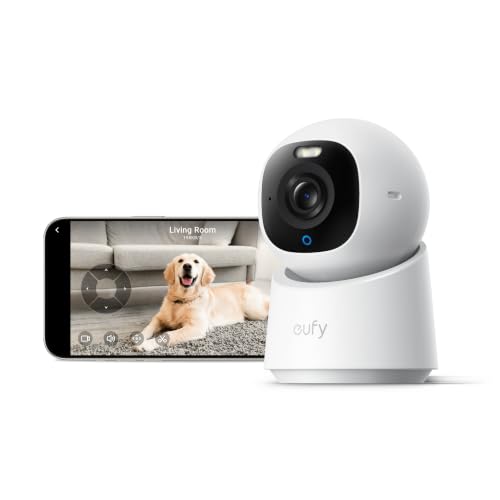
eufy Security 4K Indoor Camera E30, No Subscription, Work as Pet Camera | Nanny/Baby Camera, Pan&Tilt, AI Tracking, AI Detection, 24/7 Recording, Color Night Vision, Two-Way Audio,Works with HomeKit
Chosen because it specifies No Subscription and Work as Pet Camera.
View on Amazon
eufy Security 4K Indoor Cam S350, No Subscription, Dual Cameras, 8× Zoom | 360° Coverage,Works as a Pet Camera,Nanny/Senior/Baby Monitor,AI Auto-Tracking,Human/Pet/Cry Detection,2.4/5 GHz Wi-Fi
Chosen because it specifies No Subscription and Dual Cameras.
View on Amazon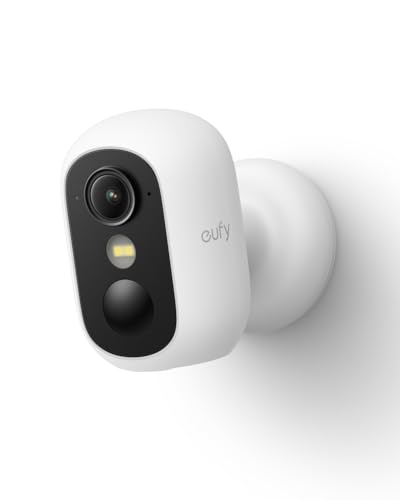
eufy Security Indoor/Outdoor Camera C35, Spotlight-Free Color Night Vision | Magnetic Mount, Local Storage, No Monthly Fee, IP67, Supports Solar Panel, White
Chosen because it specifies Spotlight-Free Color Night Vision and Magnetic Mount.
View on AmazonKey takeaways
- Choose a model whose listing says SD card or local storage, and confirm the maximum card size and recording mode on the maker page.
- A physical privacy shutter or a lens that turns to face the wall is a stronger privacy feature than a software “privacy mode” toggle alone.
- Pan-and-tilt cameras cover a whole room from one spot; a fixed camera is cheaper and has fewer moving parts.
- Most indoor cameras in this tier are 2.4 GHz Wi-Fi only, and several need a power outlet, so plan where the cable will run.
- Use a high-endurance microSD card, because ordinary cards are not built for constant overwriting.
Indoor Security Cameras With Local Storage: Quick Comparison
| Model | Local storage per listing | Resolution / movement | Privacy feature | Best for |
|---|---|---|---|---|
| Tapo C210 | Cloud and SD card storage | 2K, pan and tilt | Privacy mode in app | Best value overall |
| Reolink E1 Pro | Local storage (check card details) | 3K, dual-band Wi-Fi, auto tracking | App-based controls | Highest detail with tracking |
| eufy Security Indoor Camera E30 | No subscription, 24/7 recording | 4K, pan and tilt, AI tracking | App-based controls | Whole-room coverage |
| Wyze Indoor Cam Pan (2-pack) | Check maker page for card support | Pan, AI motion tracking | Physical privacy mode | Privacy-first rooms |
| Tapo C101 | Cloud and SD card storage | 1080p, fixed | Basic | Lowest cost |
| Funstorm 4K Security Camera | 64GB SD card listed as included | 4K, battery powered | Basic | No-outlet placement |
| Reolink E1 | Local storage in the listing | 2K (4MP), pan and tilt | App-based controls | Budget Reolink |
1. Tapo C210: Best Overall Value With SD Card Storage
- Tapo 2K Pan Tilt Security Camera, C210
- 2K · pan and tilt · night vision
- Motion detection · two-way audio · siren
- Cloud and SD card storage · works with Alexa and Google Home
Best for: a living room or kids’ play area where one camera must follow movement and you want SD card recording at a low tier. Skip if: you want a hardware lens cover; the privacy feature is software-based, so check the Tapo app for the privacy mode behavior.
The C210’s listing states SD card storage, which is the core of what this guide covers. It is also a pan-tilt model, so from a shelf corner it can sweep most of a room. Tapo sells the card separately in most cases, so confirm what is in the box, and check the maker’s page for the maximum supported card size.
Pros: SD card and cloud choice; pan and tilt; siren and two-way audio; low tier. Cons: 2.4 GHz Wi-Fi; privacy mode is a software setting; card not guaranteed in the box.
2. Reolink E1 Pro: Best for Detail and Auto Tracking
- REOLINK E1 Pro 3K Dual-Band Wi-Fi Indoor Camera
- 3K · 5MP night vision with F1.6 aperture · pan and tilt
- Auto tracking · person, pet and baby-cry detection
- 2.4/5 GHz Wi-Fi · two-way audio
Best for: homes with a strong router and a need for a sharp image of a pet or child moving around a room. Skip if: you want a camera with a physical shutter.
The Reolink E1 Pro is aimed at the baby and pet monitoring niche, with cry and pet detection in the listing. It supports dual-band Wi-Fi, which helps if your 2.4 GHz band is crowded. Reolink cameras are known for using microSD recording as the default path; the listing does not state a card size here, so check the Reolink page for the supported capacity.
Pros: dual-band Wi-Fi; auto tracking; detailed night image per listing; baby cry and pet alerts. Cons: app-only privacy controls; card is not guaranteed in the box.
3. eufy Security Indoor Camera E30: Best for Whole-Room Coverage Without a Plan
- eufy Security 4K Indoor Camera E30, Pan and Tilt
- 4K · AI tracking · AI detection · color night vision
- 24/7 recording · two-way audio · works with HomeKit per the listing
- No subscription
Best for: larger rooms and open-plan spaces where one camera must watch a long area. Skip if: you only need a basic view and want the lowest cost.
The eufy E30’s listing combines no subscription, 24/7 recording and a pan-tilt head, which is a practical combination for a room that is watched while no one is home. Continuous recording fills storage faster than clips only, so the card size matters; check the eufy page for the supported maximum. A related eufy model, the Indoor Cam E220, is covered in the also-consider list.
Pros: 4K detail; pan and tilt; continuous recording; HomeKit support listed. Cons: higher tier than basic fixed cameras; continuous recording means fast storage use.
4. Wyze Indoor Cam Pan: Best When a Physical Privacy Shutter Matters
- WYZE Indoor Cam Pan 2-Pack
- AI motion tracking · IR night vision · two-way audio
- Physical privacy mode per listing
- Works with Alexa and Google Assistant
Best for: bedrooms, home offices and any place where you want the lens physically covered while you are home. Skip if: you need the highest resolution.
The listing calls out “Physical Privacy Mode,” which describes a lens that turns away or is physically blocked rather than a camera that simply stops recording. That is the distinction a privacy-focused buyer should look for. The listing does not state local storage details, so check Wyze’s page for card support and recording behavior before you rely on it.
Pros: physical privacy mode; AI tracking; two-pack suits two rooms. Cons: local storage details not listed; mid-tier resolution.
5. Tapo C101: Best Low-Cost Fixed Camera
- Tapo 1080P Indoor Security Camera, C101
- 1080p · motion detection · night vision
- Two-way audio · siren · cloud and SD card storage
Best for: a single doorway, a shelf or a desk where a fixed view is enough. Skip if: you want the camera to follow people around a big room.
The C101 is the plainest model here and one of the least expensive. It records to SD card per the listing and keeps the same app as the C210, which is useful if you add a second camera later.
Pros: inexpensive; SD card storage; same app as other Tapo cameras. Cons: fixed view; 1080p only.
6. Funstorm 4K Security Camera: Best When There Is No Outlet
- Funstorm 4K Security Camera with 64GB SD Card
- 4K · battery powered · AI human detection
- Night vision · real-time alerts · 100-day standby per listing
Best for: a spot far from a power outlet, such as a hallway shelf or a garage-facing mudroom. Skip if: you want a mature app and a long track record.
The unusual part here is the 64GB SD card listed as part of the package, which saves a separate purchase. The 100-day standby figure is the maker’s claim for a standby state, not continuous recording, and real battery life depends on how often the camera wakes. Check the maker page before using it for round-the-clock coverage.
Pros: card listed as included; battery powered; 4K per listing. Cons: less established brand; standby claim needs care.
7. Reolink E1: Best Budget Reolink Pan-Tilt
- REOLINK 4MP 2K Indoor Camera E1
- 2K (4MP) · plug-in WiFi 6 · pan and tilt
- Person, pet and cry detection · two-way talk
- Local storage listed
Best for: shoppers who want Reolink’s app and local storage at a lower tier than the E1 Pro. Skip if: you need dual-band 5 GHz support; check the listing for the Wi-Fi bands.
Pros: local storage in the listing; pan and tilt; detection features. Cons: lower resolution than the Pro; app-only privacy controls.
Also Consider
- eufy Security Indoor Cam E220: 2K · pan and tilt · AI tracking · plug-in Wi-Fi. A step down from the E30 in the same family.
- GNCC 2K Indoor Security Camera: 2K · 2.4/5 GHz Wi-Fi · fixed view · cloud and SD card storage. A low-cost fixed option.
- Wyze Cam v4: 2.5K · indoor and outdoor use · color night vision · 2.4 GHz Wi-Fi only. Check whether the card slot suits your use.
How We Chose
This is a research-based guide. We did not personally use these cameras. We read maker listings and feature lists and kept models whose listing mentions SD card, local storage or no subscription. We removed renewed units, mixed outdoor-only cameras, vague bundles and anything that did not mention a way to store video without a plan. We capped each brand at two main picks and left out prices, because they change often.
Where a listing did not state storage or privacy details, we mark it as something to confirm on the maker’s support page. Always check card support, the maximum capacity and whether the camera needs a hub.
Buying Guide: Local Storage, Privacy and Night Vision
SD card support and capacity
Indoor cameras usually accept a microSD card, but the maximum size varies by model. Read the maker’s spec for the supported capacity and file system. A card in the 64GB to 256GB range is common in this category; check your camera for the supported limit. Choose a card marked high endurance, because continuous recording writes data all day and an ordinary card may fail early.
Event clips last far longer than continuous recording. If a camera records only when it detects motion, the same card can hold much more history than a 24/7 setup. Choose continuous recording only for rooms where you really need an unbroken record.
Privacy shutters and privacy modes
Software privacy modes stop recording through the app, but you rely on the setting rather than seeing it. A physical shutter or a lens that rotates to face the wall shows at a glance that the camera cannot see. For bedrooms and home offices, the physical option is the clearer choice. Some cameras also let you schedule privacy mode, so the lens covers when your phone arrives home.
Night vision
Infrared night vision produces black and white images and works in total darkness. Color night vision needs some ambient light or an extra light source. Glass, mirrors and shiny surfaces reflect infrared light, so avoid pointing the camera at a window at night. Place it where it can see the room without looking directly into a TV screen.
Pan, tilt and coverage
A pan-tilt camera sweeps a room from a single spot and can track movement. A fixed camera is cheaper and has one view. In a narrow room, a fixed camera on a high shelf may be all you need. In an open space, pan and tilt reduces blind spots.
Wi-Fi band and power
Many models are 2.4 GHz only, with dual-band models such as the Reolink E1 Pro as exceptions. Plug-in cameras need an outlet near where you want the camera; plan the cable path to avoid a visible dangling cord, especially in a child’s room, where cords should be kept out of reach.
Where cameras can go and where they should not
Use indoor cameras in rooms of your home where you have the right to record. Do not place them in bathrooms or bedrooms of guests or tenants, and tell visitors or household members that cameras are in use. Local laws on audio recording vary, so disable audio where required and check your area’s rules.
Setting Up an SD Card Camera Step by Step
- Format the card in the camera. After inserting the microSD card with the power off, use the app’s storage menu to format it. This prevents file-system errors that block recording.
- Choose the recording mode. Event recording saves clips when motion or a person is detected; continuous recording saves everything. Event mode stretches storage; continuous mode gives a full timeline.
- Set detection zones. Mask windows, TV screens and ceiling fans so they do not trigger clips.
- Set a privacy schedule. If the app supports it, make the camera stop recording or turn away when you are home.
- Check the clip timeline. After a day, open the app and confirm clips are being saved and can be played back.
- Re-check the card every few months. Cards wear out. Replace one that shows errors, and export important clips to your phone.
Real-World Placement: Heights, Angles and Cables
| Location | Suggested position | Watch out for |
|---|---|---|
| Living room | A shelf or bookcase corner roughly 5 to 6 ft up, looking across the room | Windows that wash out the image in daylight |
| Kids’ playroom | High shelf out of reach, cable tucked behind furniture | Loose cords within a child’s reach |
| Entryway | Facing the door from inside, about 6 ft up | Glass panels that reflect night vision |
| Pet area | Low-to-mid shelf with a clear view of the bed or feeder | Pets knocking over lightweight cameras |
| Home office | Facing the door, not the desk screen | Recording your own monitor or documents |
Keep the camera and its power adapter away from sinks, radiators and direct sunlight. A camera pointing out a window at night often shows only reflections, so aim it at the room instead.
Plug-In, Battery or Wired: What Powers Your Indoor Camera
Plug-in cameras, such as the Tapo and Reolink models in this guide, draw steady power and can record continuously. They are the best fit when an outlet is close. Battery cameras, such as the Funstorm, can go anywhere but need charging; a long standby claim does not mean continuous recording, so read how the maker defines it. Use cable clips along baseboards to keep a plug-in camera tidy, and keep the cable length short in any room where a toddler can pull on it.
Common Mistakes With Local-Storage Cameras
- Skipping the card: many cameras ship without a card, and the camera will not store clips until you add one.
- Using a cheap, low-endurance card in a camera that records 24/7.
- Leaving the camera facing a window and wondering why the night view is hazy.
- Forgetting that a thief who takes a camera with its card also takes the footage; pair local storage with phone alerts or an optional backup path if your model offers one.
- Pointing a camera into a space where guests, tenants or neighbors expect privacy.
Local Storage vs Cloud: What You Give Up and What You Gain
Local storage means recordings sit on a card in the camera, so there is no recurring fee and the footage is not uploaded by default. The trade-off is resilience: if the camera is stolen, damaged or the card fails, the footage is gone. Cloud storage keeps a copy off site, which is why the Tapo and GNCC listings mention both cloud and SD options. A sensible approach is to use the card as the main record, turn on push alerts so you see events as they happen, and use any optional cloud tier only for the rooms where an off-site copy matters, such as an entryway.
Also think about retrieval. Scrolling through a card timeline in an app is easy for event clips but slow for 24/7 footage. Use event markers and the app’s person or pet filters to jump to what matters, and note that some cameras let you export a clip to your phone while others need the card removed and read on a computer. Check the maker’s guide for the export method.
Decision Table: Which Camera Fits Which Room
| Room | What you need | Good fit |
|---|---|---|
| Living room | Pan and tilt, SD storage | Tapo C210, eufy E30 |
| Nursery or kids’ room | Cry detection, cord out of reach | Reolink E1 Pro |
| Home office or bedroom | Physical privacy cover | Wyze Indoor Cam Pan |
| Hallway shelf with no outlet | Battery power | Funstorm 4K |
| Single doorway | Low cost, fixed view | Tapo C101, Reolink E1 |
Frequently Asked Questions
Can an indoor camera record without Wi-Fi?
Some models keep recording to an SD card when the internet goes down, but live view and alerts need a connection. Check the maker page for offline recording.
What size SD card do I need for an indoor camera?
Check the camera’s supported maximum. A high-endurance card of moderate size suits event recording, while 24/7 recording benefits from the largest supported card.
Do indoor cameras with local storage still need an app?
Yes. Setup, alerts and clip viewing run through the maker’s app. A subscription is the thing you avoid, not the app.
Is local storage private?
It keeps recordings off the maker’s cloud servers by default, but remote viewing may still pass through the maker’s service. Review each app’s privacy section.
How do I stop a camera from watching me at home?
Use a physical privacy shutter if the model has one, or schedule a privacy mode tied to your phone’s location. Unplug the camera for the strongest guarantee.
Are pan-tilt cameras better than fixed cameras?
For big rooms, yes, because they cover more ground. In a small room, a fixed camera is cheaper and simpler.
Can I use these cameras as a baby monitor?
Many include cry detection and two-way audio, but they are not medical devices. Keep cords and the camera out of reach, and follow your pediatrician’s safe-sleep advice.
Which One Should You Buy?
For most people, the Tapo C210 is the simple choice: SD card storage, pan and tilt and a low tier. Pick the Reolink E1 Pro if detail, dual-band Wi-Fi and tracking matter. Pick the eufy E30 if you want a no-plan 4K camera for a larger room. Pick the Wyze Indoor Cam Pan if you want a physical privacy mode. Use the Tapo C101 or Reolink E1 when cost matters most, and the Funstorm when there is no outlet. Whichever you choose, add a high-endurance card, confirm the supported capacity, and decide in advance which rooms stay camera-free.
Sources
- Tapo (TP-Link) product pages for the C101 and C210
- Reolink product pages for the E1 and E1 Pro
- eufy Security product pages for the Indoor Camera E30 and E220
- Wyze product page for the Indoor Cam Pan and Cam v4
- Funstorm and GNCC product listings
Last updated: November 2026
More from Amazon
Programs that pair well with the guide above. Offers and eligibility are set by Amazon and may change.
Collect the home and kitchen items you want in one registry that guests can shop from.
Create a wedding registrySet up recurring deliveries of everyday items on eligible products. Terms and savings are set by Amazon.
Explore Subscribe & SaveFree shipping on eligible items, Prime Video and more. Eligible new members can start with a free trial.
Start a Prime free trialAudiobooks and podcasts to listen to on the go. Eligible new members can start with a free trial.
Try Audible freeAs an Amazon Associate we earn from qualifying purchases.