Key takeaways
- Rooms up to about 75 square feet: choose a fan around 29 to 36 inches.
- Rooms from 76 to 144 square feet: look at approximately 36 to 42 inches.
- Rooms from 145 to 225 square feet: a 44- to 52-inch fan is usually appropriate.
- Large rooms above 225 square feet: consider a 52- to 60-inch model or two smaller fans.
What's inside
Choosing a ceiling fan by blade count alone is a little like choosing a camp chair by its number of legs: it matters, but it does not tell you how well the whole setup will perform. Blade count affects airflow character, motor load, appearance, noise, and cleaning, while room size, ceiling height, blade span, motor design, and installation location often matter more.
This guide explains how many blades are best for bedrooms, living rooms, kitchens, and covered outdoor spaces in 2026. You will learn what two through eight blades typically change, how to match fan size to a room, and which features are especially useful when you want quiet circulation indoors or dependable comfort on a porch.
As an Amazon Associate we earn from qualifying purchases.


Recommended Picks
What Blade Count Really Changes
Most residential ceiling fans use three to six blades, although modern designs with eight or more are increasingly common. Fewer blades generally create a more open, breezy look and can let a motor spin efficiently at higher speed. That can produce a lively airflow sensation, useful in a warm bedroom or screened porch.
More blades usually make the fan look fuller and can smooth the sound of the airflow. They may also provide a gentler, less pulsing breeze at lower speeds. However, extra blades add aerodynamic resistance and weight, so the motor and blade pitch become critical. An eight-blade fan with a well-designed DC motor can outperform a poorly engineered three-blade model.
For most homes, three to five blades are a strong all-purpose choice. Six or more blades suit people who prefer a softer breeze, a substantial visual statement, or a low-profile fan that operates quietly at modest speed.
Match Fan Size to the Room
Blade count cannot compensate for an undersized fan. Measure the room before comparing styles:
- Rooms up to about 75 square feet: choose a fan around 29 to 36 inches.
- Rooms from 76 to 144 square feet: look at approximately 36 to 42 inches.
- Rooms from 145 to 225 square feet: a 44- to 52-inch fan is usually appropriate.
- Large rooms above 225 square feet: consider a 52- to 60-inch model or two smaller fans.
These are starting points rather than rigid rules. A 52-inch fan can work well in an open-plan living area, while a 44-inch model may be more comfortable in a compact bedroom. For a covered patio, account for the entire zone you want to cool and choose a fan specifically rated for damp or wet conditions. Indoor-only models should not be installed outdoors, even beneath a roof.
Choose for the Kind of Breeze You Want
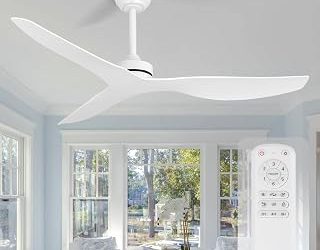
If you like a noticeable, fast-moving breeze while sitting outside, prioritize an efficient motor, a suitable blade pitch, and multiple speed settings rather than simply adding blades. A six-speed fan such as the ZMISHIBO 52 inch 8-Blade Ceiling Fan can offer fine control, while its dual-finish blades provide a more substantial look for a bedroom, living room, or properly protected patio.
For a quieter, more diffuse breeze, six-blade designs are worth considering. The Asyko 46-inch 6-Blade fan combines a compact span with a DC motor, reversible direction, light output, and remote control, making it practical for smaller rooms where a large fan would dominate.
Remember that a ceiling fan does not lower the actual air temperature. It cools people by moving air across skin. Turn it off when the room or patio is unoccupied, and reverse the direction in cooler weather if your model supports seasonal airflow.
Motor, Controls, and Lighting Matter More Than Blade Count
A quiet, efficient DC motor is often the best upgrade over a basic AC motor. It typically offers more speed options, lower operating noise, and useful reverse control. The DREO Smart Ceiling Fan with Lights, 52 Inch provides 12 speeds, three fan modes, dimmable lighting, a timer, remote control, app control, and Alexa compatibility. Those controls are valuable when you want a very low nighttime setting or quick adjustment from across a room.
Smart lighting can be particularly useful in multipurpose spaces. The DREO Smart RGBIC Ceiling Fan with Lights adds color tuning and app-based control, making it a natural fit for a game room or living room. For smaller spaces, the DREO Ceiling Fan with Lights 44” offers a flush-mount format and remote control without the visual scale of a 52-inch fan.
For shoppers who prefer simpler operation, the TCL 52 Inch Low Profile Ceiling Fan with Light and Remote provides a straightforward flush-mount design, reversible DC motor, and six speeds. A no-light model such as the ZMISHIBO is a sensible choice when the room already has good overhead illumination or when glare and nighttime brightness are concerns.
Flush Mounting, Safety, and Outdoor Placement
Low-profile or flush-mount fans are useful where the ceiling is low, but they may move air differently from a fan suspended on a downrod. Keep the blades at least seven feet above the floor, with more clearance preferred in active outdoor areas. Follow the manufacturer’s requirements for distance from walls, light fixtures, and sloped ceilings.
Use a ceiling fan-rated electrical box and have a qualified electrician handle new wiring or uncertain existing installations. On a porch, check the product’s damp-location rating, protect the motor from direct rain, and choose corrosion-resistant hardware where humidity or salty air is common.
Tips
- Compare airflow ratings, such as CFM, alongside blade count; a bigger number is not automatically better for a small room.
- Measure the ceiling height and the blade clearance before buying a low-profile fan.
- Choose reversible rotation for seasonal flexibility, especially in bedrooms and covered outdoor rooms.
- Clean blades regularly; dust buildup can create imbalance, vibration, and unnecessary motor noise.
Frequently Asked Questions
Is a three-blade or five-blade ceiling fan better?
Neither is universally better. Three blades often suit people who want a crisp breeze and efficient, modern styling. Five blades can feel smoother and visually fuller. Motor quality, blade pitch, span, and airflow rating should decide the final choice.
Are fans with more blades quieter?
They can be, especially when operated at a lower speed, but blade count does not guarantee quietness. A balanced blade set and a well-built DC motor have a greater effect. Check the manufacturer’s noise claims and read installation-related reviews carefully.
How many blades are best for a bedroom?
Four to six blades is a comfortable range for many bedrooms. Select a fan with low-speed control, a timer, and a dimmable light if you plan to run it overnight. A 44- to 52-inch span is often suitable, depending on room size.
Can I use an indoor ceiling fan on a covered patio?
Only if the fan is specifically rated for the conditions. A covered patio generally requires a damp-rated model, while areas exposed to direct weather may require wet-rated equipment. Confirm the rating before installation rather than relying on the roof overhang alone.
Conclusion
For most 2026 homes, four or five blades offer the best balance of airflow, appearance, and efficiency. Choose six or more when you prefer a gentle breeze or a fuller design, and focus on motor quality, fan size, controls, mounting height, and location rating before counting blades. The best ceiling fan is the one correctly sized for the space and tuned to how you actually use it.