Maintaining precise relative humidity is one of the most critical factors for a successful indoor harvest. Whether you are dialing in a small propagation tent or managing a multi-light commercial facility in 2026, choosing the right humidifier dictates how well your plants transpire, absorb nutrients, and resist environmental stress. Poorly matched equipment leads to wild humidity swings, microclimates, and ultimately, ruined yields due to powdery mildew, botrytis, or stunted vegetative growth.
Buying a unit based solely on price or aesthetic design is a recipe for constant frustration. Horticultural environments place extreme demands on hardware, requiring continuous daily operation, high moisture output volumes, and seamless integration with external environmental controllers. This comprehensive guide breaks down the core specifications, technology types, and design elements that actually matter when selecting a humidifier for your cultivation space.
As an Amazon Associate we earn from qualifying purchases at no extra cost to you.
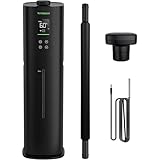
Capacity and Sized Output Requirements
The single most common mistake growers make is underestimating the moisture output required for their specific cubic footage and air exchange rates. A high-CFM inline exhaust fan will rapidly strip moisture from a grow tent, meaning your humidifier has to work continuously to maintain target vapor pressure deficit (VPD) levels. Instead of relying solely on manufacturer room-size estimates, calculate your required output based on ambient room temperature, incoming air humidity, and your total fan exchange frequency. Always scale your capacity up slightly to account for dense canopies that trap moisture unevenly and create localized dry zones.
Ultrasonic vs. Evaporative Technology
Understanding the fundamental differences between delivery methods is vital for protecting plant health and equipment longevity. Ultrasonic humidifiers use high-frequency ceramic discs to atomize water into a fine, cool mist, offering high energy efficiency and whisper-quiet operation. However, they can distribute dissolved minerals as a fine white dust onto leaves and lights unless paired with purified water. Evaporative models pass ambient air through a saturated wick filter, naturally humidifying the space without mineral scatter, but they require regular filter replacements, consume more physical footprint inside the room, and generate more audible fan noise.
External Hygrostat and Controller Integration
A built-in humidistat is rarely accurate enough for precise horticultural control because it measures humidity right at the unit chassis where moisture is actively generated. To maintain tight VPD windows across both vegetative and flowering stages, your humidifier must support external controller integration. Look for units with dedicated low-voltage trigger compatibility, analog pass-through control, or external probe ports that allow you to plug the device directly into a master environmental controller or smart timer system.
Water Source and Auto-Fill Capabilities
Manually lugging heavy water jugs to a high-capacity grow room quickly becomes an exhausting chore. Depending on your room size and layout, evaluate whether you need a massive internal reservoir, a direct waterline hookup, or compatibility with external float valves. Direct-line plumbing eliminates the risk of running dry during critical growth phases or a weekend trip, but it requires careful installation, proper sealing, and backflow prevention to avoid catastrophic water leaks on your flooring.
Cleaning Accessibility and Antimicrobial Design
Warm, stagnant water sitting inside a humidifier reservoir creates an ideal breeding ground for bacteria, algae, and root-damaging pathogens. When evaluating options, inspect how easily you can access the internal tank, transducers, and hard-to-reach corners for regular scrubbing. Removable tanks, smooth interior walls, and accessible mist chambers save hours of weekly maintenance time and protect your valuable crop from harmful airborne spores and slime buildup.
Placement, Airflow, and Distribution
Even the most powerful commercial humidifier will fail if positioned incorrectly within the grow space. Placing a mist maker directly beneath an oscillating fan or an active intake vent can cause uneven saturation, localized condensation, or pooling water on the floor. Position your unit where outgoing mist can be gently picked up by active air circulation, ensuring uniform distribution throughout the entire canopy before it reaches the primary exhaust extraction point.
Related Guides
Choosing the right humidity equipment often goes hand-in-hand with upgrading your overall environmental control infrastructure. To compare top-performing models currently on the market, explore our curated breakdown of top-rated grow room humidifiers. If you are scaling up to larger spaces, multi-zone facilities, or open-floor layouts, you can also review our selections for heavy-duty console units to find high-capacity options built for continuous, reliable operation.
FAQ
Do ultrasonic humidifiers damage plant leaves?
Ultrasonic units can deposit mineral dust onto leaves if you use hard tap water, which clogs stomata and impedes light absorption. Using reverse osmosis or distilled water completely eliminates this issue, protecting your foliage from mineral buildup.
How do I prevent mold growth inside my humidifier?
Empty and thoroughly clean your humidifier reservoir at least once a week using a mild hydrogen peroxide or vinegar solution. Avoid letting water sit stagnant for extended periods when the grow room lights are off and humidity naturally rises.
Can I use a household humidifier in a grow tent?
Household humidifiers are generally built for small bedrooms and lack the continuous-duty motors and external controller support required for grow spaces. They will likely burn out quickly under the high-demand, low-humidity conditions of an active extraction environment.
Where is the best place to measure humidity in a grow room?
Place your hygrometer or controller probe at canopy height, away from direct mist streams and direct light sources. This ensures you are measuring the actual microclimate surrounding your plants rather than the immediate output zone of the humidifier.