Key takeaways
- Place hygrometers on each floor, away from vents, windows, kitchens, and bathrooms.
- Replace evaporative water panels on the manufacturer’s schedule; inspect the drain and water line at the same time.
- Lower the humidity target if you see persistent window fogging, damp trim, or condensation inside closets.
- Choose an accessible installation location so seasonal cleaning does not become an overlooked chore.
What's inside
Dry indoor air is more than a winter nuisance. It can leave wood furniture, flooring, musical instruments, and trim vulnerable to shrinking and cracking, while also making rooms feel colder than the thermostat suggests. A properly chosen whole-house humidifier adds moisture through the HVAC system, helping maintain a steadier indoor climate than a small tabletop appliance.
This guide explains how to choose the best whole-house humidifier for 2026, including steam, bypass, fan-powered, and portable designs. You’ll learn how to match capacity to your home, check installation requirements, control humidity safely, and budget for routine maintenance without confusing a large-room humidifier with a true central system.
As an Amazon Associate we earn from qualifying purchases.


Our Recommended Picks
For a genuinely whole-house installation, the AprilAire 800 Whole-House Steam Humidifier is the standout option for larger homes. It is designed for homes up to 10,300 square feet and produces steam independently of the furnace’s heat output, making it useful when precise, consistent humidification matters. Installation is more involved than fitting a portable unit, so plan on professional assessment and, typically, a water and electrical connection.
The AprilAire 4792 Humidifier Maintenance Kit, including the Model No. 10 water panel, is a practical replacement item for compatible AprilAire 500, 500A, and 500M systems. It is not a humidifier itself, but it illustrates an important buying point: evaporative systems need periodic panel replacement to keep water distribution and output reliable.
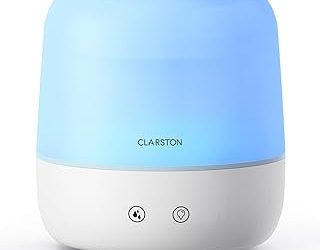
Large portable models such as the AreShark 4.2 Gal/16L Humidifier, the 15L/3.96 Gal 800 sq. ft. Humidifier, and the Lacidoll 16L/4.2 Gal Whole House Humidifier can be useful for a bedroom, open living area, greenhouse corner, or temporary seasonal coverage. Despite “whole house” wording in some product titles, these ultrasonic appliances do not distribute moisture through ductwork and cannot humidify every closed room evenly.
Choose the Right Humidifier Type
Central humidifiers generally fall into three categories. Bypass evaporative models use warm air from the furnace to pass over a wet water panel. They are often economical and relatively simple, but they work best when the HVAC system is running. Fan-powered evaporative units include their own blower, which can increase output and reduce dependence on furnace airflow.
Steam humidifiers boil water and inject clean vapor into the duct system. They usually offer the most precise control and can operate even when the furnace is not actively heating, but they consume more electricity and require more complex installation. For a large, tightly sealed home or a household concerned with stable humidity for fine wood furnishings, steam is often the most capable choice.
Match Capacity to the House
Square footage is only a starting point. Ceiling height, insulation, air leakage, climate, window area, and whether the home has an open floor plan all affect the required output. A drafty older house in a cold region may need considerably more moisture than a compact, well-sealed home with the same floor area.
Look for output stated in gallons per day or pounds of moisture per hour, not just a broad room-size claim. A heating and cooling professional can calculate the load and confirm whether your furnace, ductwork, and electrical service can support the unit. Oversizing is not automatically better: excessive moisture can cause window condensation, damp building materials, and mold-friendly conditions.
Prioritize Controls and Installation
A humidistat is essential. Basic models measure indoor relative humidity and cycle the humidifier on and off; advanced controls can adjust the target as outdoor temperatures change. This outdoor-reset feature helps prevent condensation on cold windows and exterior walls during severe weather.
Installation details matter just as much as the appliance. Confirm that the system has a suitable water connection, drain route, accessible service area, and compatible duct location. Steam units may need dedicated electrical capacity. Evaporative units require a water panel and may create wastewater during operation. Ask the installer how the system will be serviced before choosing a cramped or difficult-to-reach location.
Protect Furniture and Indoor Air Quality
For furniture, wood floors, and cabinetry, a common winter target is roughly 30% to 40% relative humidity, though the appropriate range depends on outdoor conditions and the building. Use an independent hygrometer to verify the reading; the humidifier’s built-in sensor may be located in a different part of the home and may not reflect conditions near a valuable cabinet or instrument.
Ultrasonic portable humidifiers deserve extra caution. If filled with mineral-rich tap water, they can disperse a fine white dust over furniture and electronics. Distilled or demineralized water may reduce that issue, but operating costs can rise. Clean the tank and water-contact surfaces frequently, and never allow stagnant water to sit between uses. A portable humidifier is best treated as a room-focused supplement, not a substitute for ducted coverage.
Tips
- Place hygrometers on each floor, away from vents, windows, kitchens, and bathrooms.
- Replace evaporative water panels on the manufacturer’s schedule; inspect the drain and water line at the same time.
- Lower the humidity target if you see persistent window fogging, damp trim, or condensation inside closets.
- Choose an accessible installation location so seasonal cleaning does not become an overlooked chore.
Frequently Asked Questions
What is the best whole-house humidifier overall?
For maximum control and broad coverage, a professionally installed steam model such as the AprilAire 800 is a strong choice. A bypass or fan-powered evaporative unit may be the better value for a smaller home with a compatible forced-air furnace and moderate humidity needs.
Can a portable humidifier really humidify a whole house?
Usually not evenly. Portable units can improve conditions in one large, open area, but walls, closed doors, and uneven airflow limit distribution. Their stated coverage should be treated as an estimate for a connected room, not a guarantee for an entire multi-room home.
Is steam or evaporative humidification better for furniture?
Both can protect furniture when controlled correctly. Steam provides precise output and does not rely on furnace heat, while evaporative systems are often less expensive to operate. The most important factor is maintaining stable humidity without allowing condensation.
How often should a whole-house humidifier be cleaned?
Inspect the unit at least once each heating season, following the manual for cleaning, water-panel replacement, drain inspection, and sensor checks. Homes with hard water may need more frequent attention or additional water treatment.
Conclusion
The best whole-house humidifier is the one that matches your home’s moisture load, HVAC system, water quality, and maintenance tolerance. Choose a central steam or evaporative system for dependable whole-home coverage, and reserve large portable models for targeted rooms or supplemental use. With a reliable humidistat, sensible humidity target, and regular cleaning, you can create a more comfortable indoor climate while helping preserve wood furniture and other materials.