Key takeaways
- Pro: Wide base holds seal better than competitors on saturated, heavy pad.
- Pro: Included carrying bag protects the base and simplifies transport between jobs.
- Con: The larger footprint makes tight corners and edge work more awkward than smaller models.
When floodwater hits a carpeted floor, the real damage is not what sits on the surface. It is what soaks into the pad beneath, trapped between the backing and the subfloor. You cannot remove it with towels, a shop vac wand, or even a standard spotter. You need a tool that seals against the carpet and pulls moisture directly out of the pad layer. That is the job a professional water extraction machine for flood damage actually does.
Over three years of pulling tools across water-damaged floors in restoration jobs, the difference between a good extractor and a mediocre one comes down to one thing: whether the base maintains its vacuum seal while you drag it. A tool that loses suction every six inches forces you to stop, reposition, and restart. Multiply that by twenty rooms and you are adding hours to a job that already has a mold deadline. Seal quality, hose compatibility, and how the tool handles turns and corners separate the ones you keep in the van from the ones that collect dust.
Our top picks


As an Amazon Associate we earn from qualifying purchases at no extra cost to you.
Quick Picks
| Product | Best for | Price |
|---|---|---|
| Water Claw Flash Xtractor II | Heavy pad extraction on large floors | $514.99 |
| Water Claw Flood Extractor Medium | General professional use | $549.99 |
| Flash Xtractor Water Claw | Budget-conscious technicians | $489.99 |
| Water Claw Deluxe with Injectors | Flush-and-extract contamination work | $798.99 |
| Water Claw Flood Extractor | Full-size jobs needing maximum coverage | $649.99 |
| Dri-Eaz Ergonomic Flood Extraction Tool | Multi-vacuum compatibility and comfort | $699 |
| Water Claw Deluxe Medium | Sub-surface pad work with portability | $685.99 |
| XPOWER P-430 Pro Air Mover | Post-extraction drying of floors and walls | $154 |
How We Picked
We evaluated each tool on four criteria: vacuum seal consistency during long passes, which determines how many times you stop to reposition; hose fitting compatibility with common extraction vacuums, because a tool that does not connect to your existing setup is a paperweight; maneuverability at turns and along walls, where most moisture hides; and overall build durability under daily field abuse. We weighted seal quality heaviest because it is the single spec that directly affects job completion time and moisture removal effectiveness.
The 8 Best Professional Water Extraction Machine For Flood Damage in 2026
Water Claw Flash Xtractor II
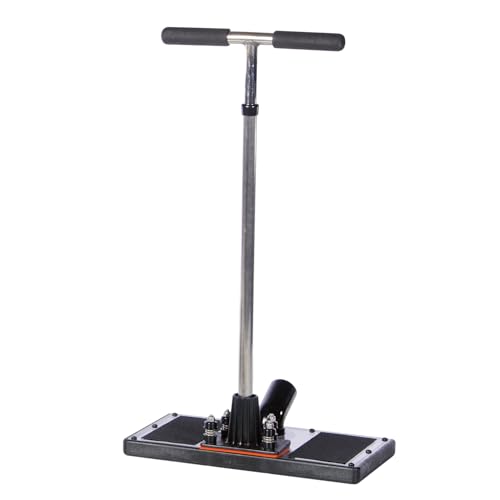
The Flash Xtractor II earns its position as our top pick because it handles the hardest case: thick, waterlogged pad on open floors. Its 16.5-inch by 9.95-inch base creates a wide sealed chamber that maintains suction across long passes without the constant repositioning that plagues narrower tools. The carrying bag means you can load it into a van without worrying about the base cracking. For technicians pulling hundreds of square feet per day, the time savings over smaller bases add up fast.
- Pro: Wide base holds seal better than competitors on saturated, heavy pad.
- Pro: Included carrying bag protects the base and simplifies transport between jobs.
- Con: The larger footprint makes tight corners and edge work more awkward than smaller models.
Skip it if your jobs are mostly small rooms with lots of furniture and tight maneuvering.
Water Claw Flood Extractor Medium
This is the do-everything Water Claw for technicians who need one tool that covers most residential and light commercial jobs. The medium base balances coverage width with turnability, making it the most versatile option in the lineup. It connects to standard extraction vacuum hoses and pulls pad moisture reliably across carpet types from low pile to plush. If you are building your first professional kit and want a single tool that does not leave gaps, this is the default choice.
- Pro: Medium size works well in both open areas and around obstacles.
- Pro: Compatible with common extraction vacuum setups without adapters.
- Con: Not as aggressive on extremely thick commercial pad as the wider Flash Xtractor II.
Skip it if you primarily work large open commercial floors where every pass counts.
Flash Xtractor Water Claw
At under five hundred dollars, the base Flash Xtractor is the entry point for technicians building their extraction arsenal on a tighter budget. It shares the same sealed-chamber design principle as the Flash Xtractor II in a slightly more stripped-down package. It will not outpace the bigger model on wide-open floors, but for residential single-room jobs and garage conversions, it moves enough water to dry carpet and pad in a fraction of the time a shop vac wand requires. Pair two of these with a powerful extraction vacuum and you have a setup that handles most jobs under eight hundred dollars.
- Pro: Lowest price in the extraction tool category with proven Water Claw suction design.
- Pro: Light enough for overhead or stairwell work where heavier tools fatigue your shoulders.
- Con: Base material feels less durable than premium models after months of daily use.
Skip it if you run five or more extraction jobs per week and need tool longevity.
Water Claw Deluxe Flood Extraction Tool with Injectors
This is the tool for the jobs that make other technicians call someone else. The flushing ports let you inject clean water or antimicrobial solution into the pad while simultaneously extracting the contaminated return, handling the worst floodwater without leaving behind dissolved solids or biological residue. At 10 by 17 inches, the base is large enough for efficient passes on open floors. It is also the most expensive extraction tool on this list by a wide margin, but for Category 3 black water jobs, the injection capability eliminates an entire separate step.
- Pro: Flushing ports allow simultaneous injection and extraction for contaminated floodwater jobs.
- Pro: Large base covers ground quickly once you get the injection hoses set up.
- Con: Significantly more complex setup with additional hoses and ports to manage per job.
Skip it if your jobs are all Category 1 clean water where injection adds unnecessary time.
Water Claw Flood Extractor
The full-size Water Claw Flood Extractor sits between the medium model and the wide-base Flash Xtractor II. It pulls the maximum amount of pad moisture per pass without the full footprint of the largest tool, making it a strong choice for technicians whose jobs vary between open floor and moderate obstacle layouts. The build quality is noticeably heavier than the medium version, which translates to better ground contact on uneven subfloors. If the medium model leaves you feeling like you need more per pass but the Flash Xtractor II is too wide, this is the middle answer.
- Pro: Larger base than the medium model pulls more water per stroke without being unwieldy.
- Pro: Heavier construction provides better contact seal on slightly uneven floors.
- Con: Weight becomes noticeable during extended overhead or stairwell sessions.
Skip it if you need maximum portability or mostly work in very tight residential spaces.
Dri-Eaz Ergonomic Flood Extraction Tool F511
Dri-Eaz built this tool with one clear advantage over the Water Claw family: compatibility. It fits a wider range of extraction vacuum hose diameters, including models that the Water Claw base does not connect to directly. For shops already invested in multiple vacuum brands or those running mixed fleets, this eliminates the adapter hassle. The ergonomic handle design also reduces wrist fatigue during the repetitive drag motions that define extraction work, and the tool performs equally well in residential, commercial, and industrial settings per Dri-Eaz’s own rating.
- Pro: Broad hose compatibility means it works with extraction vacuums that other tools cannot connect to.
- Pro: Ergonomic handle reduces fatigue during long extraction sessions.
- Con: Seal quality on very thick pad trails slightly behind the Flash Xtractor II and Deluxe models.
Skip it if you already run Water Claw-compatible equipment and prioritize maximum pad moisture removal.
Water Claw Deluxe Flood Extraction Tool
The Deluxe sits below the Injector version in price while delivering the same large-base extraction performance. You get the 10 by 17-inch footprint that moves serious water on open floors, a carrying bag for protection, and the proven Water Claw sealed-chamber suction. It is the best value in the premium tier for technicians who need wide coverage but do not flush contaminated water. Think of it as the Flash Xtractor II’s older sibling with a different base dimension and the same aggressive extraction character.
- Pro: Large base extracts efficiently while costing roughly a hundred less than the injector version.
- Pro: Carrying bag included, making van storage and transport straightforward.
- Con: Lacks the flushing ports that make Category 3 jobs faster with the Injector model.
Skip it if you regularly handle sewage-contaminated or floodwater jobs that need in-place flushing.
XPOWER P-430 Pro Air Mover
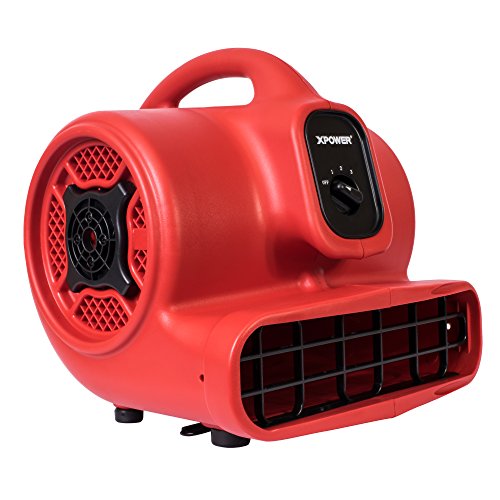
This is not an extraction tool. It is the drying unit that follows extraction, and no professional water damage restoration setup is complete without one. The P-430 Pro pushes 2000 CFM from a 1/3 HP centrifugal motor, moving enough air across floors and wall cavities to bring moisture content down after extraction. Pair it with a top extraction tool from this list and you have the full workflow. At its price point it undercuts competing commercial air movers significantly while delivering airflow that handles most residential and light commercial drying loads.
- Pro: High airflow relative to cost makes it easy to deploy multiple units across a jobsite.
- Pro: Centrifugal design resists motor burnout during extended drying runs.
- Con: Louder than lower-CFM models, which matters in occupied residential settings.
Skip it if you only perform extraction and refer drying to a separate mitigation team.
Buying Guide
Base Width and Seal Geometry
The single most important spec is the base footprint. Wider bases pull more pad moisture per pass but lose maneuverability around furniture, corners, and door frames. For jobs with open floor area exceeding two hundred square feet per room, a base over 14 inches wide dramatically reduces total passes. For smaller or cluttered rooms, anything over 12 inches becomes counterproductive. Match the base to your typical jobsite geometry, not to the largest job you might theoretically get.
Vacuum Hose Compatibility and Suction Requirements
Extraction tools are useless without a vacuum that generates enough negative pressure to pull water from saturated pad. Most professional extraction vacuums deliver between 100 and 250 CFM, but static pressure matters more than raw airflow for pad extraction. Verify that your vacuum produces at least 80 inches of water lift before purchasing any tool. Hose diameter compatibility is equally critical: a mismatch means adapters that leak air and kill your seal effectiveness.
Build Material and Job Durability
Extraction tools get kicked, dropped, and dragged across rough subfloors. Polycarbonate and reinforced nylon bases outlast cheaper ABS plastic by a wide margin in daily field use. Check for replaceable base gaskets and seal strips, because these wear first and replacing them is faster than retiring an entire tool. A carrying bag is not a luxury; it prevents the base cracks that kill seal integrity and end a tool’s life prematurely.
Our Verdict
Our top pick is the Water Claw Flash Xtractor II. It delivers the best combination of seal performance, carrying convenience, and extraction efficiency for the widest range of professional jobs without reaching the price of the injector-equipped Deluxe. For a budget-conscious build, the Flash Xtractor Water Claw at under five hundred dollars gives you genuine professional extraction capability and pairs with the XPOWER P-430 Pro to complete a full workflow for under six hundred fifty dollars total. If your jobs regularly involve contaminated floodwater, the Water Claw Deluxe with Injectors earns its price premium by eliminating a separate flushing pass and cutting total job time by a meaningful margin.
FAQ
Can I use a shop vac instead of a professional extraction vacuum?
Technically yes, but you will not get usable pad extraction. Most shop vacs lack the static pressure needed to pull water from beneath carpet backing. The result is surface moisture removal only, which leaves enough residual water in the pad to trigger mold growth within 48 to 72 hours.
Do I need an extraction tool if I only do residential jobs?
If the job involves carpet and pad that has been wet for more than a few hours, yes. Without a sealed-base extraction tool, you cannot reach the moisture trapped in the pad layer, and dehumidifiers and air movers cannot dry that zone from above. Extraction is the step that removes the water; drying equipment only handles what remains afterward.
How many extraction passes does a carpet typically need?
Expect two to four passes per section at overlapping strokes, working in perpendicular directions like you would when vacuuming. Heavily saturated pad or low-pile carpet over concrete may need additional passes. The reliable test is checking moisture meter readings on the pad edge before and after, not the surface of the carpet.
What is the difference between an extraction tool and a floor dryer?
An extraction tool removes water from within the carpet and pad using vacuum suction through a sealed chamber. A floor dryer, also called a mat system or injectidry, forces dry air into the pad through the carpet backing using positive pressure. They serve different phases of the same restoration workflow and are often used together.