Our Top Picks
 VEVOR Floor Underlayment 100 sq. ft/Roll3'3" x 30'6" (Rectangular)366.14 x 39.37 x 0.12 Inches13.23 PoundsCheck on Amazon
 AMERIQUE 800SQFT 4TH Generation Blue 1.5MM Thick Flooring800SQFT43 x 12 x 0.1 inches8 poundsCheck on Amazon
Best Underlayment for Flooring Installation: A Room-by-Room Guide
The best underlayment for flooring installation depends on three variables: your flooring type, the room’s moisture exposure, and what you need the floor to do acoustically or underfoot. Foam underlayment suits laminate and floating LVP in dry rooms on a budget; cork suits engineered hardwood where warmth and quiet matter; felt handles laminate on uneven subfloors; rubber wins in basements, laundry rooms, and any space where sound transmission to a downstairs neighbor is a real concern. Thickness matters more than most buyers expect — 2 mm foam under a click-lock laminate over concrete will telegraph every joint within a year, while 6 mm cork under the same floor will feel solid for a decade.
This guide matches the four common underlayment materials to laminate, luxury vinyl plank (LVP), and engineered hardwood, with thickness ranges, sound ratings, and moisture-barrier guidance for every room in a house. All prices are general 2026 market ranges for material only, excluding installation.
VEVOR Floor Underlayment 100 sq. ft/Roll, 3 mm Thick Laminate Flooring Padding with Attached Vapor Barrier, Heavy Duty Fiber + PE Film, Soundproofing & Noise Reduction, Ideal for Vinyl Wood
Chosen because it specifies Heavy Duty Fiber + PE Film and Soundproofing & Noise Reduction.
View on Amazon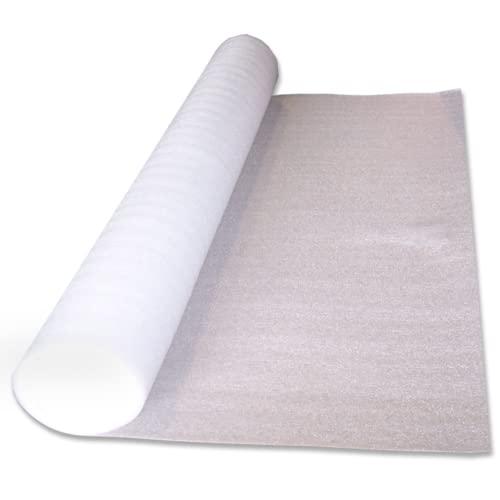
PolyFoam Multipurpose Foam Underlayment – 100 sq ft Roll for Laminate & Wood Flooring, Moisture-Resistant, Shock-Absorbing, Lightweight, Easy to Install, Made in USA
Chosen because it specifies 100 sq ft Roll for Laminate & Wood Flooring and Moisture-Resistant.
View on Amazon
QuietWalk LV 360 Sq Ft Flooring Underlayment for Luxury Vinyl, Laminate & Engineered Wood, LVT, SPC, WPC, Sound & Moisture Protection, Made in USA
Chosen because it specifies Laminate & Engineered Wood and LVT.
View on AmazonAMERIQUE 800SQFT 4TH Generation Blue 1.5MM Thick Flooring Underlayment Padding 3-in-1 Heavy Duty Foam with Tape & Vapor Barrier
Picked as a relevant option in this category.
View on AmazonThe Four Underlayment Materials, Compared by Construction
Underlayment is not one product. It’s a category spanning four genuinely different materials, each with its own density, vapor behavior, and compression profile. Manufacturers quote these specs inconsistently — some list thickness in millimeters, some in mils, some as “3-in-1” claims that conflate a foam pad with an attached vapor barrier. Below is what actually varies between them.
| Material | Typical thickness | Density / construction | Moisture behavior | Sound performance | Best paired with | Cost per sq ft |
|---|---|---|---|---|---|---|
| Polyethylene foam | 2–3 mm (80–120 mil) | Closed-cell, 1.5–2.5 lb/cu ft | Vapor barrier only if foil- or film-faced; bare foam is not | Weak; ΔIIC 3–8 | Laminate, floating LVP | $0.20–$0.50 |
| Cork | 3–6 mm | Granulated cork, resin-bound, 11–15 lb/cu ft | Naturally rot-resistant; needs a separate barrier over concrete | Good; ΔIIC 10–15 | Engineered hardwood, laminate, LVP | $0.75–$1.75 |
| Felt (recycled fiber) | 3–5 mm compressed | Needle-punched recycled fiber, 20–30 lb/cu ft | None — degrades if wet; never over slab-on-grade | Very good; ΔIIC 12–18 | Laminate over wood subfloor | $0.40–$0.90 |
| Rubber (crumb or recycled) | 2–6 mm | Vulcanized crumb rubber, 40–60 lb/cu ft | Waterproof itself; no vapor barrier unless faced | Best; ΔIIC 15–25 | LVP, laminate in condos | $0.90–$2.00 |
| Combination pad (foam + film) | 3 mm | Closed-cell foam laminated to 6-mil PE film | Full vapor barrier | Weak–moderate; ΔIIC 5–10 | Laminate or LVP over concrete | $0.35–$0.80 |
ΔIIC (delta impact insulation class) is the number that matters in multi-unit buildings, not the “sound rating” printed on the bag. It measures how much a floor assembly reduces impact noise — footfalls, dropped objects, chairs scraping. Bare 6-inch concrete slab plus engineered hardwood typically scores IIC 30–35. Building codes in most U.S. and Canadian multifamily jurisdictions require IIC 50 or better between units. A rubber underlayment contributes 15–25 of those points, which is often the difference between passing a sound inspection and tearing the floor out.
Thickness: The Spec That Causes the Most Failures
Every click-lock floating floor is engineered to work within a specific underlayment thickness window, usually stated in the installation manual and usually 2–3 mm for laminate and thin LVP. Exceeding it voids the warranty, because the locking joint flexes vertically instead of staying in plane.
The practical consequences of getting this wrong:
- Too thick (6 mm foam under a 7 mm laminate): joints open along the short ends within one heating season. You’ll see visible gaps at every plank seam by the following winter.
- Too thin (1.5 mm foam over a 10-foot span of concrete with a 1/8-inch dip): the floor dips with the slab. Every low spot becomes a soft, springy patch.
- Too soft: heavy furniture — a 200 lb sofa on four 2-square-inch legs — compresses foam under the load points. The floor takes a permanent set and the planks above it rock.
- Glue-down engineered hardwood: uses no underlayment at all in the traditional sense, only adhesive. Exception: a 2 mm rubber acoustic membrane under the adhesive where IIC ratings are required.
For engineered hardwood installed as a floating floor, 3 mm cork or a 2 mm rubber membrane is the safe range. For nail-down or staple-down engineered hardwood over a plywood subfloor, underlayment is typically a 15 lb asphalt-saturated felt or rosin paper, purely to prevent squeaks — not a cushioning product.
Moisture Barriers: Where They’re Required and Where They Backfire
Concrete slabs are never fully dry. A slab-on-grade emits water vapor continuously, typically 3–5 lb per 1,000 sq ft per 24 hours even with a proper vapor retarder beneath the slab. Flooring installed directly on that slab without a barrier will cup, delaminate, or grow mold within two to three years.
- Over concrete (any floor type): you need a vapor barrier rated at 6 mil or thicker, either as a separate polyethylene sheet or laminated to the underlayment. Combination foam-plus-film pads are the practical choice for laminate and LVP.
- Over a plywood or OSB subfloor above a conditioned space: no vapor barrier. A plastic sheet here traps moisture from below and creates a mold sandwich. Use plain foam or felt.
- Over a crawlspace: treat as concrete if the crawlspace is vented and uninsulated; treat as a wood subfloor if it is sealed and conditioned.
- Cork: cork itself resists rot, but it is not a vapor barrier. Use a separate 6-mil film underneath when going over concrete.
- Rubber: waterproof as a material, but as a loose-laid pad it doesn’t seal edges. For a true barrier, tape the seams of a separate film or choose a faced rubber product.
One more trap: never install two vapor barriers on opposite sides of the same floor assembly. A plastic sheet under the underlayment plus a plastic-backed flooring with a sealed underside traps moisture in the core and destroys the floor. If your LVP has an attached acoustic backing and a waterproof core, adding another film is usually redundant.
Matching Underlayment to Laminate
Laminate is the most underlayment-sensitive flooring on the market. It’s a floating floor, its core is wood-based and therefore dimensionally active, and its click-lock joints depend on the subfloor being flat and the pad being thin.
| Room | Substrate | Recommended underlayment | Thickness | Barrier needed? |
|---|---|---|---|---|
| Second-floor bedroom | Plywood | Felt or 2 mm foam | 2–3 mm | No |
| Ground-floor living room | Slab-on-grade | Foam + 6-mil film combo | 3 mm | Yes |
| Condo (IIC requirement) | Concrete | Rubber, 3–5 mm | 3–5 mm | Yes, separate film |
| Basement, finished | Concrete | Rigid foam panel + film | 6 mm rigid board | Yes |
| Bathroom (half-bath only) | Plywood | Not recommended; use LVP or tile | — | — |
Laminate under 8 mm thick should never sit on more than 3 mm of padding. Laminate 10 mm and thicker tolerates 3 mm cork comfortably and benefits from the added stiffness. A 12 mm laminate over 2 mm foam in a 12×14 ft bedroom will sound hollow for years; the same floor over 3 mm cork reads as solid underfoot.
Matching Underlayment to LVP and Engineered Vinyl
Luxury vinyl plank changes the calculus because many products now ship with an attached IXPE or EVA foam backing. That backing counts toward your cushioning allowance. Adding a 3 mm pad underneath a plank that already carries 1.5 mm of attached foam puts you at 4.5 mm total and outside most manufacturer tolerances.
- LVP with attached backing: install directly over a flat, clean subfloor with a 6-mil vapor barrier only if over concrete. No cushioning pad.
- LVP without attached backing: 2 mm foam or a combination pad, or 2 mm rubber where sound matters.
- Rigid-core (SPC) LVP: the stiffest vinyl core. It bridges minor subfloor imperfections better and tolerates tighter joints, but also transfers impact noise more efficiently — meaning rubber underlayment does more for you here than foam.
- WPC (wood-plastic composite) LVP: thicker and softer underfoot already. Keep underlayment at 2 mm or less.
Acoustic underlayment matters most for LVP in apartments. An 8-inch concrete slab with SPC LVP and no acoustic membrane often measures IIC 28–32; adding a 5 mm rubber membrane typically pushes it to the high 40s. In many buildings that’s the difference between a legal installation and a violation.
Matching Underlayment to Engineered Hardwood
Engineered hardwood is the most forgiving of the three flooring types, because its plywood or HDF core is dimensionally stable and its installation method — glue-down, nail-down, or floating — determines whether underlayment is even in play.
| Install method | Underlayment | Notes |
|---|---|---|
| Nail-down over plywood | 15 lb asphalt felt or rosin paper | Prevents squeaks and dust migration; no cushioning |
| Glue-down over concrete | Epoxy or urethane moisture barrier + adhesive | Test slab with calcium chloride (limit 3 lb/1,000 sq ft/24 hr) |
| Glue-down in condo | 2 mm rubber acoustic membrane under adhesive | Only where the adhesive manufacturer approves it |
| Floating over plywood | 2–3 mm cork or 2 mm rubber | Check plank length vs. thickness tolerance |
| Floating over concrete | 6-mil film + 3 mm cork, or combo pad | Film under pad, never the reverse |
Engineered hardwood is also the floor type most affected by underlayment rigidity. A 1/2-inch engineered plank over 6 mm cork feels noticeably softer than the same plank over 2 mm rubber — pleasant in a bedroom, less so under a dining table where chair legs concentrate 150–250 lb in a half-square-inch contact patch.
Sound Ratings: What ΔIIC Numbers Actually Predict
Sound ratings on underlayment packaging range from honest to absurd. Here’s how to read them.
- IIC vs. ΔIIC: IIC is the property of the full floor assembly. ΔIIC is the improvement the underlayment contributes. Manufacturers selling on ΔIIC of 25 often mean “under a specific 6-inch slab with a specific flooring,” not in your building.
- Impact noise vs. airborne noise: underlayment addresses impact noise. It does almost nothing for voices and televisions. Don’t buy a pad expecting to fix a sound-transfer complaint from upstairs.
- Reasonable expectations: foam 3–8 ΔIIC; cork 10–15; felt 12–18; rubber 15–25. Anything claiming ΔIIC 30+ is usually measuring a different metric or a full assembly.
- Assembly matters more than the pad: adding a resilient channel or an acoustic ceiling below does more for IIC than upgrading from cork to rubber. If sound is your primary problem, fix the ceiling first.
For a typical second-floor bedroom over a first-floor bedroom in a wood-frame house, a felt or cork pad under laminate typically brings the assembly from IIC 32–36 to IIC 45–50 — enough to stop footsteps from being a nightly annoyance, not enough to make a home gym quiet.
Room-by-Room Selection Guide
Room use drives moisture, load, and acoustic requirements, and those three factors narrow the field faster than material preference.
| Situation | Flooring | Pick | Why |
|---|---|---|---|
| Small apartment, rental, concrete slab | LVP with attached backing | 6-mil film only | Added pad voids warranty; film handles vapor |
| Condo, sounds inspection required | SPC LVP or laminate | 5 mm rubber | Highest ΔIIC per millimeter |
| Kids and pets, ground floor | Laminate or LVP | Foam + film combo | Cheap to replace, moisture barrier included |
| Basement bedroom | LVP | Rigid foam board + film | Thermal break for cold slab, full vapor seal |
| Home office with desk chair | Engineered hardwood | 2 mm rubber | Resists compression under 200 lb rolling load |
| Living room with piano or heavy furniture | Engineered hardwood, glue-down | No pad; acoustic membrane only if required | Cushioning lets heavy loads deflect and gap |
| Kitchen | LVP with attached backing | Film only, sealed seams | Spill exposure; no soft pad to trap water |
| Bathroom | Tile or sheet vinyl | Not floated flooring | Any floating floor fails at fixture penetrations |
A few load realities worth planning around. A loaded bookshelf runs 300–600 lb concentrated on four feet. A refrigerator is 250–400 lb on four small leveling feet. A waterbed is excluded from most floating floor warranties outright, and even a king-size mattress set at 200–250 lb will compress a soft 6 mm foam pad under its leg contact points over several years. If any of these will sit on the floor, choose the firmest underlayment in the acceptable thickness range — 2 mm rubber over 3 mm cork, and cork over foam.
Subfloor Flatness: The Requirement Nobody Reads
Almost every floating floor warranty specifies subfloor flatness within 3/16 inch over 10 feet, and 1/8 inch over 6 feet. Underlayment does not fix an uneven subfloor, regardless of thickness. A 6 mm pad over a 3/8-inch dip simply becomes a 3/8-inch dip with padding in it.
- Measure before buying: a 10-foot straightedge and a tape measure. Walk the room on a 4-foot grid and mark every high and low spot.
- Fix low spots with a cementitious patching compound, not with extra underlayment. Feather to a zero edge.
- Grind or sand high spots on wood subfloors; grind concrete.
- Budget: patching compound for a 200-square-foot room typically runs $60–$150 in material, and it’s the line item that saves the installation.
Concrete slabs also need a moisture test before anything goes down. Duct-tape an 18-inch square of 6-mil polyethylene to the slab, wait 24 hours, and check for condensation or a darkened slab underneath. Test kits measuring in pounds per 1,000 square feet per 24 hours are more precise and cost $40–$90 — cheap insurance against a $3,000 floor replacement.
Installation Sequence That Prevents Most Failures
Underlayment installation is simple, but the order of operations matters and errors are hard to reverse once the floor is down.
- Acclimate the flooring in the room for 48–72 hours, flat, in a climate-controlled space.
- Test moisture (concrete) or measure flatness (all subfloors). Repair before anything else.
- Vacuum thoroughly. A single screw head under 2 mm foam becomes a visible bump in the finished floor.
- Roll out the vapor barrier first if used, lapping seams 6 inches and taping them with sheathing tape. Carry the film up the wall 2–4 inches and trim after the baseboard goes on.
- Roll out the underlayment over the barrier, butting seams — never overlapping. Overlapping seams create a 3–4 mm ridge that telegraphs through the floor above within a month.
- Tape underlayment seams on foam and rubber to stop migration; leave cork and felt seams butted and untapped.
- Leave a 1/4-inch expansion gap at every wall and fixed object. Cover with baseboard or shoe molding, never caulk it closed.
- Cut underlayment to fit around door casings rather than compressing it behind them.
A practical detail: a standard 36-inch door with a 2-1/4-inch casing needs roughly 1 inch of clearance under the casing for flooring plus underlayment. If your finished floor stack is 3/4-inch flooring plus 5 mm rubber, that’s about 15/16 inch. Undercut the casing with a jamb saw rather than trimming the plank — a trimmed plank edge at a doorway is where most floating floors start to fail.
Cost Planning: What Underlayment Adds to a Project
Underlayment is a small fraction of flooring cost but changes the total more than buyers expect, especially in sound-rated assemblies.
| Room size | Foam + film | Cork | Rubber, 5 mm |
|---|---|---|---|
| 100 sq ft (10×10) | $35–$80 | $75–$175 | $90–$200 |
| 200 sq ft (10×20) | $70–$160 | $150–$350 | $180–$400 |
| 500 sq ft (ground floor open plan) | $175–$400 | $375–$875 | $450–$1,000 |
| 1,200 sq ft (whole apartment) | $420–$960 | $900–$2,100 | $1,080–$2,400 |
Add roughly $60–$150 per room for patching compound and tape, and $40–$90 for a moisture test kit if you’re going over concrete. In a condo that requires an acoustic membrane, that line item typically adds $0.50–$1.00 per square foot over a basic foam pad — but failing the sound inspection costs far more than the upgrade.
Common Mistakes and How to Avoid Them
The failure modes below account for the majority of premature flooring failures, and every one of them traces back to an underlayment decision made before installation day.
- Double vapor barriers. Film under the pad plus a foil facing on the flooring traps moisture. Pick one barrier and place it against the slab.
- Overlapping pad seams. But the seams. A 1/8-inch overlap under laminate is a visible ridge for the life of the floor.
- Too much cushioning under click-lock floors. Read the manual. If it says 2 mm maximum, 2 mm is the maximum, not a suggestion.
- Felt over concrete. Felt wicks moisture and compresses permanently when damp. It belongs over wood subfloors only.
- Ignoring attached backing. Many LVP products already include 1–1.5 mm of foam. Adding a 3 mm pad puts you past tolerance.
- No expansion gap. A 1/4-inch gap at the walls is mandatory for every floating floor and every underlayment system.
- Skipping the moisture test. Two hours of testing prevents a replacement job. Concrete that reads above 3 lb per 1,000 sq ft per 24 hours needs a surface-applied moisture mitigation system, not just a plastic sheet.
- Using a pad to “fix” an uneven floor. It doesn’t. Patch it, grind it, then install.
Frequently Asked Questions
Can I use the same underlayment under laminate, LVP, and engineered hardwood?
Only 2 mm rubber works across all three without voiding typical warranties, and only where the flooring is floating and the manual permits a separate pad. Foam is fine for laminate and LVP without attached backing; cork suits floating engineered hardwood and laminate; felt is essentially laminate-only and only over wood subfloors.
Is 6 mm underlayment ever the right choice?
Under rigid-core SPC vinyl over a clean concrete slab with a required IIC rating, a 5–6 mm rubber membrane is often exactly right. Under a 7–8 mm laminate, 6 mm foam is almost always wrong and will open the joints. The variable is the flooring’s core stiffness, not the pad’s thickness in isolation.
Do I need a separate vapor barrier if my underlayment is foil-faced?
No. A foil or polymer film facing bonded to the pad performs the barrier function, provided seams are taped and edges are carried up the wall slightly. But if your LVP already has a waterproof core and attached backing, an additional facing of any kind usually isn’t needed over a wood subfloor.
What underlayment works best over a radiant-heated slab?
Thin, dense products. Rubber at 2–3 mm or a rigid foam panel rated for radiant heat. Avoid thick cork and high-loft foam, which insulate the floor from the heat source and drop your delivered surface temperature by several degrees. Confirm the flooring manufacturer approves over radiant heat, and that the slab is brought up to temperature gradually — no more than 5°F per day.
How long does underlayment last?
Under an intact floor, underlayment lasts the life of the floor — typically 10–25 years. Foam compresses and loses resilience first, especially under heavy furniture; cork holds its thickness for decades; rubber is effectively permanent; felt compresses but doesn’t crumble. If you ever lift the floor to replace it, replace the underlayment at the same time. Reusing compressed pad causes immediate joint problems.
Does underlayment reduce noise from upstairs neighbors?
Not from the apartment below you — underlayment is installed on the upper floor and reduces impact noise transmitted downward, which is why it’s an upstairs rather than downstairs upgrade. It also slightly softens footfall noise within the room, but it does nothing for airborne noise like conversation or music.