Key takeaways
- Organize shared-entry mail with agreed recipient folders, private handoffs and a separate route for unclear items, using a practical household worksheet.
What's inside
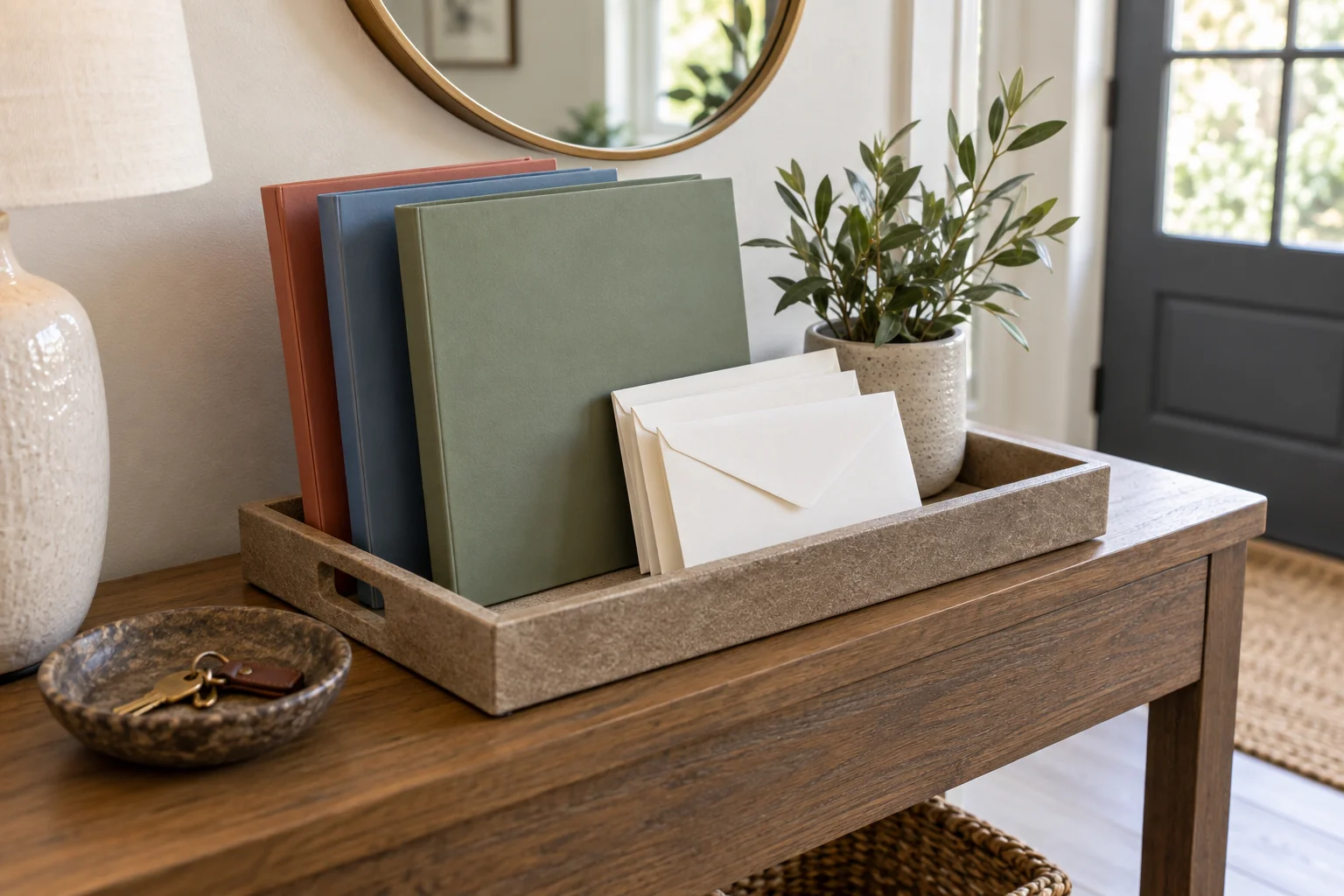
Separate personal mail in a shared entrance by assigning a private destination to each recipient and a clearly different place for agreed household mail. Sort by the name on the outside, keep envelopes closed, and make collection part of the normal return-home routine. The organizer should move mail to its owner without exposing its contents to everyone passing the door.
This is a household sorting system after delivery. It does not replace an official mailbox, authorize anyone to open another person’s correspondence or determine postal procedures in every country. Keep delivery problems separate from the household’s internal categories.
Agree on who handles the first sort
Ask everyone whether a shared first sort is acceptable and where they want their unopened mail placed. Some may prefer a closed folder, an individual drawer or direct handover. Do not assume a visible tray is suitable merely because the entrance has spare surface space.
Assign the task of bringing mail inside only to someone authorized to do it. USPS’s mail-theft guidance recommends prompt collection instead of leaving letters and packages at the mailbox or door. A household organizer can support that habit, but it cannot guarantee protection against theft.
Keep the shared receiving spot inside the home where appropriate, away from public sightlines and routine splashes. It should not obstruct the entrance, door movement or controls. Check the arrangement from the doorway as well as from inside the room.
Separate people from actions
Use recipient folders for incoming personal mail. Do not combine “Alex’s mail” with a neighboring slot called “pay soon,” because the second category requires someone to inspect or judge content that belongs to another person.
Once the owner collects and opens their mail privately, they can move an item into their own action system. Shared bills can have an agreed household process, but the agreement should identify who may open them, who acts and where the record stays.
Create a separate outgoing location only if the household needs it. An envelope waiting for pickup must not be indistinguishable from incoming mail. Avoid placing private outgoing letters where a visitor might mistake them for material to discard.
Keep unclear items out of the recycling stream
A name you do not recognize is not enough reason to throw a piece away. Put it in a short-term “check recipient” location and ask the relevant person or postal service how to handle it. Do not open it to identify the recipient.
In the United States, USPS’s Postal Operations Manual section 611 gives instructions for mail delivered to the wrong person, including returning it to the Post Office with the appropriate endorsement. Follow current local postal guidance for the particular problem rather than treating your internal holding folder as a permanent solution.
| Category | Placement | Next action |
|---|---|---|
| Named resident | That person’s agreed closed folder | Owner collects and handles privately |
| Agreed household correspondence | Separate shared destination | Authorized person follows household process |
| Unclear or former resident | Temporary check-recipient folder | Resolve using postal guidance |
| Outgoing item | Clearly separate location | Sender confirms collection arrangement |
Worked example: identical surnames, different recipients
Imagine three housemates, two of whom share a surname. A first-name initial is not enough to distinguish every envelope. They agree that ambiguous pieces stay unopened in a check-recipient folder until the people concerned identify the addressee from the outside information.
The household uses plain closed folders with short identifiers that its members understand. It does not display bank names, medical appointment details or account numbers on the tray. When one person is away, that person arranges how their mail should be handled rather than expecting the others to improvise.
This fictional arrangement demonstrates a privacy decision, not a universal folder count. A two-person home might need less equipment, while a large shared household may prefer private room-level delivery.
Write absence instructions only with the recipient’s agreement. Record who may collect the sealed folder and where it should wait. Keep that private arrangement separate from any public entrance label, and review it when the person returns.
Test retrieval without reading the contents
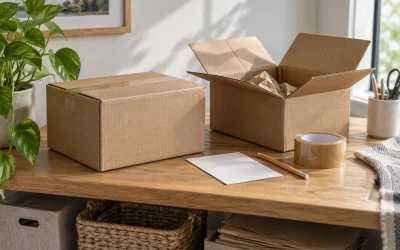
Use blank envelopes to test the organizer’s capacity and access. Check that the largest ordinary envelope fits without being folded unnecessarily and that one person’s folder can be removed without lifting another’s mail. Do not infer actual capacity from a staged product photograph.
Agree on a check-in routine that suits the residents. If a folder fills, contact its owner through the usual private channel instead of moving the contents onto a communal table. A reminder can say that mail is waiting without revealing senders or sensitive details.
When someone moves out, remove their active label after arranging the appropriate address and mail-handling changes. Clear the temporary exception folder through the proper process, not through an automatic discard deadline. The system works when every item has an owner or a defined unresolved action, and personal content stays with the person entitled to read it.