When indoor air stagnates, homes quickly develop hot spots, cold corners, and stuffy pockets that standard oscillating fans simply cannot fix. Moving air efficiently across an entire living space requires more than a simple breeze; it demands a dedicated device engineered to create continuous air circulation. By keeping air in constant motion, a proper circulator helps balance indoor temperatures, reduces the workload on your heating and cooling system, and improves overall comfort throughout the changing seasons.
Choosing the right model in 2026 means looking past flashy marketing terms and focusing on the mechanical specifications that dictate true performance. Whether you are trying to eliminate temperature stratification in a vaulted ceiling living room or keep air moving through a dense home office, understanding how to evaluate these machines ensures you invest in a device that actually suits your space. Here is the definitive guide to what truly matters when shopping for a whole room air circulator.
As an Amazon Associate we earn from qualifying purchases at no extra cost to you.
Vortex Action Versus Standard Oscillation
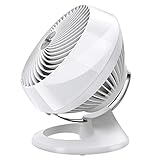
The single biggest misconception buyers make is assuming all fans operate on the same aerodynamic principles. Traditional oscillating fans move air back and forth across a narrow arc, offering temporary relief only when the stream passes directly over you. In contrast, a true whole room air circulator uses deep-pitch blades and an aerodynamic intake cone to create a concentrated, high-velocity beam of air. This focused stream travels across the room, bounces off walls or ceilings, and establishes a continuous loop of air movement that refreshes the entire volume of the space rather than just cooling a localized zone.
Calculating CFM Requirements for Room Size
Airflow volume is measured in cubic feet per minute (CFM), which dictates how effectively a unit can cycle air through a specific footprint. Small bedrooms or home offices typically require a lower CFM output, whereas open-concept kitchens, living rooms, and large master suites demand much higher output ratings to maintain momentum. Always match the manufacturer’s maximum throw distance and CFM rating to the dimensions of your room. Undersized units will fail to push air across the entire span, while excessively powerful units in tiny spaces can create uncomfortable draftiness and unnecessary background noise.
Blade Pitch and Aerodynamic Efficiency
The physical geometry of the blades dictates how well the motor translates electricity into actual kinetic airflow. Cheaply made fans often feature flat, shallow blades that chop the air rather than directing it, resulting in weak velocity and wasted energy. Look for units that feature steeply pitched blades housed inside a specialized deep intake grille and cylindrical air acceleration duct. This specialized housing compresses the air before launching it forward, allowing the unit to project a tight vortex pattern across impressive distances without needing a massive physical footprint.
Motor Technology: AC Reliability Versus DC Efficiency
The internal motor dictates both the lifespan of your appliance and your monthly electricity bill. Traditional Alternating Current (AC) motors are generally more affordable upfront, reliable, and straightforward to repair, though they usually offer fewer speed increments and consume more power at high settings. Direct Current (DC) motors, on the other hand, run significantly cooler, consume a fraction of the electricity, and allow for ultra-fine speed adjustments ranging from a gentle whisper to maximum velocity. If you plan on running your circulator for extended periods throughout the day, investing in a DC-powered unit pays dividends in energy savings.
Noise Output and Decibel Management
Because whole room circulators rely on high-velocity air movement, motor and wind noise can become a factor when operating at maximum capacities. Review the decibel (dB) ratings if you intend to use the circulator in a bedroom or home office where quiet environments are essential. Units that feature multi-speed settings allow you to dial down the velocity during quiet hours, dropping the decibel output to a gentle white noise hum. Properly balanced blades also reduce mechanical vibration against hard surfaces, keeping the unit steady and quiet even at top speeds.
Build Quality, Materials, and Maintenance
Air circulators accumulate a significant amount of dust, pet hair, and airborne debris over months of continuous operation. A frequently overlooked buying factor is how easily the unit can be disassembled for routine cleaning. Models with tool-free removable front grilles and accessible blades make maintenance straightforward, ensuring your motor does not strain against built-up grime. Furthermore, look for durable ABS plastics or reinforced metal components that resist cracking and maintain structural integrity over years of regular adjustments.
When to Invest in Premium Upgrades
Basic manual-dial air circulators are exceptional at doing one job reliably, but premium upgrades can significantly alter your daily user experience. Features such as remote controls, digital LED displays, programmable timers, and automated multi-directional pivoting add substantial convenience if the unit is placed out of arm’s reach or mounted high up. Smart-home integration or eco-modes that automatically adjust airflow based on ambient room temperature are also worth the extra investment if you want a set-it-and-forget-it climate control helper.
Related Guides
To see how specific models perform under rigorous testing conditions, explore our detailed roundups featuring the top-performing whole room air circulators as well as a focused look at the best reliable Vornado options available on the market today.
FAQ
Do air circulators actually cool down a room?
Air circulators do not lower the actual ambient temperature of a room like an air conditioner does. Instead, they create a wind-chill effect on your skin and mix stratified air layers, making the environment feel significantly cooler and more comfortable.
How far away from a wall should I place a circulator?
For optimal performance, place your circulator a few feet away from walls or furniture to allow uninterrupted intake airflow. Pointing the unit upward toward the center of the room or along a clear wall path maximizes the continuous vortex cycle.
Can I run my air circulator continuously overnight?
Yes, many modern circulators are designed for continuous operation and feature energy-efficient motors that draw minimal power. Just ensure the unit is placed on a stable, flat surface and clean the front grille periodically to prevent dust accumulation.
What is the difference between a fan and an air circulator?
A standard fan relies on wide oscillation to blow an intermittent breeze directly at you over a short distance. An air circulator uses specialized deep-pitch blades and aerodynamic shrouds to project a high-velocity beam of air across the entire room, forcing all the air in the space to circulate.