Key takeaways
- Climate: Match the vine to your hardiness zone and winter conditions. Tropical options may need to be grown as annuals or moved indoors in cooler regions.
- Growth rate: Fast climbers create coverage sooner, but they can demand more pruning and stronger structural support as they mature.
- Sun exposure: Check how many hours of direct light your pergola receives. Flowering is usually best when the plant gets the amount of sun recommended for its variety.
- Support and weight: A mature vine can become surprisingly heavy. Inspect beams, rafters, and trellis wires before training vigorous plants overhead.
- Maintenance: Consider leaf drop, pruning, watering, and whether you want fragrance, flowers, privacy, or mainly green coverage throughout the season.
What's inside
A pergola can provide shade and structure, yet the right vine determines whether it becomes a cool garden retreat or a tangle of weak stems and constant maintenance. Buyers often overlook mature size, winter tolerance, support needs, and the difference between a seed packet and an established plant.
This guide compares promising pergola climbers for 2026, from fragrant jasmine and dramatic wisteria to fast-growing tropical vines. The focus is practical: how each choice behaves outdoors, where it grows best, and what to consider before planting around a seating area.
As an Amazon Associate we earn from qualifying purchases at no extra cost to you. Product prices and availability are accurate as of the date shown and are subject to change.




🛒 Best Price Today on Amazon
Prime members get fast, free shipping on everything above, plus member-only deals. New members get a 30-day free trial — cancel anytime.
How to Choose a Climbing Vine For Pergola (2026)
- Climate: Match the vine to your hardiness zone and winter conditions. Tropical options may need to be grown as annuals or moved indoors in cooler regions.
- Growth rate: Fast climbers create coverage sooner, but they can demand more pruning and stronger structural support as they mature.
- Sun exposure: Check how many hours of direct light your pergola receives. Flowering is usually best when the plant gets the amount of sun recommended for its variety.
- Support and weight: A mature vine can become surprisingly heavy. Inspect beams, rafters, and trellis wires before training vigorous plants overhead.
- Maintenance: Consider leaf drop, pruning, watering, and whether you want fragrance, flowers, privacy, or mainly green coverage throughout the season.
The Best Climbing Vine For Pergola (2026)s Reviewed
Boston Ivy Vine Seeds
Boston Ivy is a strong choice for gardeners who want dense seasonal coverage and attractive foliage rather than prominent flowers. This seed packet offers an economical way to establish vines along a pergola, fence, or wall, although starting from seed requires patience and consistent moisture during early growth.
Thunbergia Grandiflora Blue Trumpet Vine
Sold as a pair of young plants, Thunbergia grandiflora brings large blue trumpet-shaped flowers and a quick-climbing habit to warm outdoor spaces. It suits sunny pergolas and privacy screens especially well, but its vigorous growth and limited cold tolerance make it best for gardeners prepared to prune and protect it when temperatures fall.
Wisteria Floribunda Live Plants
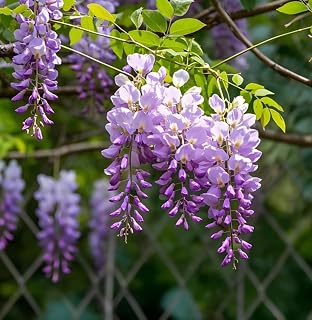
These three young wisteria plants offer the possibility of a spectacular flowering canopy, with cascading blooms that suit traditional and cottage-style gardens. Wisteria is a long-term project rather than an instant screen: provide a very sturdy pergola, train the main framework early, and prune regularly to keep the vine controlled.
Mixed Mandevilla Live Plants
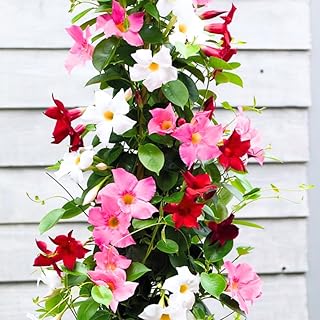
Mixed mandevilla plants are a colorful option for sunny decks and pergolas, producing long-lasting flowers when given warmth, regular watering, and a climbing support. Their warm-climate preference makes them especially practical in zones 9–11, while container growing allows gardeners elsewhere to bring them indoors or treat them as seasonal accents.
American Purple Wisteria
American purple wisteria combines vigorous climbing growth with trailing lavender-purple flowers, making it a natural focal point over a garden seating area. Its compact potted start is easy to position, but its eventual strength should not be underestimated; use a durable support system and plan for annual shaping.
Frequently Asked Questions
What is the fastest-growing vine for a pergola?
Thunbergia grandiflora and wisteria can establish quickly in suitable climates, though growth depends on light, warmth, watering, and soil conditions. Fast growth is not automatically better, since vigorous vines need frequent training and a strong frame.
Which pergola vine is best for flowers?
Wisteria is a standout for dramatic hanging flower clusters, while mandevilla offers a longer display of colorful blooms in warm conditions. Choose based on climate: wisteria is generally more adaptable to seasonal conditions, whereas mandevilla prefers heat.
Can I grow a pergola vine in a container?
Yes, particularly mandevilla and other manageable climbers. Use a large, well-draining container, provide a stable trellis, and expect to water more often than you would an in-ground plant. Container-grown vines may also need winter protection.
How do I keep a climbing vine from damaging my pergola?
Train young stems along wires, clips, or a separate trellis instead of allowing them to force their way beneath roofing or into joints. Prune away congested growth, inspect fasteners periodically, and avoid letting a heavy mature vine rely on lightweight lattice alone.
Final Thoughts
For dramatic long-term character, American purple wisteria and the Wisteria floribunda set are compelling choices when the pergola is built to carry them. In warm regions, Thunbergia grandiflora delivers fast floral coverage, while mixed mandevilla plants are a flexible pick for containers and seasonal color.