
Key takeaways
- Put it where you walk: Frequency training only works if the bar is unavoidable. The doorway between kitchen and living room, normally the worst choice, becomes the best one.
- Prioritize seating durability: Fifty light sets a week loads the mounting far more times than three hard sessions do. Designs that resist creep matter more than peak rating.
- Accept ducking: A permanently mounted bar in a busy doorway means bending slightly each pass. That is the cost of the method, and most people stop noticing within a week.
- Keep sets easy: Stop at roughly half your maximum reps. The point is accumulated volume without fatigue, not hard sets scattered through the day.
- Inspect weekly: High-frequency use means high-frequency loading cycles. A quick check of hooks, pads, and adjustment locks each week prevents slow loosening.
What's inside
There is a training method that suits small homes better than it suits gyms: doing three or four easy reps every time you walk past the bar, twenty times a day, never approaching failure. Practitioners call it greasing the groove, and it works because strength responds well to frequent submaximal practice. It also requires something a gym cannot provide and a small apartment can, which is a bar you physically cannot avoid walking under.
That completely inverts the usual buying criteria. You are no longer optimizing for a bar you take down after a session; you want one that stays up permanently, sits in your main traffic route rather than out of the way, and holds up to fifty or sixty low-intensity sets a week instead of three hard ones. Durability of the seating mechanism matters more than peak capacity. Below, six options judged on whether they can live in a doorway you use constantly and survive being used constantly too.
As an Amazon Associate we earn from qualifying purchases at no extra cost to you. Product prices and availability are accurate as of the date shown and are subject to change.


Quick Comparison
| Product | Best For | Standout Feature | Watch Out For |
|---|---|---|---|
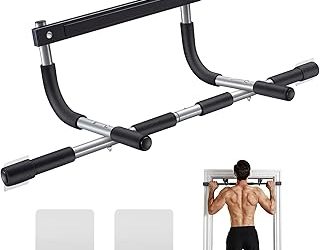
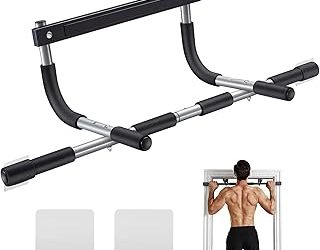
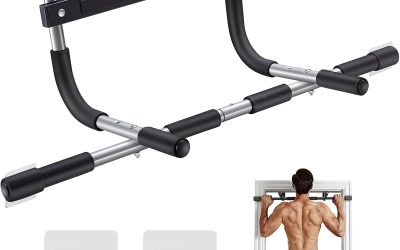
| Ally Peaks Multi-Grip Doorway Bar | Varying grips across the day | Different positions prevent repetitive strain | Frame projection means ducking each pass |
| Ally Peaks 440 lb Doorway Bar | High-frequency heavy use | Thick steel unfazed by hundreds of weekly reps | Bulk is noticeable in a constant-traffic doorway |
| Sportneer No-Drill Doorway Bar | Low-profile permanent placement | Slim shape stays out of the walking path | Frequent light use can loosen the span setting |
| Ally Peaks Width-Adjustable Doorway Bar | Perfect fit in a busy doorway | Tight fit resists shifting over many sets | Lock needs regular checking under high use |
| Upgrade Multi-Grip Bar with Larger Hooks | Staying seated over months | Big hooks resist the creep of repeated loading | Deeper hooks lower the effective door clearance |
| Joist Mount Wall Pull Up Bar | Set-and-forget frequent training | Bolted mount never needs re-checking | Wall position may be off your usual route |
How to Choose
- Put it where you walk: Frequency training only works if the bar is unavoidable. The doorway between kitchen and living room, normally the worst choice, becomes the best one.
- Prioritize seating durability: Fifty light sets a week loads the mounting far more times than three hard sessions do. Designs that resist creep matter more than peak rating.
- Accept ducking: A permanently mounted bar in a busy doorway means bending slightly each pass. That is the cost of the method, and most people stop noticing within a week.
- Keep sets easy: Stop at roughly half your maximum reps. The point is accumulated volume without fatigue, not hard sets scattered through the day.
- Inspect weekly: High-frequency use means high-frequency loading cycles. A quick check of hooks, pads, and adjustment locks each week prevents slow loosening.
Top Picks Reviewed
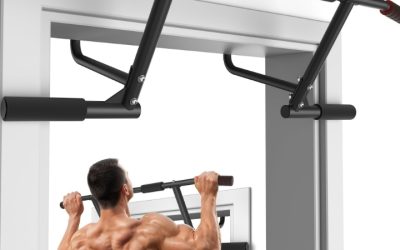
Best for Grip Rotation: Ally Peaks Multi-Grip Doorway Bar
Doing the same grip fifty times a week is how elbow tendon issues start. Having wide, narrow, and neutral positions on one bar lets you rotate across the day, which spreads load across different tissue and keeps the joints comfortable.
The projecting frame is something you will duck under repeatedly. In a doorway you pass twenty times a day, that becomes a genuine consideration rather than a footnote.
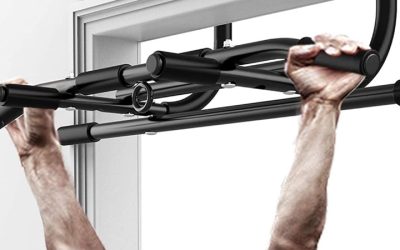
Toughest Under Volume: Ally Peaks 440 lb Doorway Bar
High-frequency training piles up loading cycles fast, and thick-walled steel simply does not care. If your plan involves several hundred reps a week for years, this is the structure that will still be tight at the end of it.
Bulk in a high-traffic doorway is the tradeoff. It is the least discreet option here in exactly the location where discretion would help.
Slimmest Permanent Fit: Sportneer No-Drill Doorway Bar
The compact profile keeps the walking path clearer than the multi-grip designs, which matters a great deal in a doorway you use dozens of times daily. It is the easiest to live with permanently.
Light, frequent loading is actually harder on adjustable spans than occasional heavy loading, because the mechanism cycles more. Verify the setting weekly rather than assuming it holds.
Tightest Fit: Ally Peaks Width-Adjustable Doorway Bar
A bar sized exactly to your opening has no room to shift, and over hundreds of sets that precision is what prevents slow migration and the creaking that comes with it.
Adjustable mechanisms need supervision under this kind of use. Build a weekly habit of confirming the lock, because a slow loosening is not obvious until it matters.
Most Stable Long Term: Upgrade Multi-Grip Bar with Larger Hooks
Enlarged hooks grip more of the frame, which is precisely the property that resists the gradual creep caused by repeated light loading. Over months of daily use it stays where you put it.
Deeper hooks sit higher above the casing and reduce the headroom for anyone walking through. In a small home with lower door headers, that is felt daily.
Best Set-and-Forget: Joist Mount Wall Pull Up Bar
Bolted into framing, there is nothing to check, nothing to loosen, and nothing to re-seat. For a training method built on doing something twenty times a day without thinking about it, removing all maintenance is the ideal.
Walls are not doorways. If the only mountable wall is in a corner you rarely pass, you lose the automatic prompting that makes frequency training work in the first place.
Frequently Asked Questions
Does greasing the groove actually build strength?
Yes, particularly for pull-ups. Frequent submaximal practice improves neural efficiency and accumulates substantial weekly volume without the fatigue of hard sessions.
How many reps should each pass be?
Roughly half your maximum. If you can do ten, do four or five. You should finish every set feeling like you could easily have done more.
Will constant use wear out a doorway bar?
The bar itself, no. The mounting interface and any padding wear faster under high cycle counts, so inspect those parts weekly rather than annually.
Is it bad to train the same movement every day?
Not at submaximal intensity. Problems arise from repeated maximal effort, not from frequent easy practice, though varying grip positions is still wise for the elbows.
Final Thoughts
If you live somewhere small, put the bar in the doorway you cannot avoid and leave it there. The usual advice about choosing a low-traffic opening optimizes for not being annoyed; frequency training optimizes for being reminded. Choose the design that holds its seating over hundreds of light sets, check it weekly, and let the doorway do the coaching.

Write Your Review
No reviews yet. Be the first to share your experience!