
Key takeaways
- Measure jamb-to-jamb, not door width. The door slab is narrower than the opening. Take the clear distance between the finished jambs at the height you plan to mount, since older frames are rarely square top to bottom.
- Check trim projection and shape. Leverage brackets need flat casing with enough depth to hook over. Rounded, beveled, or ultra-thin modern trim gives the bracket almost nothing to bite, and that’s when bars start slipping.
- Identify your wall material above the door. Solid wood header behind drywall is ideal. Plaster and lath, hollow-core partition walls, or drywall with a large gap above the casing will crack or dent under repeated pressure — pad the contact area or choose a bolted mount instead.
- Match the load rating to your real training weight. Add your bodyweight plus any vest or dumbbell, then leave headroom for the dynamic spike of a kipping rep, which can briefly double static load. A bar rated near 220 lb is not a 210 lb athlete’s bar.
- Think about grip height and knuckle clearance. You need room to hang without your feet touching the floor and without your hands jamming into the frame. Openings under 80 inches tall force knee bends; wide multi-grip bars need clearance so your knuckles clear the casing at the top of the pull.
What's inside
A doorway pull-up bar lives or dies on two measurements most buyers never take: the clear width between the door jambs, and how far the casing trim stands out from the wall. Those two numbers decide whether a bar clamps flat and stays put, or rocks a quarter inch on every rep and slowly chews the paint off your molding. Most interior doorways in North American homes fall between 28 and 32 inches of rough opening, with trim projecting roughly a half inch to an inch — but “most” is not “yours,” and a tape measure costs less than a patched door frame.
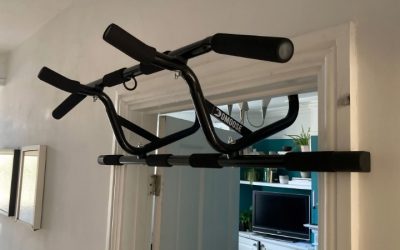
The second thing worth understanding is where the load actually goes. Compression-style bars wedge horizontally against the jambs and rely on friction plus the strength of the frame in a direction it was never designed to resist. Leverage-mount bars sit over the top of the casing and press against the wall above the door, so your body weight becomes downward force through the header — the single strongest piece of framing in the whole opening. That distinction matters more than grip foam, more than color, and more than any spec on the box. The picks below are sorted by how honestly they handle it.
As an Amazon Associate we earn from qualifying purchases at no extra cost to you. Product prices and availability are accurate as of the date shown and are subject to change.

#1 Pick

#2 Pick


#4 Pick

#5 Pick

#6 Pick

#7 Pick

Quick Comparison
| Pick | Mount Style | Typical Doorway Fit | Frame Load Path | Best For |
|---|---|---|---|---|
| Leverage-Mount Multi-Grip Bar | Over-casing bracket, no screws | 24–36 in openings, trim up to 1 in | Downward into header | Heavier lifters, weighted reps |
| Telescoping Compression Bar | Twist-lock friction fit | 26–36 in adjustable | Outward into jambs | Renters, bodyweight-only training |
| Slim Fixed-Length Bar | Compression with end caps | Single size, narrow doors | Outward into jambs | Older homes, tight hallways |
| Bracket-Mounted Doorway Bar | Screwed into studs | Any width, permanent | Shear through fasteners | Owners wanting a fixed station |
| Padded Trainer Bar with Sleeves | Leverage mount, foam contact | 28–34 in openings | Downward into header | Beginners and shared households |
How to Choose
- Measure jamb-to-jamb, not door width. The door slab is narrower than the opening. Take the clear distance between the finished jambs at the height you plan to mount, since older frames are rarely square top to bottom.
- Check trim projection and shape. Leverage brackets need flat casing with enough depth to hook over. Rounded, beveled, or ultra-thin modern trim gives the bracket almost nothing to bite, and that’s when bars start slipping.
- Identify your wall material above the door. Solid wood header behind drywall is ideal. Plaster and lath, hollow-core partition walls, or drywall with a large gap above the casing will crack or dent under repeated pressure — pad the contact area or choose a bolted mount instead.
- Match the load rating to your real training weight. Add your bodyweight plus any vest or dumbbell, then leave headroom for the dynamic spike of a kipping rep, which can briefly double static load. A bar rated near 220 lb is not a 210 lb athlete’s bar.
- Think about grip height and knuckle clearance. You need room to hang without your feet touching the floor and without your hands jamming into the frame. Openings under 80 inches tall force knee bends; wide multi-grip bars need clearance so your knuckles clear the casing at the top of the pull.
Top Picks Reviewed
Leverage-Mount Multi-Grip Bar
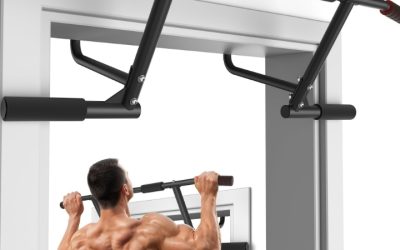
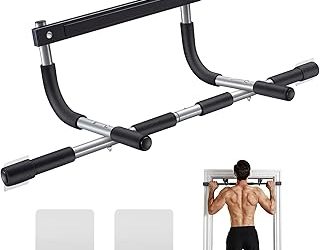
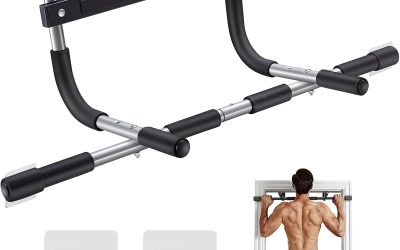
This is the configuration I recommend to anyone training seriously in a rented apartment. The bracket assembly straddles the casing and transfers load downward, so the frame is loaded the way it was engineered to be loaded. Multiple hand positions — wide, neutral, close — let you hit different lat and grip demands from the same fixture. The tradeoff is bulk: the frame arms extend into the room and you’ll want to lift it off the doorway between sessions, which takes about ten seconds once you learn the angle. Look for wide rubber contact plates; narrow steel feet concentrate pressure and print into drywall.
Telescoping Compression Bar
The classic twist-to-tighten bar is the cheapest way to start doing pull-ups at home, and it works well within limits. Adjustability means it moves to a different doorway or a different apartment, and it stows in a closet. But friction mounts are only as good as the surface they grip and the honesty of the person installing them: retighten before every session, keep the bar below eye level so a slip has less consequence, and skip explosive movements entirely. Painted or waxed jambs reduce friction more than people expect.
Slim Fixed-Length Bar
Fixed-length bars have fewer moving parts than telescoping models, which means fewer places to loosen mid-set. They suit older homes with narrow doorways where an adjustable bar would sit near the short end of its range and lose thread engagement. The obvious limitation is portability — buy the wrong size and you own a towel rack. Verify the size against your measurement twice before ordering.
Bracket-Mounted Doorway Bar
If you own the walls and want the most solid feel, screwing a bar into the studs beside or above the opening ends the wobble question permanently. Done properly, with lag screws into framing rather than anchors into drywall, this handles weighted work and dynamic movement without complaint. It also leaves holes, so it’s a commitment. Find the studs with a proper finder, not by knocking.
Padded Trainer Bar with Removable Sleeves
A leverage-mount bar with thick foam sleeves is the friendliest option for a household where multiple people of different sizes and skill levels use it. The padding spares your palms during long negative-rep sessions and cushions the wall contact points. Sleeves that rotate on the tube reduce shear on the skin but also reduce grip training benefit, which is why removable ones are the right call.
Frequently Asked Questions
Will a doorway pull-up bar damage my trim?
It can, and the pattern is predictable: compression bars scuff and compress the jamb faces, while leverage mounts dent the wall above the casing. Both are preventable with a thin rubber or felt pad at every contact point and by taking the bar down when it’s not in use. Existing hairline cracks in plaster are a warning sign, not a detail to ignore.
How do I know whether my door frame can hold my weight?
Hang from the mounted bar with your feet still on the ground and gradually shift weight onto your arms while watching the contact points and listening for creaking. If the casing flexes, the bracket shifts, or anything cracks, stop. A frame that groans at half your bodyweight will not survive a full set.
Can I do kipping pull-ups or muscle-ups on one?
On compression bars, no. Swinging generates lateral and rotational forces that friction mounts cannot resist, and the bar can walk out of position mid-rep. Leverage mounts tolerate controlled movement better, but any dynamic gymnastics work belongs on a bolted or freestanding rig.
What if my doorway is wider than the bar’s maximum?
Don’t improvise with spacers or blocks — they concentrate load on unsupported points. A wide opening is a good reason to switch to a wall-mounted or ceiling-mounted bar anchored into framing, which costs little more and removes the fit problem entirely.
Final Thoughts
The best door pull-up bar is the one your specific opening can support without complaint. Measure the clear width and trim depth, figure out what’s behind the wall above the header, and then pick a mount style that sends force in a direction the framing already handles. If your walls are solid and your trim is flat, a leverage-mount multi-grip bar gives you the widest range of training with the least risk. If you’re renting a place with plaster walls and delicate casing, be honest about the ceiling on what a friction bar can do — or spend a little more on a mount that goes into studs and stop worrying about it altogether.

Write Your Review
No reviews yet. Be the first to share your experience!