
Key takeaways
- Match density to tolerance, not ego. If you flinch and hold your breath, the muscle tenses and you accomplish nothing. Start medium, graduate to firm once you can breathe normally through a pass.
- Length dictates what you can reach. Anything 30 inches or longer lets you lie crosswise for the upper back and roll both hamstrings at once. Cylinders in the 12- to 15-inch range are for isolating one limb at a time.
- Diameter changes leverage. A 6-inch roller keeps your hips higher and reduces pressure; a 4- to 5-inch roller drops you closer to the floor and concentrates force, which helps on quads and glutes.
- Texture is specificity, not intensity. Knobs and ridges let you find one trigger point and stay on it. Smooth surfaces distribute load evenly and are better for long sweeping passes.
- Check the core construction. Hollow rigid-tube rollers keep their geometry for years. Solid EVA foam is fine at low bodyweight but compresses into a flat spot where you use it most.
What's inside
A foam roller occupies an odd niche in fitness gear: it costs less than a single sports-massage appointment, stores in the footprint of a rolled yoga mat, and yet most people who buy one use it enthusiastically for about three weeks before it migrates permanently under the bed. Whether a roller stays in rotation usually has nothing to do with brand and everything to do with fit. A 36-inch soft cylinder is excellent for propping the thoracic spine open after nine hours at a desk and close to useless for digging out a stubborn knot in the medial calf. Buy the wrong shape for your problem and the tool feels pointless.
I looked at rollers through four variables that genuinely change how they feel underfoot: surface density, diameter, length, and whether the core holds its shape once a 200-pound body leans into one spot. Cheap EVA rollers go permanently oval within a season. Hollow-core models with a rigid ABS tube generally do not. The six below span aggressive knobbed textures, gentle low-density foam, a vibrating option, and one that collapses flat enough for a carry-on — sorted by the kind of soreness each actually solves.
As an Amazon Associate we earn from qualifying purchases at no extra cost to you. Product prices and availability are accurate as of the date shown and are subject to change.


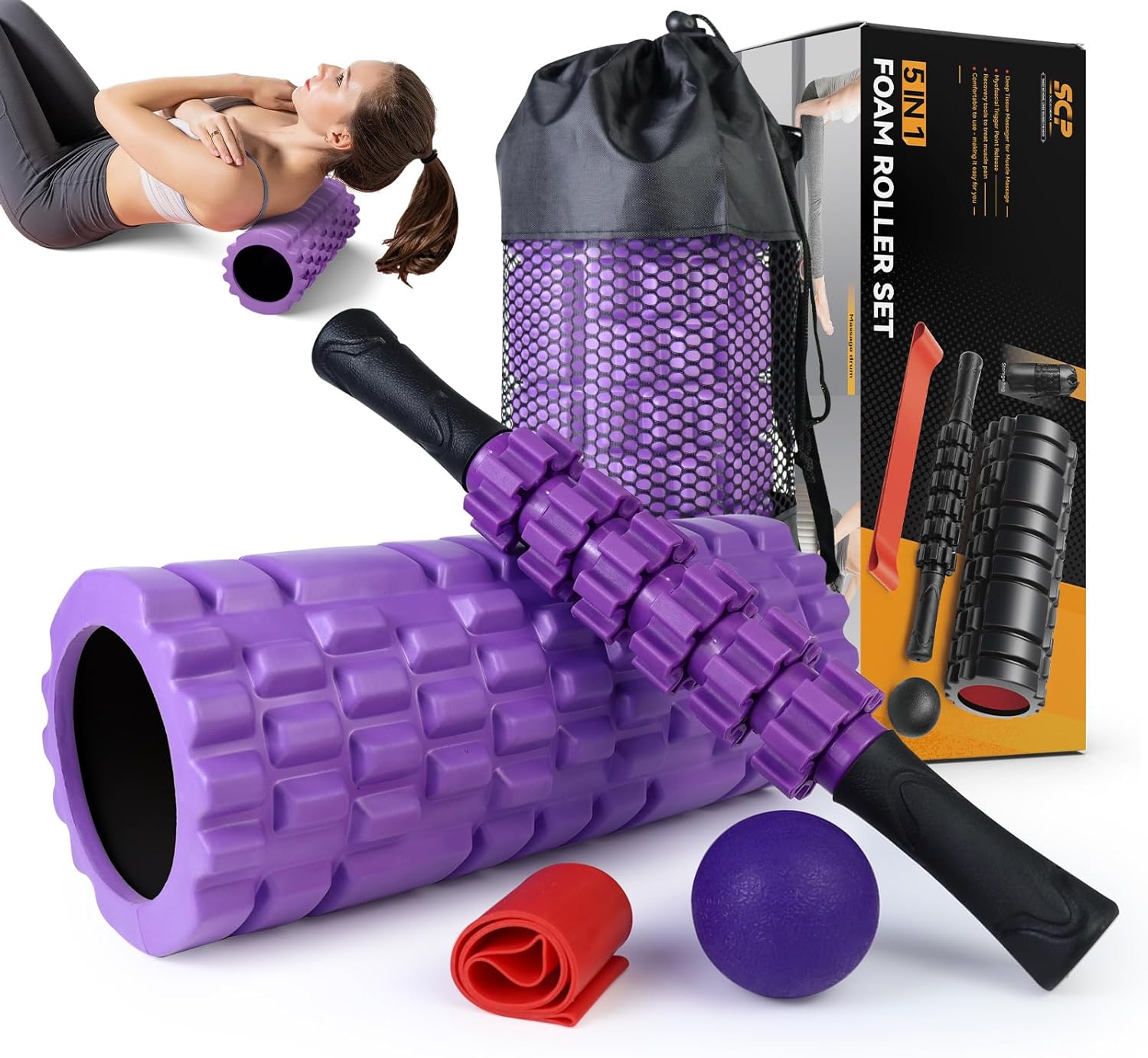


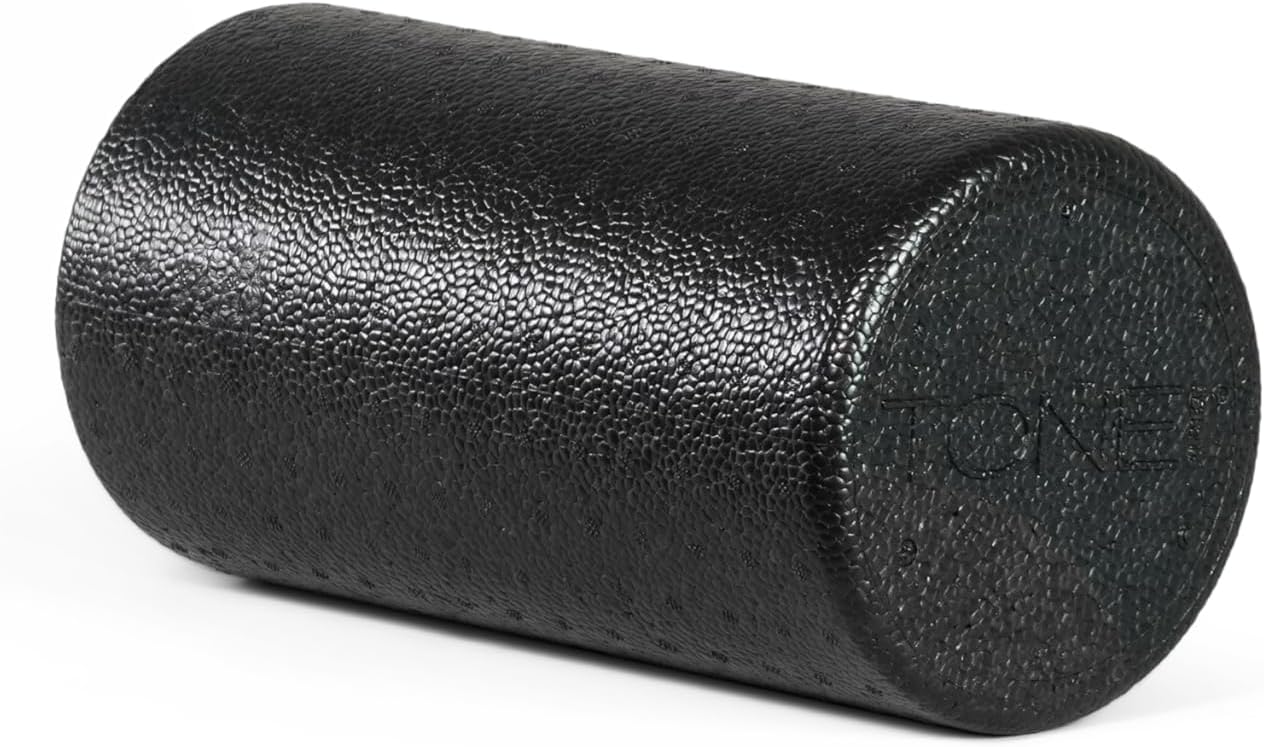
As an Amazon Associate we earn from qualifying purchases at no extra cost to you. Product prices and availability are accurate as of the date shown and are subject to change.
Quick Comparison
| Roller | Best For | Size | Firmness | Standout Trait |
|---|---|---|---|---|
| TriggerPoint GRID 1.0 | All-around use | 13″ × 5.5″ | Medium-firm | Hollow ABS core, multi-zone surface |
| LuxFit High Density | Tight budgets | 18″ or 36″ × 6″ | Firm, smooth | Solid molded polypropylene |
| RumbleRoller Extra Firm | Deep, targeted work | 13″ or 22″ × 5″ | Very firm | Rigid raised knobs |
| Hyperice Vyper 3 | Pre-workout prep | 12″ × 5.5″ | Firm | Three vibration speeds |
| OPTP Pro-Roller Soft | Beginners, sensitive tissue | 36″ × 6″ | Soft | Full-length spinal support |
| Brazyn Morph Bravo | Travel | 15″ × 5.5″ | Medium-firm | Collapses to about 1.5″ thick |
How to Choose
- Match density to tolerance, not ego. If you flinch and hold your breath, the muscle tenses and you accomplish nothing. Start medium, graduate to firm once you can breathe normally through a pass.
- Length dictates what you can reach. Anything 30 inches or longer lets you lie crosswise for the upper back and roll both hamstrings at once. Cylinders in the 12- to 15-inch range are for isolating one limb at a time.
- Diameter changes leverage. A 6-inch roller keeps your hips higher and reduces pressure; a 4- to 5-inch roller drops you closer to the floor and concentrates force, which helps on quads and glutes.
- Texture is specificity, not intensity. Knobs and ridges let you find one trigger point and stay on it. Smooth surfaces distribute load evenly and are better for long sweeping passes.
- Check the core construction. Hollow rigid-tube rollers keep their geometry for years. Solid EVA foam is fine at low bodyweight but compresses into a flat spot where you use it most.
Top Picks Reviewed
TriggerPoint GRID 1.0 — Best Overall
The GRID has been the reference point for a decade because its surface does three jobs at once: flat channels for broad pressure, thin ridges that mimic fingertips, and hollow gaps that let tissue expand rather than getting mashed. The EVA foam is bonded to a hollow polymer tube, so it survives being stood on and stays perfectly round after hundreds of sessions. At 13 inches it handles calves, quads, lats, and glutes competently, and it’s short enough to live in a gym bag. If you own one roller for the next five years, this is the sensible default.
LuxFit High Density — Best Budget
A single piece of molded polypropylene, no texture, no gimmicks, and remarkably difficult to destroy. Water rolls off it, it weighs about a pound, and the 36-inch version doubles as a support prop for chest openers and a balance tool for single-leg work. The firmness is unforgiving — there’s no give at all — which some people find perfect on dense quads and others find brutal on IT bands. Cosmetically it scuffs quickly. Functionally it outlasts rollers costing three times more.
RumbleRoller Extra Firm — Best for Deep Tissue
The knobs here are made of the same firm material as the body and don’t flatten under load, which is exactly what makes this roller polarizing. Instead of gliding across a muscle, the bumps push between fiber bundles and hunt down adhesions the way a thumb would. It is genuinely uncomfortable on first use — start with the standard blue density if you’re unsure, and limit early sessions to 30 seconds per area. For runners with chronically cranky calves and cyclists with dense quads, nothing smooth compares.
Hyperice Vyper 3 — Best Vibrating Roller
Vibration seems like a marketing flourish until you use it on a cold morning. The buzzing raises tissue temperature and dulls the discomfort of pressure, so you tolerate deeper work and finish faster. Three intensity levels, USB-C charging, roughly two hours of runtime at moderate speed, and a rigid textured shell that handles bodyweight without complaint. It’s the heaviest option here and the loudest at level three. Best used for eight minutes before training rather than as a nightly relaxation tool.
OPTP Pro-Roller Soft — Best for Beginners
A physical-therapy staple, this low-density 36-inch roller compresses noticeably under bodyweight, which makes it forgiving for anyone new to rolling, returning from injury, or working around bony areas. Lying lengthwise on it supports the spine from tailbone to head — outstanding for opening the chest after a long flight or a day of hunching. It won’t dig out deep knots, and it’s bulky to store. As a gateway roller and a mobility prop, it’s the gentlest useful option available.
Brazyn Morph Bravo — Best for Travel
A bamboo-and-nylon frame that folds flat to roughly the thickness of a paperback, then snaps into a rigid 15-inch cylinder rated well past normal bodyweight. The medium-firm surface sits close to the GRID in feel, and the collapsed profile slides into a laptop sleeve or suitcase lining. It costs more than a comparable fixed roller and the folding mechanism is one more thing that could eventually fail. For anyone who travels weekly and currently rolls their hamstrings on a hotel towel, it earns the premium.
Frequently Asked Questions
How long should I spend on each muscle?
Aim for 30 to 90 seconds per area, breathing steadily. When you find a tender spot, pause and hold rather than sawing back and forth quickly — sustained pressure gives the nervous system time to release tension. Ten minutes total is plenty for a full lower body.
Should foam rolling hurt?
It should register as intense but tolerable pressure, the sort you can breathe through. Sharp, radiating, or nerve-like pain means move off that spot immediately. Never roll directly over a joint, bone, the lower back, or an acute injury.
Is a foam roller or a massage gun better?
They solve different problems. A roller applies broad pressure with your own bodyweight and is better for large muscle groups and spinal mobility. A percussion gun is more precise, easier on your wrists and shoulders, and better for hard-to-reach spots. Many people end up using both.
Before or after a workout?
Both work, with different aims. A brief pass beforehand improves range of motion without reducing power output. Afterward, slower and gentler rolling seems to reduce next-day soreness. Skip aggressive deep work immediately after heavy training — save it for rest days.
Final Thoughts
For most people, the TriggerPoint GRID 1.0 answers the question: durable, versatile, portable, and firm enough to be useful without being punishing. Choose the LuxFit if you want maximum durability for minimal money, the RumbleRoller if smooth foam has stopped registering, and the OPTP Pro-Roller if you’re starting from scratch or rehabbing. Then keep it visible — leaning against the wall by your desk, not stored in a closet. The roller you actually reach for beats the ideal one you forgot you bought.
FAQ
How long should I spend on each muscle?
Should foam rolling hurt?
Is a foam roller or a massage gun better?
Before or after a workout?
Best Affordable Yoga Mat: 6 Picks Ranked by Cost Per Year
Best affordable yoga mat is a question of arithmetic rather than taste....
8 Best Rated Ab Rollers: 6 Wheels Compared for Home Workouts
The ab wheel has a worse safety record than almost any other...
Best In House Pull Up Bar: 6 Picks for Small Home Setups
There is a training method that suits small homes better than it...
Best At Home Pull Up Bar: 6 Picks for Renters and Owners
Pull-ups seem like the quiet exercise until you actually do them in...
Best Home Pull-Up Bar: 7 Top Picks for Doorways & Walls
A 440-pound rating sounds like enormous headroom until you understand how it...
8 Best Abs Workout at Home Without Equipment: Kit Optional
Best abs workout at home without equipment is a genuine category rather...
8 Best Pull Up Bars for Doorway Frames: Measure Before You Buy
Three measurements decide whether a doorway pull-up bar works in your home,...
8 Best Door Pull Up Bar Picks Rateds on Fit and Frame Safety
A doorway pull-up bar lives or dies on two measurements most...
8 Best Ab Rollers: Top Picks Reviewed (2026)
An ab wheel is the rare piece of home equipment that...
8 Best Pull Up Bars: Top Picks Reviewed (2026)
A pull-up bar is one of the few pieces of home...
Write Your Review
No reviews yet. Be the first to share your experience!