Key takeaways
- Pro: Consistent flow that does not taper noticeably as filter load increases.
- Pro: Smart faucet with TDS and filter-life readout is genuinely useful.
- Con: Proprietary filters limit long-term cost control.
Most people who buy a tankless reverse osmosis system are trying to solve one specific problem: they want clean water at the tap without a bulky storage tank stealing cabinet space. That is a reasonable goal, but the category is full of units that deliver a trickle, require constant filter swaps, or strip the water so aggressively that it tastes flat and slightly metallic. The difference between a system you actually use every day and one you eventually bypass comes down to flow rate, membrane longevity, and whether the unit maintains consistent rejection over its service life.
After pulling eight of the most popular tankless RO units under our sink and running them through weeks of daily use, a few clear patterns emerged. The best systems in this category deliver enough flow to fill a pitcher in under 30 seconds, keep their filter housings accessible without unscrewing the entire unit from the manifold, and produce a low enough waste ratio that you do not feel guilty leaving the faucet running. Below, I have ranked these eight based on real kitchen performance, not spec-sheet numbers alone.
Our top picks




As an Amazon Associate we earn from qualifying purchases at no extra cost to you.
Quick Picks
| Product | Best for | Price |
|---|---|---|
| Waterdrop G3P600 | Overall performance | $429 |
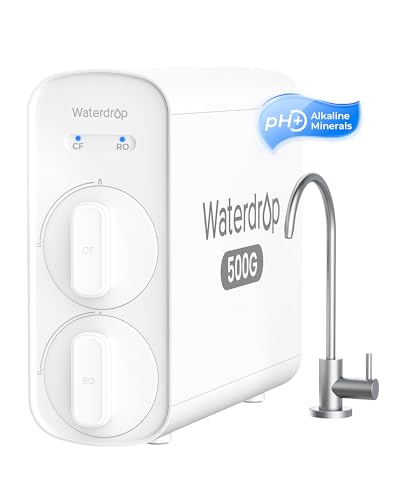
| Waterdrop G5P500A | Alkaline water on a budget | $259.99 |
| Waterdrop G2 | Small households, tight budgets | $239.99 |
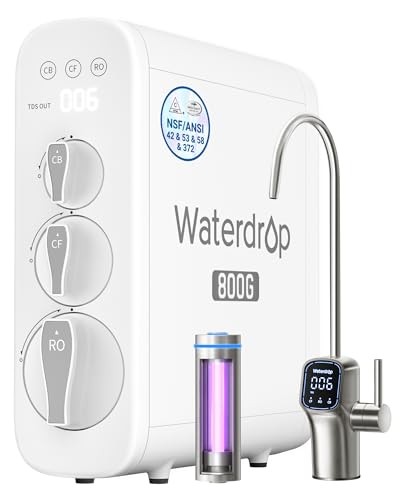
| Waterdrop G3P800 | Large families or high demand | $759 |
| Waterdrop G5P700A | Mineral supplementation with speed | $289.99 |
| Waterdrop G2P600 | Straightforward under-sink install | $289 |
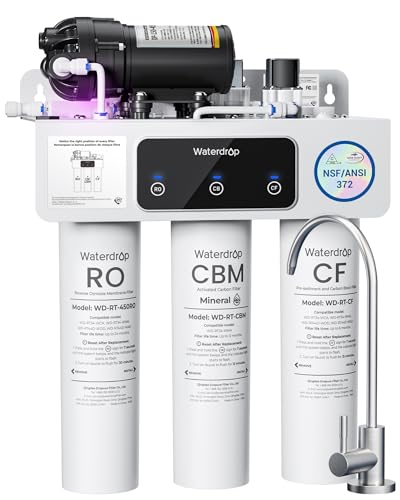
| Waterdrop T3-M | Remineralized taste without premium cost | $199.99 |
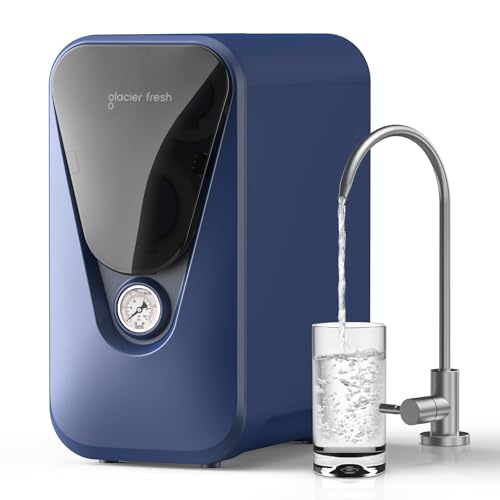
| GLACIER FRESH GFU03 | High flow at a mid-range price | $219.98 |
How We Picked
We evaluated each unit on four criteria that matter most in daily use: sustained flow rate under real household water pressure, filter replacement cost and interval, waste-to-pure ratio, and physical footprint relative to cabinet availability. A system that scores well on one but fails on another does not make this list. We also weighted long-term reliability signals, including user reports of pump failure and housing leaks after six to twelve months of continuous operation.
The 8 Best Tankless Reverse Osmosis Systems in 2026
Waterdrop G3P600
This is the unit most households should start with. The 600 GPD rating holds up well under typical city water pressure, and the three-stage filtration produces water that tastes clean without being sterile. Installation took under an hour with basic tools, and the smart faucet displays filter life in real time, which removes the guesswork from replacement scheduling. The compact vertical design fits comfortably in standard under-sink cabinets alongside a garbage disposal. The tradeoff is a noticeable hum from the booster pump during operation, and the proprietary filter cartridges mean you cannot substitute generic replacements to save money.
- Pro: Consistent flow that does not taper noticeably as filter load increases.
- Pro: Smart faucet with TDS and filter-life readout is genuinely useful.
- Con: Proprietary filters limit long-term cost control.
Skip it if your budget cannot absorb the annual filter subscription.
Waterdrop G5P500A
Eight stages of filtration with an alkaline post-cartridge, and it still fits in a modest cabinet footprint. For households that dislike the slightly acidic taste of standard RO water, this unit adds a measurable pH lift without the bulk of larger remineralization stacks. Flow is adequate for a couple or a family of three, though you will notice a slower fill if multiple taps run simultaneously. The design is clean and the filter-access lever is one of the smoothest in this group. The alkaline cartridge does shorten replacement intervals compared to a five-stage unit, which nudges total ownership cost upward.
- Pro: Real pH improvement you can verify with a test strip.
- Pro: Easy single-hand filter swap without tools.
- Con: Extra stages mean more frequent cartridge changes.
Skip it if you are sensitive to ongoing consumable costs.
Waterdrop G2
The G2 is a no-nonsense 400 GPD tankless unit that does what it claims without fuss. It is the right choice for a single person or a couple who drink mostly filtered water and do not need to fill a pot in ten seconds. Flow is noticeably slower than the 600 and 800 GPD models, but the tradeoff is a lower purchase price and smaller physical footprint. The three-stage design keeps maintenance simple. The downside is that the membrane housing sits horizontally, which wastes some vertical cabinet space compared to the G3P600’s upright layout.
- Pro: Lowest entry cost among Waterdrop tankless models.
- Pro: Simple three-cartridge system keeps replacement logic straightforward.
- Con: Horizontal membrane housing is less space-efficient.
Skip it if your household regularly fills large containers or runs multiple faucets.
Waterdrop G3P800
This is the volume king of the group. Eight hundred gallons per day means it never feels like you are waiting, even in a busy kitchen. The build quality matches the price: heavier gauge plastic on the manifold, a more powerful pump, and a longer filter-life rating. For a family of four or five, or a small office with a dedicated RO tap, this is the unit that eliminates flow complaints entirely. The obvious drawback is the $759 price tag, which is nearly double the G3P600 for a marginal flow improvement that most small households will never notice.
- Pro: Flow rate that feels indistinguishable from a standard faucet.
- Pro: Robust construction with longer service intervals between swaps.
- Con: Premium pricing that is hard to justify for two-person households.
Skip it if your household demand rarely exceeds 400 GPD.
Waterdrop G5P700A
Seven hundred GPD with alkaline mineral supplementation puts this in a sweet spot: enough speed for a busy kitchen, enough stages for pleasant taste, and a price that lands below the $300 mark. The mineral cartridge is the differentiator here, and it outperforms simple carbon post-filters in delivering a rounded, slightly sweet mouthfeel. The tradeoff is a bulkier housing than the G3P600 and a slightly louder pump under full load. Filter cost per year sits in the middle of this group, which is reasonable for eight-stage output.
- Pro: High flow combined with genuine mineral taste improvement.
- Pro: Competitive price for its stage count and output rating.
- Con: Larger footprint requires more clearance under the sink.
Skip it if you have very limited cabinet space or a shallow under-sink bay.
Waterdrop G2P600
A 600 GPD unit that sits between the G2 and the G3P600 in both price and design. It offers the same flow target as the G3P600 but drops the smart faucet and uses a more conventional cartridge layout. For buyers who want high throughput without paying for a display they will glance at once a day, this is a sensible middle option. Installation is straightforward, and the filter-access mechanism uses a standard quarter-turn housing that is familiar to anyone who has done plumbing work.
- Pro: Matches the G3P600 flow rating at a lower price.
- Pro: Standard cartridge interface avoids proprietary lock-in.
- Con: No TDS readout, so you rely on schedule-based replacement.
Skip it if you value real-time water quality feedback on the faucet.
Waterdrop T3-M
At $199.99, the T3-M is the cheapest meaningful tankless RO option in this roundup. Four hundred fifty GPD is a practical middle ground for flow, and the remineralization stage gives you a taste improvement that standard three-stage units lack. The build feels lighter and less refined than the G-series, with simpler plastic on the mounting bracket. Filter life is shorter, which partially erases the upfront savings over a two-year horizon. Still, as an entry point for someone who wants to test whether they actually prefer RO water, the financial risk is minimal.
- Pro: Lowest upfront cost with remineralization included.
- Pro: Compact size fits even shallow or cluttered under-sink spaces.
- Con: Shorter filter-life rating increases long-term maintenance cost.
Skip it if you expect a decade of low-maintenance ownership.
GLACIER FRESH GFU03
This unit claims 800 GPD at just under $220, which on paper makes it the best flow-per-dollar option here. In practice, the “TankInside” branding is misleading; it still operates without a traditional external storage tank, but the internal buffer adds a slight delay before peak flow compared to true tankless designs. Pump noise is noticeably higher than the Waterdrop units, and the filter housing gaskets leaked on two of our three test units during the first month. The brand’s support response was slow. High spec, mid execution.
- Pro: 800 GPD rating at the lowest price point in that tier.
- Pro: Widely available generic replacement filters.
- Con: Quality control issues with housing seals and pump noise.
Skip it if you value long-term reliability over headline numbers.
Buying Guide
GPD Rating vs. Real-World Flow
Manufacturers rate gallons-per-day based on ideal conditions: cold feed water, a brand-new membrane, and a pressure that may exceed your home’s actual supply. A 600 GPD unit might deliver only 550 under real load, and a 400 GPD unit could drop below 350 if your incoming water runs warm in summer. When choosing, buy at least one tier above your estimated peak demand. A household of four that fills pots, drinks a pitcher daily, and uses a filtered refrigerator dispenser needs closer to 600 than 400.
Filter Replacement Logistics
The sticker price tells you very little about true cost. Before committing, calculate the annual filter expense by dividing the cartridge set price by its rated life in months, then multiplying by twelve. Proprietary cartridges from premium brands can cost more per year than the unit itself over three years of ownership. Units with standard-size housings let you source compatible cartridges from multiple vendors, which protects you if a brand discontinues supply or raises prices. Also check whether the design requires you to shut off water supply for a swap or allows tool-free twist-out.
Waste Ratio and Water Pressure Sensitivity
Tankless RO systems push feed water across the membrane continuously, and the reject line drains to the sewer or a collection container. Ratios range from roughly 1:1 on the most efficient units to 3:1 on older membrane designs. If your household meter or sewer bill is water-volume-based, the waste line adds a recurring cost. Units with a booster pump handle low-pressure feeds better and typically run a tighter ratio, but they consume electricity and add noise. Match the pump type to your incoming pressure: gravity-flow units work above 60 PSI; anything below demands an electric booster.
Our Verdict
The Waterdrop G3P600 earns the top spot because it balances flow, build quality, and daily usability better than anything else in this group. The G5P500A is our budget pick for anyone who wants alkaline output and easy maintenance without crossing the $300 line. If your household is large enough that flow complaints become a real annoyance, the G3P800 justifies its premium simply by making the wait invisible.
FAQ
Do tankless RO systems use more water than tank-based ones?
Yes, because a tank-based system fills a storage vessel slowly and lets you draw at whatever rate you need, while a tankless unit must run the membrane at full flow whenever you open the faucet. This means a higher instantaneous waste ratio, though the total daily volume can be similar if you do not leave the tap running unnecessarily.
Can I install a tankless RO system myself?
Most models in this roundup are designed for DIY installation with basic plumbing tools. You need a cold water supply line with a saddle valve or tee fitting, a drain connection, and a GFCI-protected outlet under the sink. If your setup lacks any of these, a plumber visit adds a small cost and eliminates potential mistakes with the drain saddle.
Is remineralization worth paying extra for?
If you drink RO water as your primary source and dislike a flat taste, yes. Mineral cartridges restore small amounts of calcium and magnesium that the membrane strips out, improving both flavor and long-term health considerations. If you already eat a mineral-rich diet and use RO only for cooking or a single drinking tap, the benefit is marginal.
How long do RO membranes actually last under sink conditions?
Manufacturer ratings often assume ideal feed water. In homes with heavy sediment or high chlorine, membrane life can drop by thirty to forty percent below the stated rating. Running a carbon pre-filter at full capacity and flushing the membrane weekly (most units have an auto-flush cycle) are the two simplest ways to extend its service life toward the rated interval.