Key takeaways
- Allocate hallway coat storage using real garment bulk, reach and daily routines, with a shared-space worksheet and a worked capacity example.
What's inside
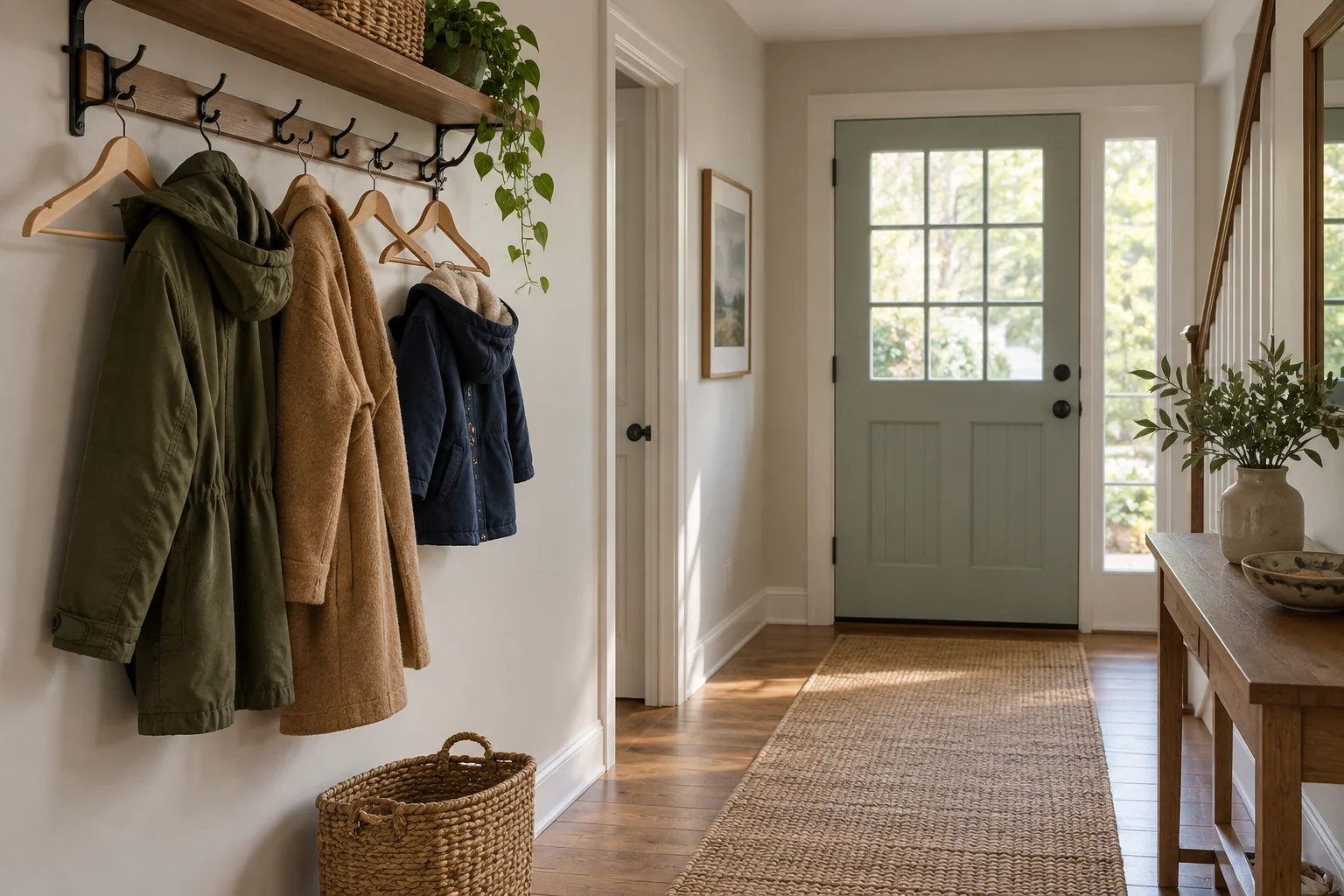
Allocate shared hallway coat storage by the coats people use, the space those garments occupy and the heights each person can reach comfortably. Give everyday items a defined place, keep occasional items elsewhere when possible, and check the loaded arrangement against doors and walking routes.
Equal numbers of hooks do not always create equally usable storage. One long winter coat can interfere with a lower shelf, while several thin jackets may fit into a smaller section. This guide uses a garment inventory and a trial allocation before any new hardware is purchased.
Start with the hallway’s non-negotiable functions
Identify the entrance, other doorways, switches and the route people use while carrying bags. Existing storage must not obstruct those functions when coats are hanging from it. Measure and observe the loaded projection of the clothes, not just the empty depth of a rail or hook.
If you live in a shared building, distinguish your private hallway from communal circulation space. Building rules may restrict storage outside the dwelling. This household allocation exercise is not permission to place furniture or clothing in a shared escape route.
Use properly installed storage within its manufacturer’s requirements. Do not infer load capacity from how many empty hooks are visible. If you are renting or adding wall fixings, resolve permission and installation suitability before assigning the new space.
Inventory the coats that need daily access
Ask each household member which coats they use during the current season. Separate daily pieces, occasional pieces and items that need another storage location. Make those decisions together instead of moving another person’s clothing out of sight without agreement.
Hang the daily pieces as they would normally be stored and observe their bulk. Note long hems, wide sleeves and the space needed to lift each item off without removing someone else’s coat. Record reach preferences through actual use rather than assigning a universal hook height.
IKEA’s hallway guidance presents a mix of open storage, seating and hooks at varying heights for outdoor wear. That offers useful layout options; it does not prescribe a household quota or establish the capacity of your existing rail.
Use a shared allocation worksheet
| Person or purpose | Daily garments | Space and access need | Assigned position |
|---|---|---|---|
| Household member A | Count and describe current coats | Long hem or bulky sleeve? | Trial rail section or hooks |
| Household member B | Count and describe current coats | Comfortable reach and retrieval | Trial rail section or hooks |
| Visitor use | Temporary arrivals | Agreed overflow position | Reserve only if space permits |
| Occasional or seasonal | Not needed every day | Alternative storage location | Named location, not an anonymous pile |
Add a short note for items that arrive wet. Follow the garment’s care instructions and the household’s suitable drying arrangement rather than packing a wet coat tightly among dry clothes. A storage assignment should not quietly become an improvised drying method beside a heater.
Allocate usable space rather than counting hangers
Start with the existing rail or hooks and test a modest daily selection. On a rail, group each person’s garments so they can be retrieved without crossing another group. Use removable identifiers on the storage system if helpful; avoid attaching adhesives to clothing or finishes that may be damaged.
On hooks, check whether a long garment blocks a lower hook or drapes into the walking route. Several coats layered on one hook may technically hang there but still be difficult to retrieve. Treat that as an access problem rather than proof that another person owns too many coats.
Keep household fairness separate from equal dimensions. A person with limited reach may need an accessible position even if another section is wider. Agree on the result through practical use and revisit it when needs change.
Worked example: allocating a measured rail
In a fictional hallway cupboard, a usable rail section measures 100 centimeters. The household’s trial garments occupy 30 centimeters for one person, 35 for another and 20 for a third, leaving 15 centimeters unassigned. These are observed example widths, not recommended allowances per person.
The group first tries reserving the remaining section for visitors. One bulky coat makes retrieval awkward, so they move an occasional jacket to a bedroom wardrobe and repeat the trial. The improved arrangement leaves daily coats accessible without claiming that a rail of this length supports any particular weight.
They record where the occasional jacket moved and agree to review the arrangement when winter garments return. The useful calculation is 100 minus 30 minus 35 minus 20 equals 15; the useful decision still comes from checking the actual loaded storage.
Test a normal arrival and departure
Ask household members to hang and retrieve their own garments while using their normal bags or mobility aids. Keep the trial unhurried. Check door movement, access to switches and whether clothing brushes the floor or nearby surfaces.
If the system works only when every garment is compressed perfectly, simplify it. Reduce the daily selection, relocate occasional pieces with permission, or choose a better storage arrangement after verifying installation and space. Adding more hooks is not automatically an improvement.
Finish with a short agreement: who uses each area, where occasional coats live and what happens when visitors arrive. Review it at a seasonal change or when another person joins the household. Clear, usable assignments are more durable than an attractive arrangement nobody can maintain.